

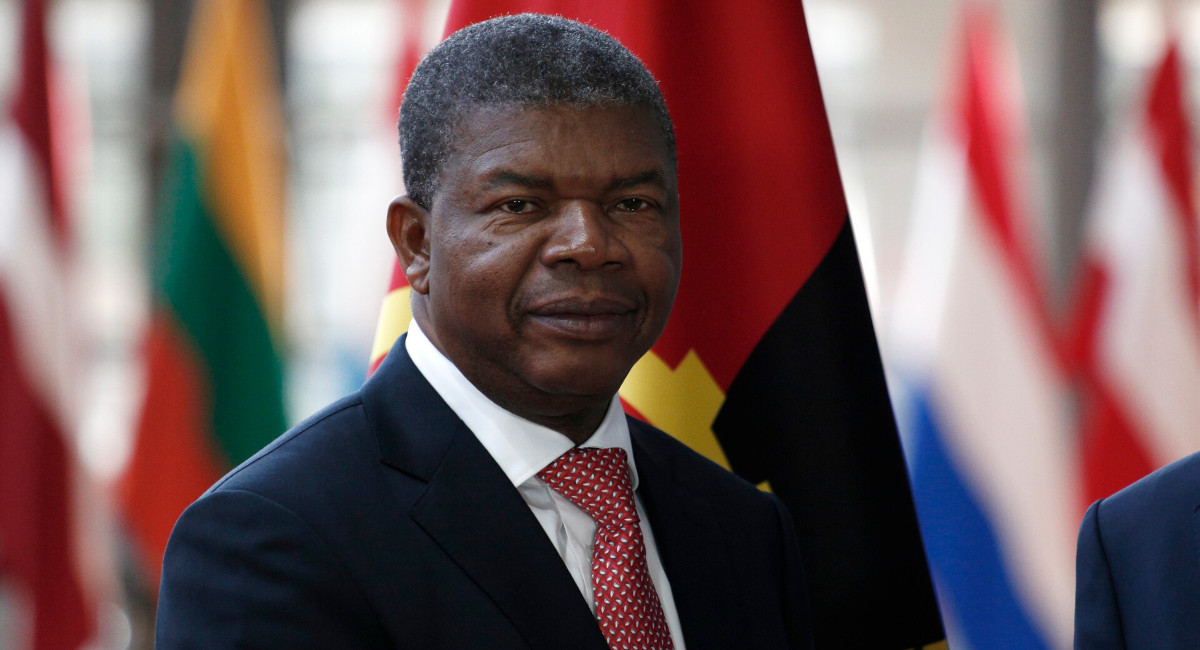
Lourenço, who was speaking during the Leaders’ Meeting on Climate and the Just Transition, said that the operationalisation of the new funding target, in the order of $1.3 billion a year until 2035, “will be a real test of the credibility of the international system, and it must be said here that the just transition will only be just if this commitment is honoured and accessible to all developing countries.”
For the Angolan head of state, COP30 – the United Nations Climate Change Conference – “must reaffirm multilateralism as an instrument of trust, fairness and concrete action, so that the climate transition goes hand in hand with economic and social transition.
“Without forgetting that climate justice will only be possible if the objectives of climate finance, technology transfer and the establishment of strategic partnerships converge,” he went on. “Only in this way will developing countries become more resilient in the face of climate phenomena.”
Speaking at a conference that was held virtually as a joint initiative of the United Nations secretary general, António Guterres, and the president of Brazil, Luís Inácio Lula da Silva, Lourenço pointed to the actions underway in Angola.
His country, like many in Africa, has suffered from the harmful phenomena resulting from climate change, which has led the country to “take urgent measures” to minimise the socio-economic impacts, he stressed.
For the current year, Angola’s government has established a number of priority actions, in particular the commitment to presenting in five month’s time the national contribution to the UN Framework Convention on Climate Change, “with ambitious and realistic targets for reducing carbon intensity.
“We also intend, by September of this year, to submit the National Climate Change Adaptation Plan to the Framework Convention for the first time, which will reflect the actions to be implemented in the areas of agriculture and food security, water resources, resilient infrastructures, ocean protection and public health,” he told the assembled officials.
With the aim of collecting “more reliable and accurate” indicators on climate action at national level, he said, Angola has set itself the targets for this year of starting to operationalise the National Monitoring, Reporting and Verification System and getting the Climate and Environmental Observatory up and running – “two mechanisms whose purpose is to contribute to the production of up-to-date environmental information in our country.”
He expressed the hope that that COP30, which marks 10 years since the signing of the Paris Agreement, will bring “tangible results” in terms of making access to climate finance more flexible, so that developing countries can implement their adaptation policies. The virtual meeting was attended by several heads of state and government and other world leaders.
