

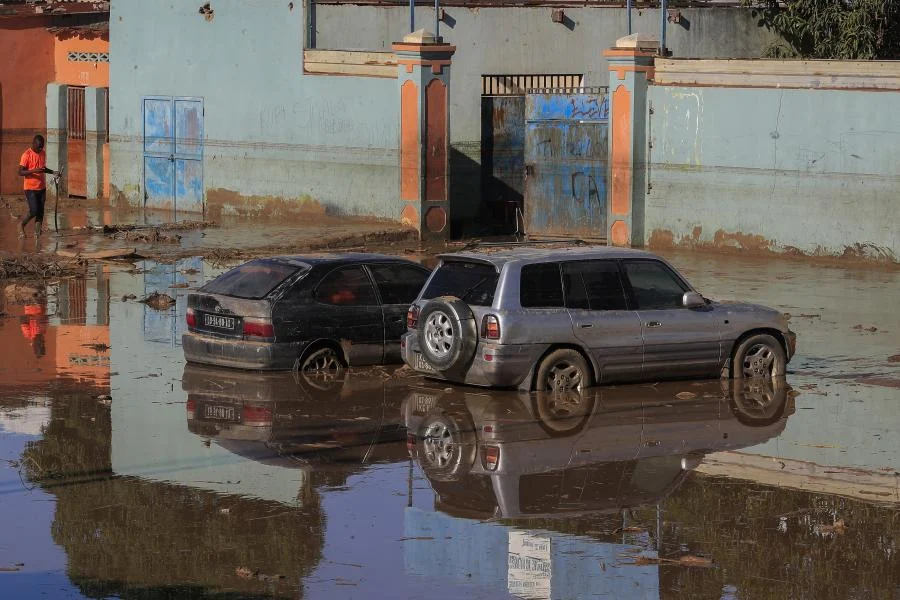
The number of missing persons following the devastating floods in the Angolan province of Benguela has risen from 11 to 31, while the confirmed death toll remains at 19, according to the latest report from the Civil Protection and Fire Service.
The province has experienced intense rainfall throughout the month, which led to the breach of the Cavaco River dike. This catastrophic event triggered massive flooding that left more than 8,000 families displaced, though rescue operations have successfully reached 3,624 individuals.
Data released during the seventh meeting of the Provincial Civil Protection Commission indicates that the flash floods resulted in the total destruction of 1,540 homes and caused significant damage to another 3,871 residences, with a total of 2,586 flood-related incidents recorded across the region.
The areas of Calomanga and Kapiandalo continue to be reported as the most severely affected locations. Regarding regional infrastructure, authorities have confirmed the complete destruction of one bridge and partial damage to another along National Road 260. This disruption has hindered transit throughout the area, though ongoing repair work is underway to restore mobility.
Read more about this topic: Angola: death toll has risen to 19 in Benguela due to floods
In operational terms, officials stated that technical assistance is progressing at a steady pace, with active efforts focused on cleaning up neighborhoods, repairing essential structures, and facilitating the gradual return of families to their homes. Amid the recovery efforts, authorities have issued a public health warning regarding the risk of contamination at local beaches due to the presence of fecal coliforms.
Additionally, the government has called on the public to be vigilant and avoid spreading misinformation, particularly regarding alleged rainfall patterns in the interior of the province.
The region is now entering a recovery phase, though officials emphasized that the situation still requires heightened attention from both authorities and the public to manage the ongoing impacts of the flooding.
