

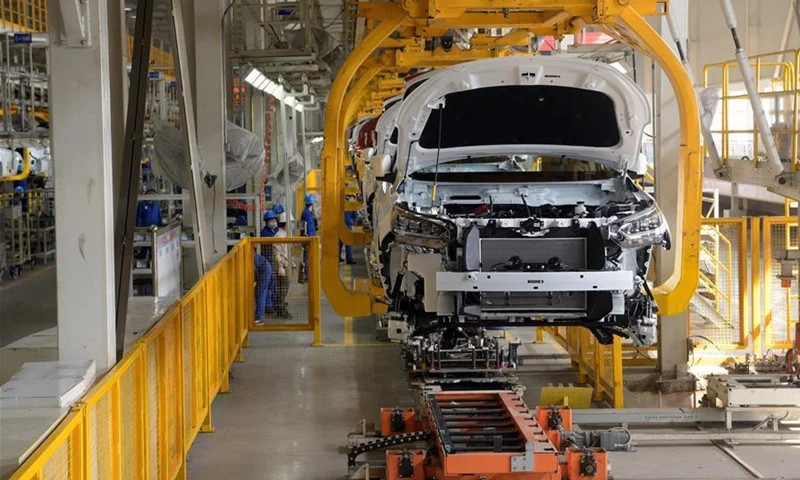
Brazil became, in the first five months of the year, the world’s largest importer of Chinese automobiles, overtaking Russia, in a buying rush ahead of higher tariffs on electric vehicles set to take effect in July.
Brazil imported Chinese cars worth 5.2 billion dollars (4.5 billion euros) between January and May, an increase of 146.9% compared to the 2.1 billion dollars (1.8 billion euros) recorded in the same period last year, according to Chinese customs data.
The South American country surpassed Russia, which imported 5 billion dollars (4.3 billion euros) worth, and Belgium, at 3.8 billion dollars (3.3 billion euros), becoming the world’s leading destination for cars produced in China.
Electric and hybrid vehicles accounted for 4.5 billion dollars (3.9 billion euros) of Brazilian purchases, with April and May concentrating more than half of that amount, an acceleration attributed to buyers getting ahead of the July tariff increase. Brazil also led global imports of Chinese electric and hybrid vehicles, ahead of Belgium and the United Kingdom.
Read more: Brazil denied visas to two U.S. officials headed to meet Flávio Bolsonaro ahead of October’s elections. Lula says that was outside interference (with video)
According to the Brazil-China Business Council, Brazilian imports of automobiles from China reached 5.35 billion dollars (4.6 billion euros) in the first half of the year, more than double the value of vehicle purchases from France.Plug-in hybrids accounted for just over half of that total, at 2.79 billion dollars (2.4 billion euros). The rise in imports coincides with growing trade ties between Brasília and Beijing.
On Sunday, Brazilian President Luiz Inácio Lula da Silva and Chinese counterpart Xi Jinping agreed to accelerate negotiations toward a trade agreement between China and Mercosur, just days after a 25% tariff imposed by the United States on part of Brazilian exports took effect, followed by a new 12.5% tariff applied to dozens of trading partners, including Brazil.
Lula told Xi that the Brazilian Government remains committed to diversifying its export markets, asking only for some flexibility for sectors considered sensitive.
