

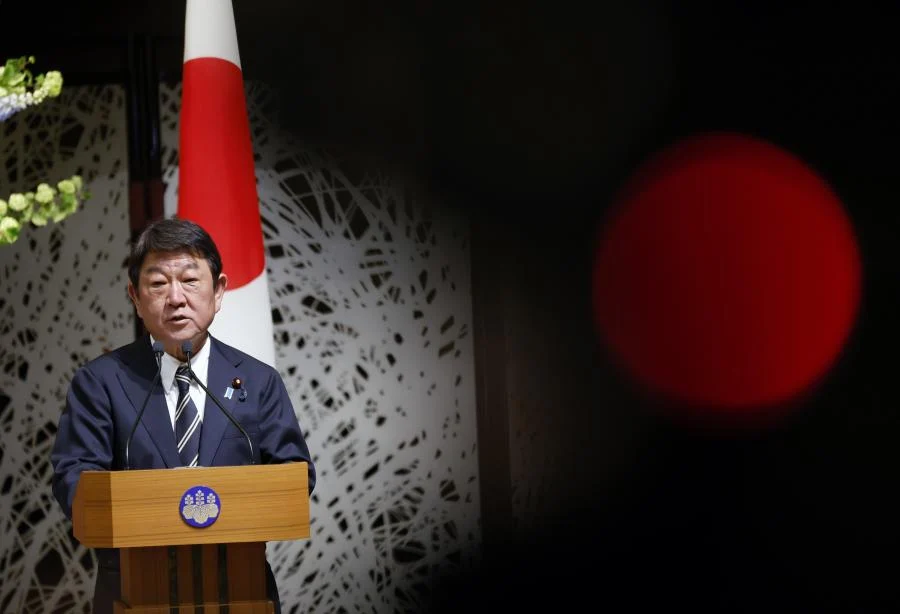
Japanese Foreign Minister Toshimitsu Motegi arrives in Luanda today to begin a multi-nation African tour that will also take him to South Africa, Kenya, and Zambia. The high-level visit aims to strengthen economic ties and secure strategic resources at a time of increasing global geopolitical shifts.
The visit coincides with the 50th anniversary of diplomatic relations between Japan and Angola. The official agenda for Friday includes bilateral cooperation talks with his Angolan counterpart, Téte António. This marks the first visit by a Japanese Foreign Minister to Luanda in six years, following Taro Kono’s trip in 2019.
In an article published on the Ministry of Foreign Affairs (MOFA) website ahead of his arrival, Motegi described the “Free and Open Indo-Pacific” vision as a “vital compass” for the partnership between Japan and Africa. He emphasized that Africa’s critical minerals, oil, and natural resources are not only essential for global economic security but are also the primary drivers for the continent’s sustainable growth.
Read more: Angola and Mozambique strengthen parliamentary ties to defend interests
Japan has maintained a steady economic presence in Angola. As of the end of the 2023 fiscal year, Japanese aid included approximately 23.6 billion yen (€126.2 million) in loans and 43.5 billion yen (€232.6 million) in grants. Additionally, technical cooperation reached 8.5 billion yen (€45.4 million) under an agreement signed in late 2019.
Bilateral trade between the two nations reached approximately $200 million (€171 million) in 2024, according to data from Angola’s General Tax Administration (AGT). Motegi’s tour signals Japan’s intent to deepen its engagement with African partners to diversify its supply chains and reinforce economic stability.
