

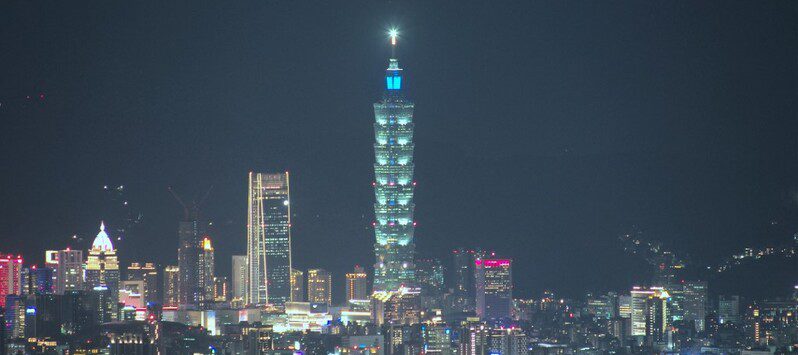
A few minutes before the clock strikes, anyone standing in front of the huge statue at the top of the steps of the memorial to Chiang Kai-shek, in central Taipei, can see the soldiers in white uniforms approaching with their mechanical gestures. It is the changing of the guard in the building that pays tribute to the leader who in 1949 took refuge on the island after losing the Chinese civil war to Mao’s communists. A divisive figure today, with supporters considering the leader of the nationalists as a hero and detractors denouncing him as a dictator. But despite the tense relationship with Beijing – which sees Taiwan as a rebel province and has reaffirmed in recent months its willingness to resort to force to achieve reunification – its capital is a vibrant city, where concern about a possible Chinese invasion exists but little. day-to-day and with much to offer those who visit it – from the National Palace Museum, where so many of the Chinese imperial artifacts were brought by Chiang, to Taipei 101, which with its 101 floors was once the building highest in the world, passing by the night markets or a detour to the Taiwanese whiskey distillery, Kavalan.
The city deserves better, but if you only have 48 hours to dedicate to it, the Chiang Kai-shek Memorial is a good place to start. The huge white building with a blue roof stands out on Freedom Square, right in the center of Taipei. And after climbing the 89 steps (one for each year of Chiang when he died) of the staircase that leads to the statue of the leader guarded by soldiers in immaculate uniforms and marveling at his skill in handling the rifles that make his hands dance, you can take the lift to visit the free exhibitions downstairs. The main one tells the story of Chiang, showing photos of the leader alongside other great figures, from Franklin Roosevelt to Churchill, to his two limousines.
Outside, time for a stroll through the park that surrounds the memorial, where you can often see groups doing tai chi. In the same square is also the National Theater and the National Concert Hall.
Read more in Diário de Notícias
