

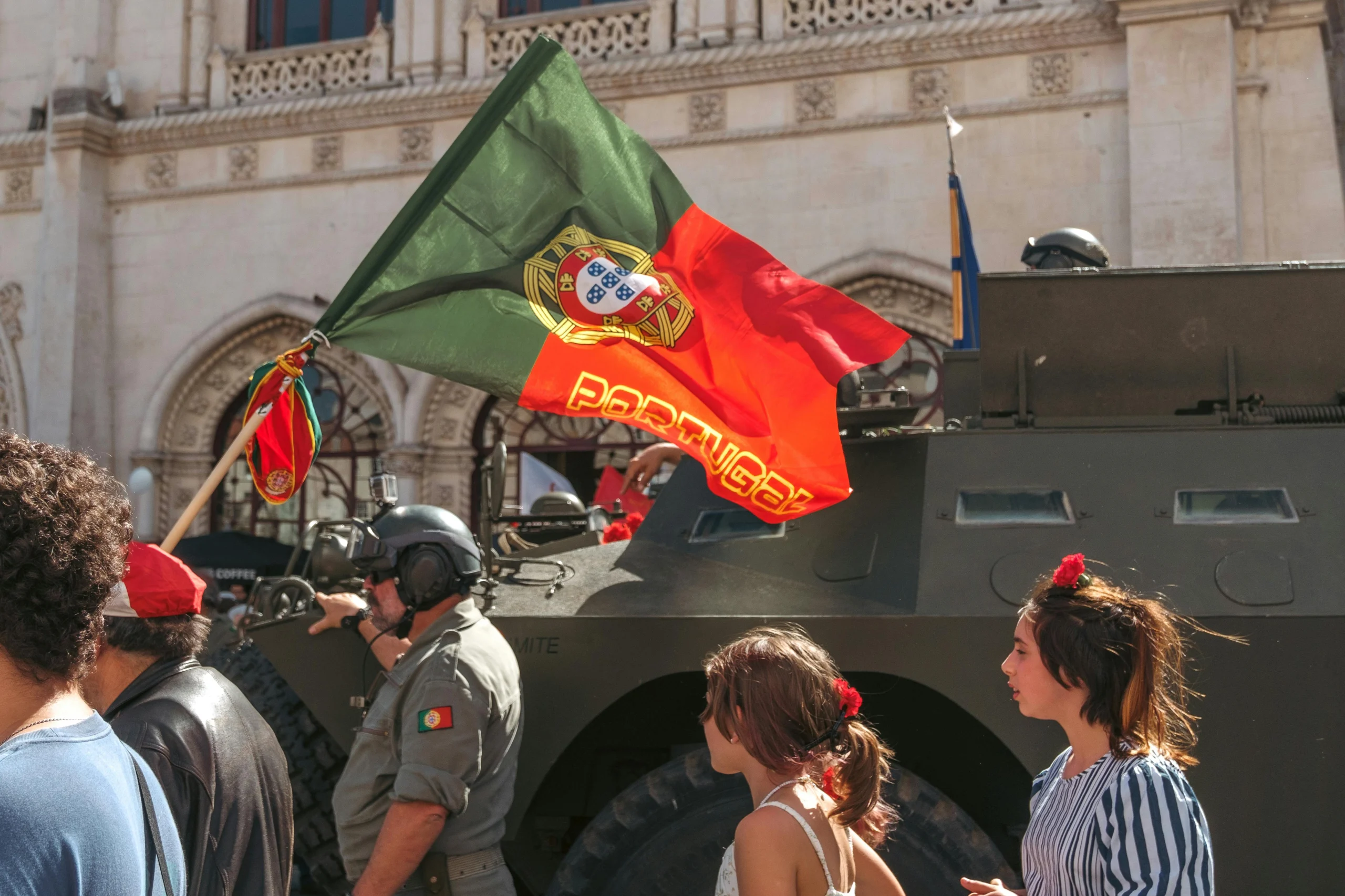
In Macau, “Portugal, Camões, and Portuguese Communities Day” holds deep significance, serving as a connection between local history, cultural identity, and the universality of the Portuguese language. More than just an institutional observance, the celebration reflects the resilience of a shared heritage and the way in which the figure of the poet has spanned centuries of political upheaval to take root in the community’s collective imagination and set the pace for local traditions.
The Evolution of a Date: The Metamorphosis of a Symbol
The chronological journey of June 10 spans more than four centuries of history, evolving in accordance with the political expediencies of each era. It all dates back to 1580, the year in which Luís Vaz de Camões died in poverty, leaving behind a legacy that would later serve as the fuel for national identity.
Three centuries later, in 1880, while the country was still under the monarchy, republican crowds took to the streets of Lisbon to celebrate the poet’s tercentenary, hailing him as the “genius of the nation”—a foreshadowing of what would happen with the Proclamation of the Republic in 1910, when the date was designated a public holiday.
The major ideological shift occurred with the consolidation of the “Estado Novo” regime, beginning in 1933. Salazar’s regime recognized the propaganda potential of the poet and the epic of the Age of Discovery. In 1944, the date was grandly renamed “Camões, Portugal, and the Race Day,” serving as a showcase for nationalism and the assertion of colonial power. By 1963, as the Overseas War progressed, the day was exploited as a tribute to the Armed Forces.
The break with the authoritarian past came in 1978, already under the Third Republic. June 10 shed the shackles of exclusivist nationalism to become democratic and assume the designation we know today. By focusing on inclusion and the recognition of the diaspora and communities scattered across the four corners of the world, the date gained a new universalist philosophy, a concept that fits Macau’s multicultural and identity-based framework like a glove.
The Myth of Macau: The Legend of the Cave
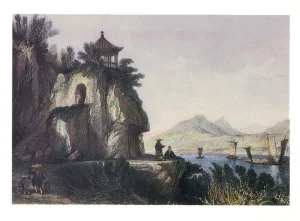
It is precisely within this multicultural context that Camões’ connection to Macau forms the basis of one of the most romantic and tragic legends in world literature. According to legend, the poet was exiled to the peninsula in the mid-16th century and chose a granite cave in Patane to write much of his masterpiece, “Os Lusíadas“. That rock, now at the heart of a historic garden, has been etched into the popular imagination as the birthplace of the Portuguese-language epic in the East.
The story takes a dramatic turn in 1557, as he prepares to leave the region. When he boarded the famous “Silver Ship”, Camões took with him only his manuscripts—his “sole fortune”—and the secret love of Tin-Nam-Men (“Gate of the Southern Land”), a young Chinese woman who accompanied him on his voyage across the South Seas.
Read also: Diversity in the month of June in Macau
Legend has it that the romance sank near the mouth of the Mekong River. Caught in a violent storm, the poet found himself faced with an impossible choice. He saved himself by swimming with one arm above water to keep the poem safe from the waves, but lost his beloved at sea. The young woman would be immortalized in his poetry under the name Dinamene, the muse who inspired the famous and poignant sonnet “My gentle soul, who has departed…“. It is this mysticism that continues to fuel the community’s pride and explain the intensity of today’s celebrations.
June 10 Nowadays: A Living Tradition in Macau
Today, even after the handover in 1999, the official celebrations of June 10 remain alive in Macao, featuring a rich and highly symbolic ceremony. The day traditionally begins at the Chancellery of the Consulate General of Portugal with the raising of the national flag, to the sound of the national anthem sung by the community, accompanied by the Public Security Police Force band and the Macau Portuguese-Speaking Scouts Group (GELMac).
The most emotionally charged moment is the traditional pilgrimage to the Camões Garden and Grotto. There, in an atmosphere that transports generations of residents back to their childhood, dozens of students from the Portuguese School of Macau and the Luiz Gonzaga Gomes School gather to recite the poet’s sonnets and lay flowers at his bust. The day concludes with a reception for the community at the Consular Residence (formerly the Bela Vista Hotel), a gathering that typically features a speech by the Chief Executive of the Macao SAR, reinforcing mutual institutional respect.
However, the modern celebration is no longer limited to a single day. June 10 has become the centerpiece of a dynamic program packed with events that spans the entire month, celebrating Lusophone Month with exhibitions, concerts, and cultural activities throughout the country. This celebration also extends to the local cuisine: as has become customary during this season, several Portuguese restaurants join in the festivities by offering symbolic discounts of 10.06% on their menus. It is living proof that Camões’ legacy in Macau continues to shape not only the cultural identity but also daily life on the peninsula.
