

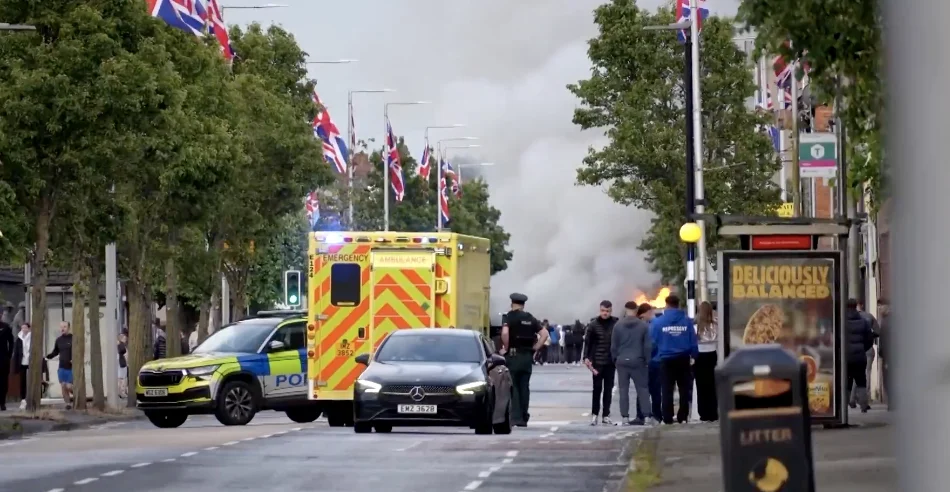
The incident — which left a man seriously injured and for which a suspect has since been named in court for the first time — went viral within hours, fuelling conflicting interpretations, rumours about those involved, and unverified claims circulating mainly on platforms such as X, Facebook, and private messaging apps.
Media and digital security researchers say the speed at which unverified content spread created an environment of heightened polarisation, making it harder for authorities and traditional news outlets to control the narrative.
Short videos of the attack and later re-shared images were widely circulated, often accompanied by speculative captions or false claims regarding political or community motivations.
This phenomenon, common in episodes of urban violence, tends to intensify perceptions of immediate threat and can contribute to rapid mobilisation of groups on the ground, experts warn.
“Acceleration effect” on unrest
In Belfast, local authorities and security forces have increasingly pointed to social media-driven misinformation as an “accelerator” of existing tensions, particularly in areas historically shaped by community divisions.
Although the official investigation into the attack is still ongoing, reports of clashes and hostile gatherings emerged within hours of the incident going viral, prompting police intervention across several parts of the city.
Digital security specialists stress that misinformation does not create conflict on its own, but can rapidly amplify local friction, especially where underlying social or political vulnerabilities already exist.
In contexts such as Northern Ireland, where the legacy of sectarian conflict continues to shape community dynamics, the circulation of unverified narratives can have a particularly sensitive impact.
Anti-immigrant protests erupted in Belfast following charges against a Sudanese man for a knife attack, leading to heightened tensions https://t.co/OIWqD92tez pic.twitter.com/Da0uOrEW3M
— Reuters (@Reuters) June 10, 2026
