

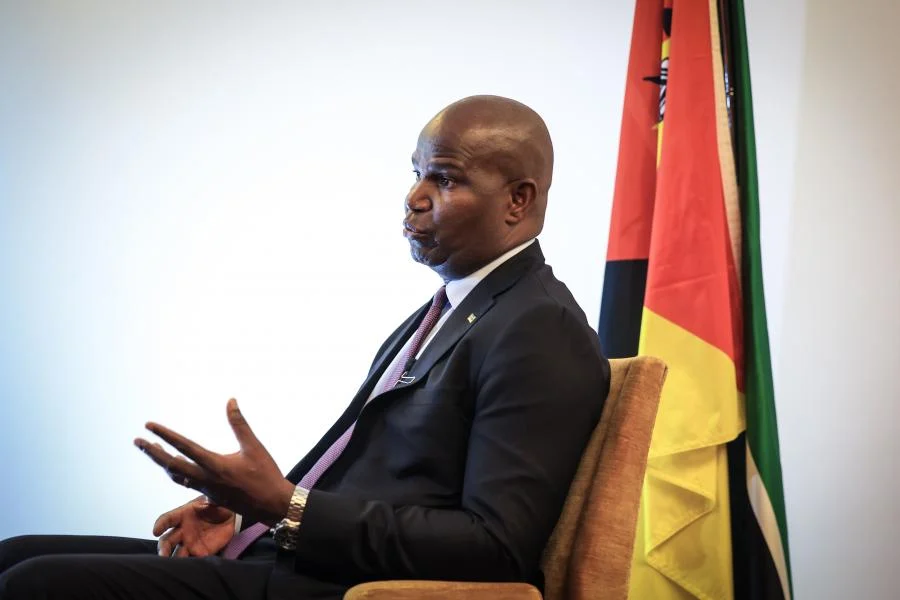
Mozambican President Daniel Chapo argued today that investment is the key to overcoming the fragility and main challenges of the country, such as climate change and terrorism in the northern region.
“Fragility is real in Mozambique, with floods, cyclones, and the conflict in Cabo Delgado; the solution is investment to employ young people, because unemployed youth represent a great fragility,” said the head of state during his opening speech at the World Bank’s Fragility Forum, which began today in Washington.
In a conversation with the president of the World Bank, Daniel Chapo stated that “peace and development are the key to private sector investment,” which he considered crucial to financing the country’s development. “People in Mozambique want to know how to resolve fragility,” noted the leader, emphasizing that the country “has many young people without jobs who need knowledge,” and adding that “to combat fragility, the key is investment.”
During the meeting with Ajay Banga, who visited Mozambique last year, Chapo reviewed the main reforms underway in the Portuguese-speaking African nation “to open the country for business.” He highlighted the energy sector as one of the most promising, not only to foster the country’s industrialization but also for exportation to regional partners.
Read more: Mozambique: €100 million from Italy to develop green cities
“We have assets in the energy sector, we have natural gas, but in 20 or 30 years it will run out, which is why we must diversify. Last year Ajay Banga went to Mozambique to see our energy assets, which we have in sufficient quantities to export to our neighbors,” Chapo said, stressing that gas is not just a fuel, but can also be used to produce fertilizers and boost tourism, logistics, and industrialization.
In a debate marked by the importance of job creation for national development, Ajay Banga highlighted the need to better structure and more comprehensively define the concept of development aid, focusing on ecosystems rather than large investments in a single sector or industry.
The World Bank, he stated, is preparing a fragility index to help countries anticipate problems because, as both agreed, it is easier to invest in preventing serious issues than to bear the higher financing costs of addressing the consequences of fragility.
The World Bank Group expects to mobilize 2.5 billion dollars (2.1 billion euros) for Mozambique over the next five years under the new Country Partnership Framework (CPF), focusing on job creation to drive economic growth.
Read more: Mozambique issues first digital licenses to bolster cybersecurity
“By focusing on economic corridors and sectors with high potential for job creation, such as energy, agribusiness, and tourism, we aim to mobilize around 2.5 billion dollars during the CPF period to help Mozambique transform its natural wealth into tangible opportunities and better jobs, especially for youth and women,” the financial entity stated in January.
The World Bank’s program for the next five years in Mozambique includes the mobilization of financing instruments by various entities within the Group, including guarantees, private sector support, and advisory services for launching projects in the country.
The World Bank’s new strategy for this Portuguese-speaking African nation “focuses on energy, agribusiness, and tourism, while developing a skilled workforce, strengthening macroeconomic stability, and addressing fragility,” to reinforce macroeconomic and fiscal stability, improve workforce skills, expand access to energy, boost economic corridors, and increase private sector-led jobs.
