

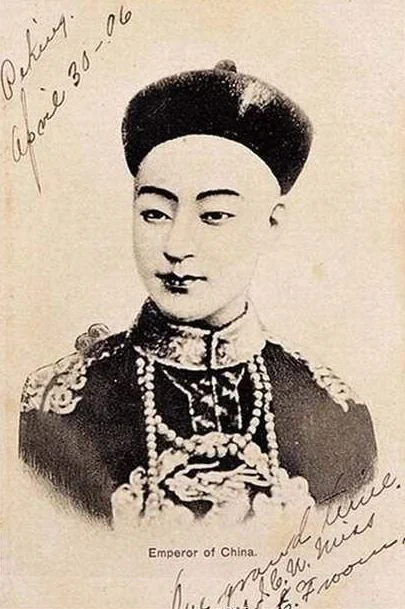
Just 103 days later, Empress Dowager Cixi orchestrated a coup. The Guangxu Emperor was placed under house arrest, reform leaders Kang Youwei and Liang Qichao fled into exile, and the “Six Gentlemen,” led by Tan Sitong, were executed. The reform was abruptly crushed.
But what if Yuan Shikai hadn’t betrayed the reformers? What if Cixi had relinquished power? Had this top-down reform continued, how might modern Chinese history have unfolded? This raises a classic question: Why did Japan’s Meiji Restoration succeed while the Qing Dynasty’s reform failed so catastrophically?
An Alternative Reality: A Chinese Meiji Restoration
A successful reform would have fundamentally altered China’s trajectory:
1. A Smooth Political Transition
The Qing court could have transitioned to a constitutional monarchy, likely averting the bloodshed of the 1911 Xinhai Revolution. The Guangxu Emperor would have become a figurehead, with power shifting to an elected parliament and cabinet. This might have spared China the devastating warlord era of the early 20th century.
2. Early Educational and Economic Modernization
Abolishing the eight-legged essay and establishing modern universities would have steered intellectuals toward science and engineering decades earlier. By encouraging private capital and infrastructure development, China could have industrialized sooner, rather than struggling through decades of war.
Why Do “Ifs” Remain Only “Ifs”?
1. The Illusion of Power: A Powerless Monarch vs. De Facto Oligarchs
The reform’s fatal flaw was its leaders’ lack of actual power. Lacking military or financial control, the Guangxu Emperor relied entirely on passionate but inexperienced scholars like Kang Youwei and Liang Qichao.
In stark contrast, Japan’s Meiji Restoration was driven by battle-tested samurai who commanded vast armies. Japan’s reformers were oligarchs wielding both military and political power, whereas the Qing reformers were mere scholars armed only with imperial edicts. Given this massive disparity, Yuan Shikai’s eleventh-hour defection made the reform’s collapse inevitable.
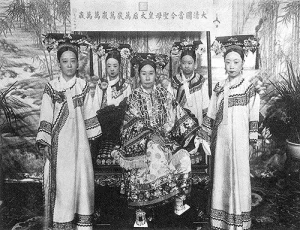
Empress Dowager Cixi (November 29, 1835 – November 15, 1908) was the de facto supreme ruler of the late Qing Empire. (Credit: Xinhua)
2. The Pace of Reform: A Frantic Hundred Days
The reform was disastrously rushed. In just 103 days, the Emperor issued over a hundred edicts, attempting to compress centuries of Western progress into months. Abruptly abolishing the civil service exam and dismissing redundant officials instantly threatened the livelihoods of millions. This radical, impractical approach triggered fierce, widespread resistance from the entire bureaucracy.
Conversely, Japan had spent decades building an intellectual foundation before the Restoration. The new government then spent two years sending the Iwakura Mission to study Europe and the Americas. Only after thoroughly understanding Western societies did they systematically implement major structural and industrial reforms.
Read More: Daniel Jackson, the 21-year-old who seeks to create a new European state
Tears of an Era
The Wuxu Reform’s failure was more than just a political defeat; it marked the absolute dead end for self-improvement within the Qing system.
When the coup erupted, Tan Sitong chose to stay rather than flee, famously declaring: “In all nations, no reform has ever been achieved without bloodshed… if there must be blood, let it begin with me!” Having realized the decaying system could no longer be saved through moderate reform, he used his life as a final warning.
This tragedy shattered the intellectuals’ last illusions about the Qing court. When the rulers chose to sink with their power rather than relinquish it to save the nation, the pendulum of history swung irrevocably toward revolution.
Ultimately, there are no “ifs” in history. Given the power dynamics, social foundations, and international climate of the time, the Hundred Days’ Reform was destined to be a heroic yet hopeless tragedy.
