

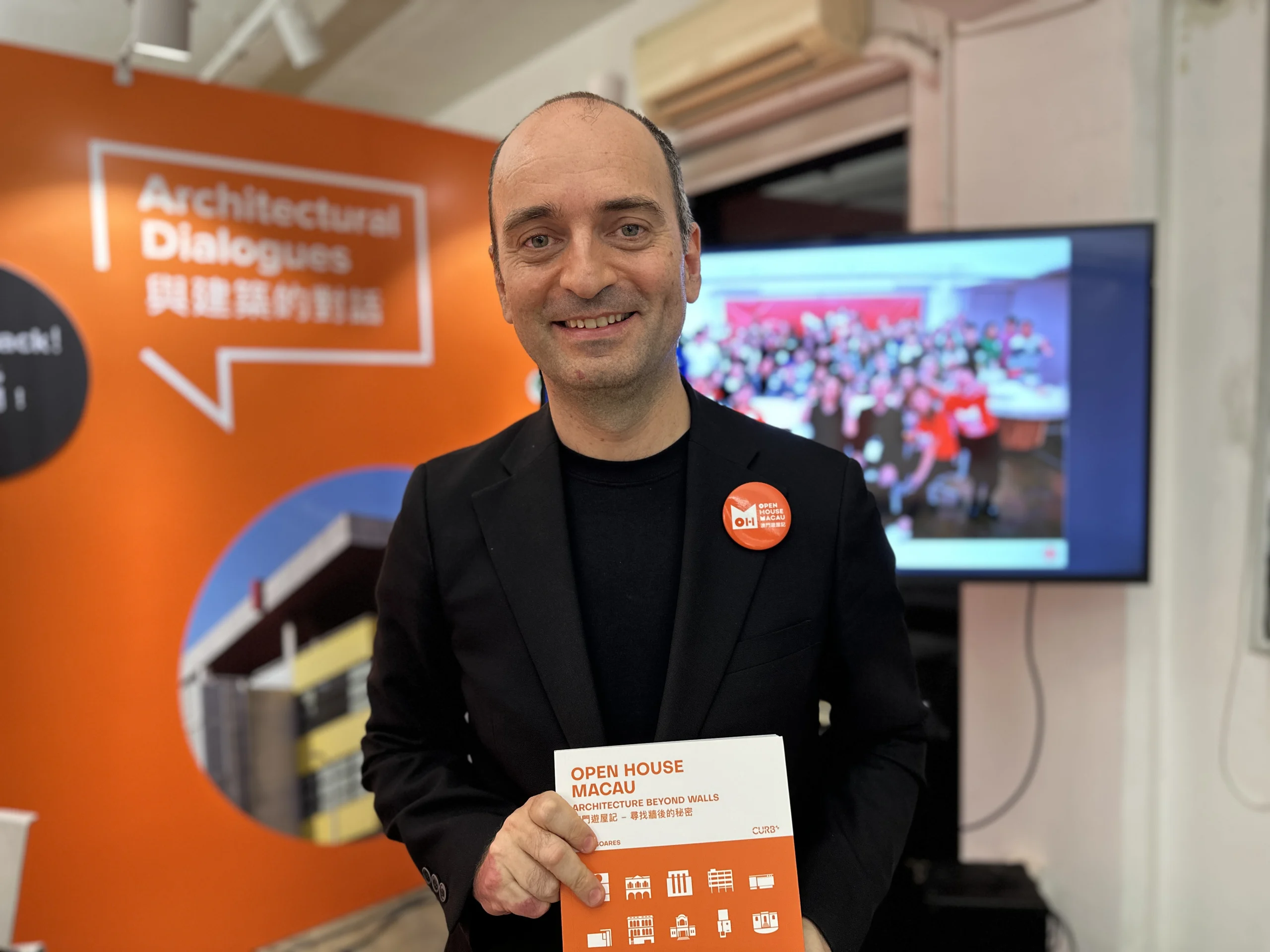
The event returns on November 7 and 8 and invites the community to actively participate by suggesting locations and sharing ideas.
“We want to position Macau as an international center of architecture. We often talk about the gaming industry, which has its reasons. But in terms of architectural culture, Macau also has many stories worth sharing and is a place of great significance. This event aims precisely to draw public attention to that aspect,” said Nuno Soares to PLATAFORMA.
Open House Macau is organized by CURB – the Centre for Architecture and Urbanism – and is part of the international “Open House Worldwide” network, created in London in 1992 and now present in around 60 cities. Macau first hosted the initiative in 2018, marking the event’s debut in Asia.
In the previous edition, 50 sites across the Macau Peninsula were opened to the public, including the Edifício Rainha D. Leonor, TDM, and the Official Residence of the Consul-General of Portugal, some with guided tours. “At the time, we expected around 1,500 participants, but ended up with 5,500—almost four times more than anticipated,” recalls Nuno Soares.
We shape the city through construction, and the city also shapes how we live, move, and think. Our architecture carries these exchanges, reflecting how space is used, transformed, and experienced over time – CURB – Centre for Architecture and Urbanism
This year, the event takes place under the theme “Architectural Dialogues”. Nuno Soares emphasizes that Open House is not exclusive to architects but aimed at the general public, with the goal of showcasing Macau’s architecture while revealing its cultural characteristics.
Read also: Macau: “A Glimpse of Chinese Culture” in Lisbon
“This is a place built through dialogues between different cultures. Therefore, we want to celebrate what is intrinsic to Macau’s culture. At the same time, we aim to raise awareness of the city’s architectural richness,” he says.
The curator clarifies that the focus is not on classified heritage, but on architecture in a broader sense: “These are buildings not officially recognized as heritage. They are large buildings. They are the buildings that make up the fabric of our city.”
The selection of spaces does not follow rigid criteria or official lists; rather, it is “a list of buildings carefully selected by curators and the community.” The organization acknowledges that some locations from the previous edition may not reopen and is collecting suggestions from the public, expanding the initiative from the peninsula to Taipa.
This year, Open House Macau also includes additional activities, such as a photography competition and open studio days
Community participation is considered essential: “This is very important because we know what we know, but the general community knows much more than we do. That’s why it is crucial to listen to them, so we can discover spaces we are not yet aware of,” explains Nuno Soares.
Unlike similar events, Open House Macau generally remains free to attend upon registration. Even so, financial sustainability remains a challenge.
Nuno Soares admits that one of the key “lessons” from the previous edition was the need for greater support, noting that public funding this year remains insufficient to cover all expenses, including preparation, training, and logistics. The organization therefore plans to “seek sponsorships” and generate revenue through the “sale of publications and souvenirs,” while also recruiting volunteers.
Read also: Macau: More Culture, Less ‘Decoration’
As for expectations, the curator points to increasing youth participation. “The idea is to foster a new generation of people who are engaged and capable of celebrating and interacting with the city.”
The goal is to develop a structured program, including research on buildings and logistical training, and to expand the volunteer team to more than 100 people. “This year, we want to expand the volunteer base so that more people can be trained and later develop their own projects.”
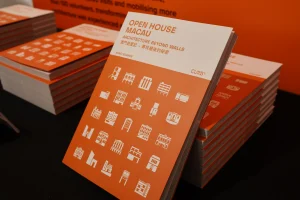
Publication of the book “Open House Macau – Architecture Beyond Walls”
The book offers a retrospective of the pioneering 2018 Open House Macau event. It “opened 50 buildings to the public, mobilized more than 100 volunteers, and attracted thousands of residents and tourists to experience Macau from a new perspective,” explains CURB. The publication includes photographs and texts presenting the history and aesthetic features of the buildings. The organization states that the book “is not only a record of the event, but also positions architecture as a shared cultural resource, highlighting the fundamental role of public participation in building a more inclusive, informed, and active city.”
