

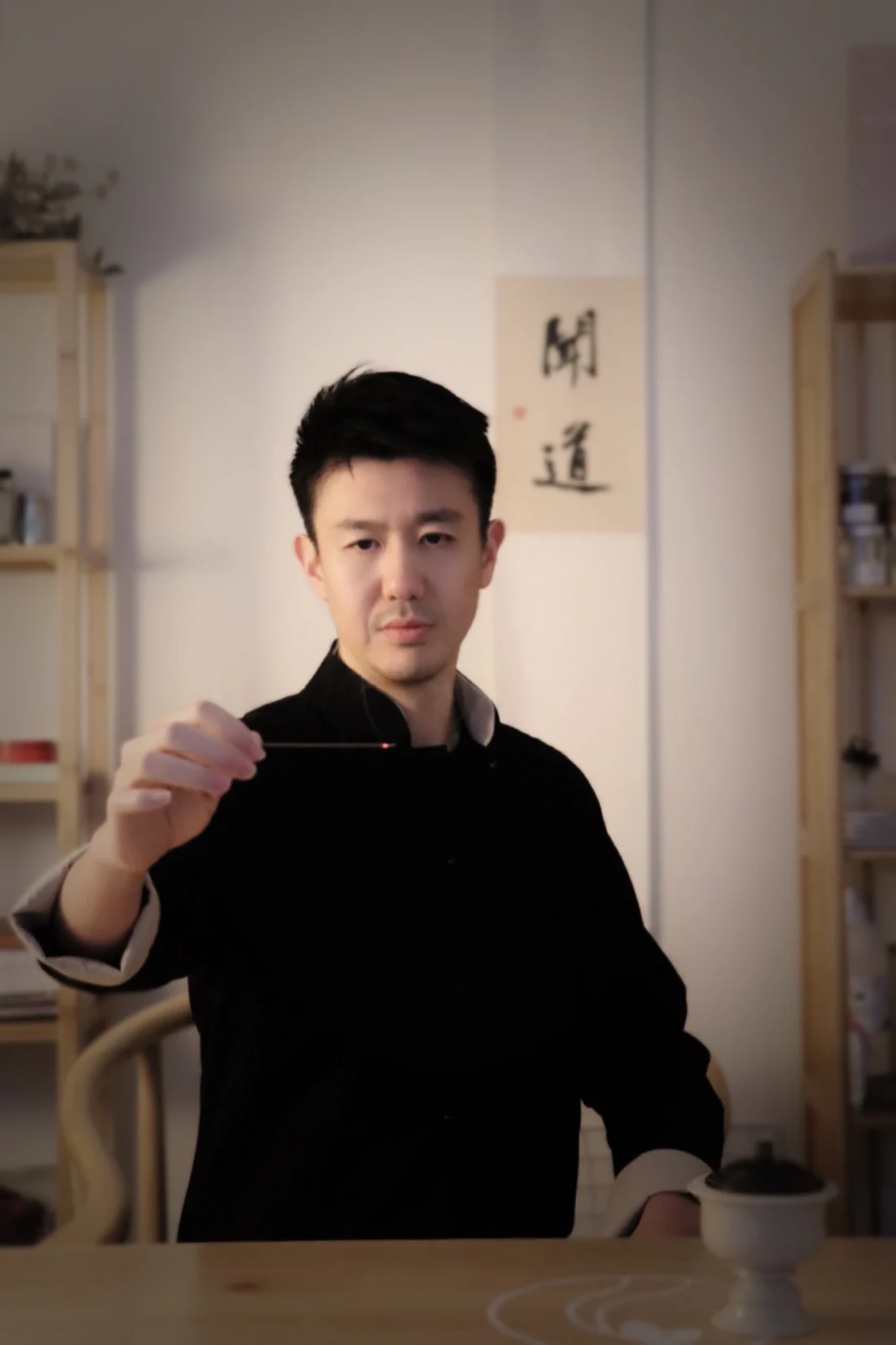
The decision to move into Hengqin emerged as the company transitioned from an offline model to e-commerce. “We wanted to find a pivot that would allow us to gain a presence in the Mainland China market while maintaining our connection to Macau to expand internationally.”
The dynamism of the Hengqin In-Depth Cooperation Zone and the growing advantages of integration between the two regions were decisive factors in the decision.
During the visit to the park, three factors stood out: “strong policy advantages and support for business development; a strategic location, separated from Macau by just a river, with ease of movement; and the concentration of e-commerce, streaming, and cross-border service companies, with a complete industrial chain and an environment aligned with our business.”
As for the setup process, the company did not face any significant difficulties. With the support of the service center, from company registration to the start of operations, “it took about a month and proceeded quite smoothly.” He also highlighted the public service model: “an efficient experience, with continuous support. Matters such as commercial or tax registration receive dedicated assistance, allowing companies to focus on their core business.”
The company is leveraging a model of “Macau platform + international resources + Hengqin space.” “We are making use of Macau’s role as a platform between China and Portuguese-speaking countries, using its international network to promote our brands in those markets and in Southeast Asia,” he told PLATAFORMA.
Read also: Macau and Hengqin as a bridge for Chinese expansion
In practice, the division of roles is clear: Macau ensures international connectivity and brand credibility, while Hengqin concentrates operations, supply chain, and market execution. “The combination of the two realities significantly improves efficiency and results — it is truly a case of 1+1>2.”
[Hangzhou or Shenzhen] stand out for the scale and maturity of their domestic markets; Hengqin stands out for its cross-border orientation and its connection to Macau — J. Kai Cheong Sit, Executive President of Operations at Chi Ao Cultural Co. Ltd.
The company faced typical sector challenges, such as supply chain integration, talent acquisition, and cross-border settlement. According to J. Kai Cheong Sit, the park and the cooperation zone offer concrete solutions: connections to partners, tax incentives, talent housing, and streamlined procedures.
“The park helped us solve the most difficult ‘last mile’ in business development,” he concludes.
From support to expansion
Since setting up in Hengqin, the company has made significant progress. “We have been able to take the brand beyond the city, combining online and offline, and open new opportunities in cross-border e-commerce.” Entry into Portuguese-speaking and Southeast Asian markets is expected in the short term.
More than operational growth, this represents a structural shift: “a transition to an integrated Hengqin–Macau model for global expansion, with a direct impact on the company’s future.”
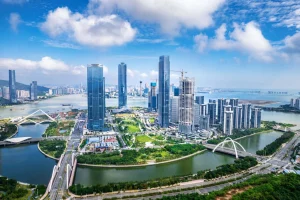
Comparing with hubs such as Hangzhou or Shenzhen, he highlights the difference: “These cities stand out for the scale and maturity of their domestic markets; Hengqin stands out for its cross-border orientation and its connection to Macau.”
The unique advantage lies in the combination of Mainland China’s industrial chain, Macau’s international access, and the specific policies of the cooperation zone. For small and medium-sized enterprises focused on international expansion, “this model is difficult to replicate in other cities.”
Read also: UCCLA delegation highlights technological innovation in Hengqin
For the next phase of the cooperation zone, J. Kai Cheong Sit identifies three priorities: “greater ease in the movement of people and capital between Hengqin and Macau”; “strengthening the e-commerce value chain”; and “more targeted policies for brand internationalization and Sino-Lusophone trade.”
In one sentence, he sums up the park’s positioning: “A high point of Hengqin–Macau cooperation and a gateway to business internationalization.”
