

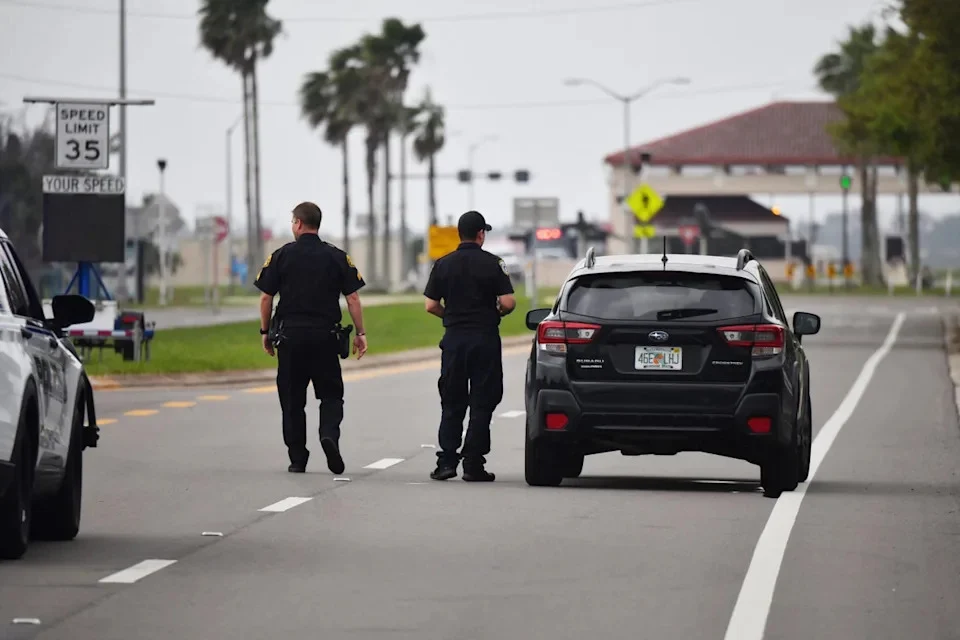
Authorities in Pinellas County, in the state of Florida (USA), have recovered human remains from a local waterway, a tragic development that brings a grim conclusion to the intensive search for Nahida Bristy, a student at the University of South Florida.
The investigation into the tragic deaths of two University of South Florida doctoral students has taken a harrowing turn as authorities piece together a calculated crime involving the misuse of artificial intelligence.
According to the Hillsborough County Sheriff’s Office, 26-year-old Hisham Abugharbieh, a roomate faces two counts of first-degree murder with a weapon (premeditated) in the deaths of Zamil Limon and Nahida Bristy
Zamil Limon and Nahida Bristy, both 27, were reported missing on April 16, sparking an intensive search that culminated in the arrest of Abugharbieh.
Read more: US: teen killed and five injured in Louisiana mall shooting (with videos)
According to CBS News, Abugharbieh appeared in court in Tampa shackled and in a protective gown, currently held without bond while facing additional charges including battery, false imprisonment, tampering with evidence, and failing to report a death.
The home shared by the suspect and Limon became a central crime scene, where investigators found a significant volume of blood that led authorities to conclude that Bristy is also likely deceased.
Bristy’s family has been informed that her body may never be fully recovered due to the alleged dismemberment, a devastating reality for the family of a student who was dedicated to her studies in chemical engineering.
Bay News 9 reports that the discovery was made following a massive search operation that had mobilized local law enforcement, marking a critical and heartbreaking turning point in an investigation that has gripped the campus community.
Read more: Louisiana massacre: man charged with providing gun to killer (with videos)
The recovery process involved forensic teams working in challenging conditions to ensure that evidence was preserved while conducting a recovery that has now transitioned the case from a missing person’s inquiry to a homicide investigation.
The apprehension of the suspect has revealed a deeply disturbing layer to the case, as investigators uncovered evidence that the individual allegedly turned to artificial intelligence to cover their tracks. As reported by NBC News, digital forensics revealed that the suspect utilized the platform ChatGPT to seek advice on how to conceal the crime, specifically asking the chatbot for methods on how to dispose of a human body.
This reliance on a generative AI tool to navigate the logistics of a violent crime highlights a chilling misuse of modern technology, as the suspect reportedly searched for guidance on how to avoid detection by law enforcement immediately surrounding the time of the alleged murder.
The digital trail left behind by these searches provided detectives with a roadmap that corroborated the timeline of events leading to Bristy’s disappearance and subsequent death. By analyzing the suspect’s online activity, authorities were able to piece together the premeditated nature of the attempt to hide the remains, which eventually led them to the waterway where the discovery was made.
Read more: Mexico shooter had materials referencing Columbine school massacre (with videos)
As noted by CBS News, forensic experts are currently working to finalize identification through DNA analysis to provide official closure to the victim’s family, who have remained at the heart of this investigation. The case serves as a dark reminder of how quickly a disappearance can evolve into a criminal tragedy, now forever linked to the suspect’s failed attempt to use technology to evade justice.
The suspect’s history of instability was previously documented, with a 2023 protective order revealing allegations that Abugharbieh had screamed about being a deity who required others to bow down to him.
Now, as the community mourns the loss of two promising scholars—Limon, who was set to present his doctoral thesis on the use of AI in environmental science—the legal system moves forward with a case that will forever serve as a dark reminder of how quickly intellectual promise can be extinguished by violence.
