

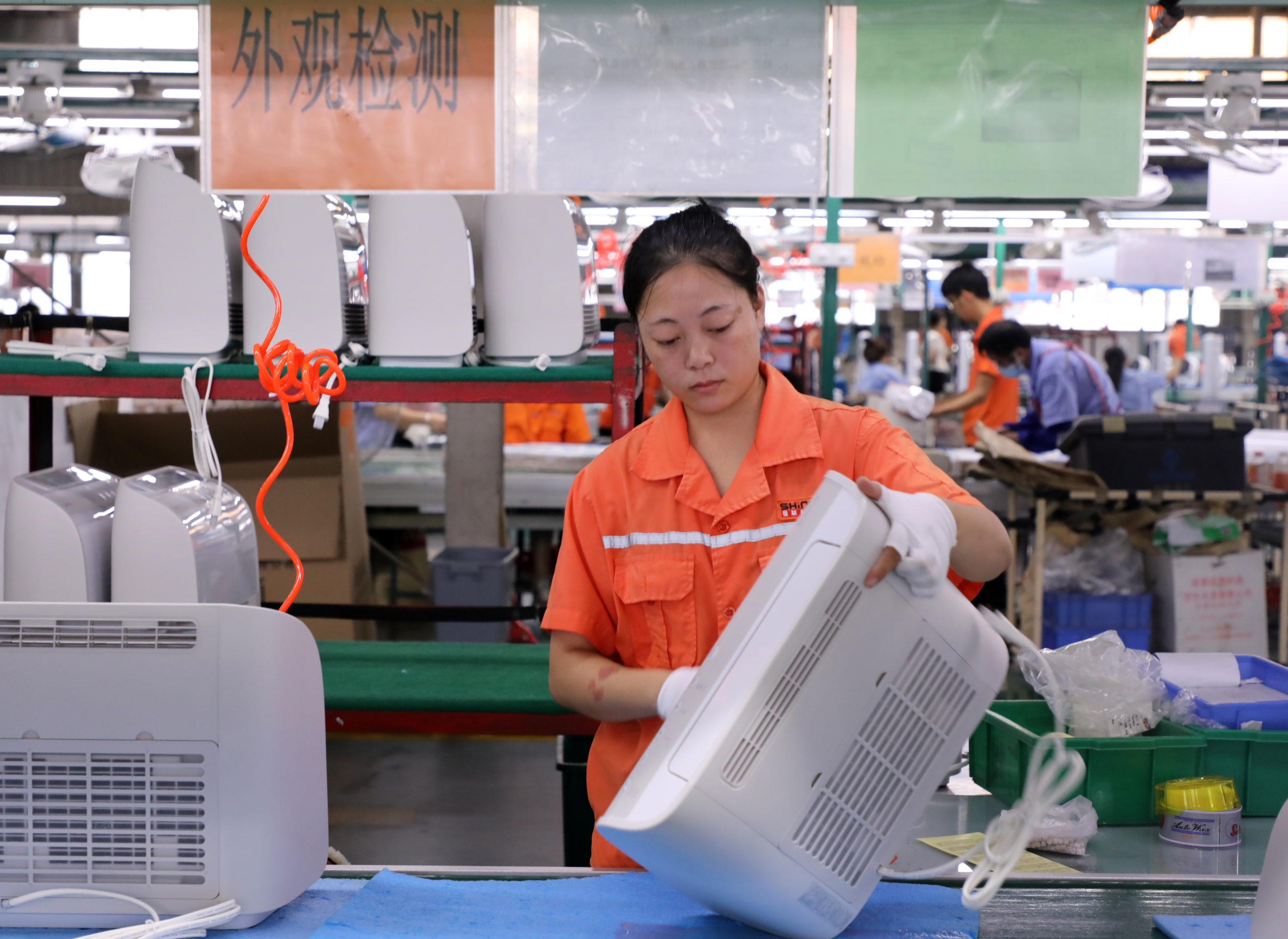
From January to September, China created 10.57 million new urban jobs, achieving 88 percent of the government’s annual target, the ministry said.
Officials credited the improvement to continued implementation of employment support measures. Temporary reductions in unemployment insurance premiums helped businesses cut labour costs by 138.4 billion yuan (US$19 billion) in the first three quarters. Another 19.6 billion yuan was distributed to enterprises as job retention subsidies, while 16.6 billion yuan was allocated to vocational training and job promotion programmes.
China also continued to expand employment through entrepreneurship. Nineteen provinces established more than 60 industry-focused vocational training and skills development platforms to increase the supply of skilled workers in key sectors.
Targeted support measures were rolled out for university graduates and migrant workers—two key labour groups. The MOHRSS said it implemented a “1131” personalised employment service programme for jobless graduates who recently left school, while 42,500 people were recruited nationwide under the “Three Support and One Assistance” rural service programme—over 8,000 more than originally planned. The ministry also strengthened cooperation between labour-exporting and labour-importing regions to stabilise employment among migrant workers, particularly those from households previously lifted out of poverty.
Job-matching services continued across the country, with 56,000 job fairs held nationwide during the first nine months of the year, advertising around 17 million job vacancies. Pilot programmes promoting integration between human resources services and the manufacturing sector have been launched in more than 30 cities.
China’s social security coverage also expanded. As of the end of September, 1.074 billion people were enrolled in the basic pension insurance scheme, while unemployment insurance and work injury insurance covered 248 million and 304 million people respectively. Combined revenue for the three major social insurance funds reached 6.69 trillion yuan in the first nine months, with total expenditure at 6.04 trillion yuan, leaving a cumulative balance of 9.85 trillion yuan. Over 22 million workers were covered by the occupational injury protection pilot scheme.
The ministry added that China’s pool of technical professionals continued to grow, with 36,000 new postdoctoral researchers added in the first three quarters. It also introduced 17 new officially recognised professions and 42 new types of jobs. So far this year, 18 regions have raised their minimum wage levels, while authorities have intensified efforts to prevent wage arrears and strengthen protection of workers’ rights.
