

Cantonese
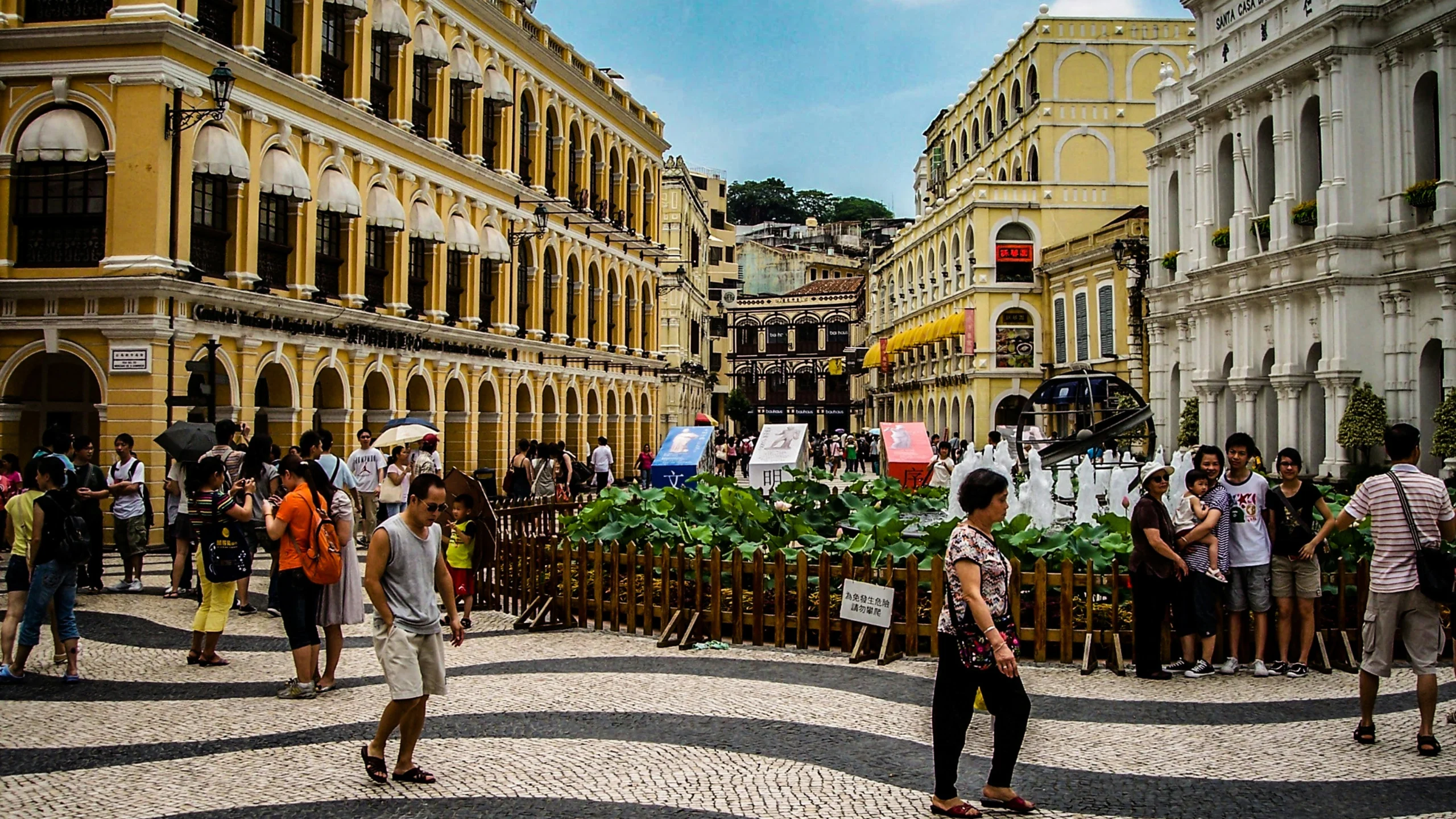
Cantonese, also known as Guangdong dialect, or Baihua, is the language used for communication in Macao’s family, business, and social occasions, and can even be used for writing.
According to the “Detailed Results of the 2021 Population Census” of Macao, among the population aged 3 and above, 91.2% use Chinese as their daily language, with over 80% (538,000) speaking Cantonese, which is the dominant language in Macao.
Mandarin
As the official language of China, Mandarin or Pǔtōnghuà is used second only to Cantonese, accounting for 4.7%. The majority of Mandarin speakers are from Mainland China, who have come to Macao for employment or tourism, making it one of the commonly used languages in Macao.
Chinese Dialects
Additionally, other Chinese dialects such as Minnan, Hakka, and Shanghai account for 5.4%. Although primarily concentrated within specific communities, they carry unique local cultures and traditions.
As more than 60% of visitors from the Mainland China, simplified Chinese are used in the large-scale Integrated Resort in Macao.

English
With the development of the tourism industry, the use of English in Macao is also becoming more prevalent, accounting for 3.6%. With the increase in foreign residents and international tourists, English has become an important tool for local residents to connect with the international community.
Portuguese
Only about 0.6% of Macao’s population use Portuguese as their daily communication language. However, it still holds an important position in government, legal, and cultural activities, as it remains one of Macao’s official languages.
Macanese Patois (Patuá)
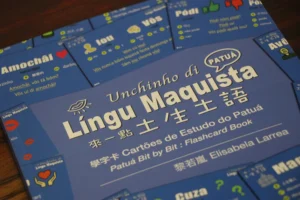
Patuá is a creole language of Macao that was once commonly used within the Macanese community. Linguists believe it was derived from Papiá Cristang of Malacca, a similar Portuguese creole still spoken there today. It was then later influenced by Cantonese, English and Spanish elements, and particularly by the Indian Canarim, a language of Goa.
However, it was classified as a “critically endangered” by UNESCO in 2009, with fewer than 50 remaining speakers. In recent years, some Macanese have been dedicated to the preservation and promotion of Patuá.
Example: Amochâi (dear), means “intimate” in Cantonese, which is half Portuguese and half Cantonese. “Amo” means “love” in Portuguese, and “Châi” is the Cantonese word for “son”.
If you want to learn more about Patuá, click here: “Macau têm na iou-sa coraçám”
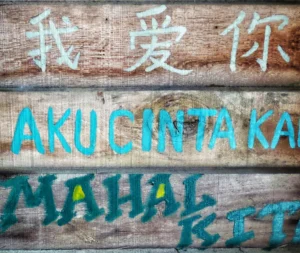
In addition to the languages mentioned above, around 4.6% of the population in Macao uses other languages such as Filipino, Thai, Burmese, and Indonesian. This is mainly due to the large number of foreign employees from these countries, further enriching the linguistic diversity of Macao and demonstrates the city’s international character and inclusiveness.
