

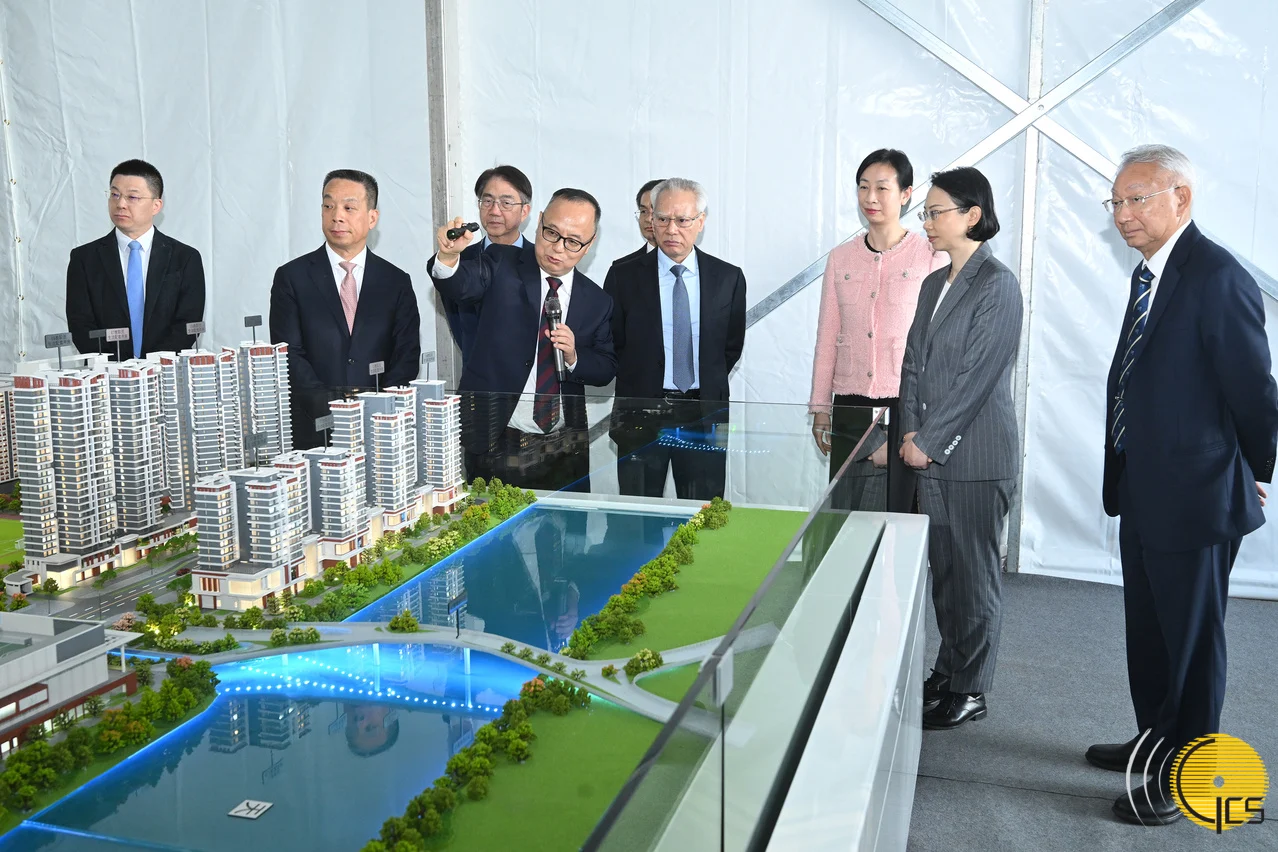
Macau’s integration into the Guangdong-Hong Kong-Macau Greater Bay Area represents one of the most significant strategic opportunities since the establishment of the Macau Special Administrative Region.
More than a regional development initiative, the Greater Bay Area is a long-term vision for building an economic, scientific, technological and human ecosystem capable of positioning China as one of the world’s leading centers of innovation and high-quality development. At the same time, it provides Macau with a unique opportunity to strengthen its role as a bridge between the West and China’s broader opening-up strategy.
The Greater Bay Area brings together nine cities in Guangdong Province—Guangzhou, Shenzhen, Zhuhai, Foshan, Dongguan, Zhongshan, Jiangmen, Huizhou and Zhaoqing—alongside the two Special Administrative Regions of Hong Kong and Macau. None of these cities shares exactly the same characteristics. Each contributes distinct strengths to a common project centered on integration, complementarity and shared development.
Macau stands out because of its international dimension. Over more than four centuries, the city has developed a unique identity shaped by the meeting of different cultures, legal systems, commercial traditions and bodies of knowledge.
That historical experience has transformed Macau into a platform for dialogue between China and the rest of the world, particularly with Portuguese-speaking countries—a role that continues to gain importance within China’s opening-up policy. It is precisely this identity that gives Macau its distinctive place within the Greater Bay Area.
While Shenzhen has established itself as one of the world’s leading centers for technological innovation, Guangzhou continues to strengthen its scientific, industrial and academic leadership, Zhuhai develops new platforms for regional cooperation, and Hong Kong reinforces its position as an international financial hub, Macau contributes something different: the ability to connect economies, cultures, institutions and markets. This complementarity is one of the Greater Bay Area’s greatest strengths.
The success of a region of this scale does not depend on making its cities alike. On the contrary, it depends on turning their differences into competitive advantages.
The diversity of economic specializations, universities, research institutions, logistics infrastructure and international experience creates a regional ecosystem where knowledge, talent, investment and innovation circulate with increasing intensity. For Macau, this represents a structural transformation.
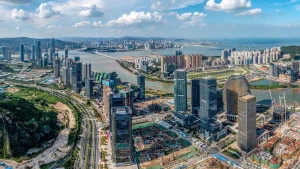
For many years, the city’s limited land area constrained its economic expansion. Today, thanks to deeper regional integration, scale is no longer determined primarily by Macau’s physical size but by its ability to participate in a much broader network of cooperation.
The close relationship with Zhuhai and the development of the Guangdong-Macau In-Depth Cooperation Zone in Hengqin perhaps best illustrate this transformation.
For the first time, Macau has the conditions to combine its human capital, universities, research centers, professional services and international experience with a region specifically designed to accommodate new industries, scientific innovation and large-scale business projects. Yet integration into the Greater Bay Area extends well beyond Hengqin.
It is reflected in the growing mobility of students, researchers, entrepreneurs and highly skilled professionals; in scientific research networks linking universities across different cities; in the development of more sophisticated industrial supply chains; in the flow of investment; in cultural cooperation; and in the creation of new opportunities for younger generations.
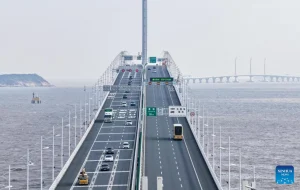
The evolution of regional infrastructure also reflects this integrated vision. The Hong Kong-Zhuhai-Macau Bridge, high-speed rail links, ports, airports and logistics hubs are more than transportation projects. They are instruments that bring territories, economies and people closer together, reducing distances and creating new possibilities for collaboration.
Within this process, Macau can play a role that extends far beyond its geographical size. Its long-standing experience in cooperation with Portuguese-speaking countries, its independent legal system, the international recognition of its higher education institutions, its multicultural heritage and its tradition of intercultural dialogue are all strategic assets that strengthen the Greater Bay Area’s global positioning.
For this reason, regional integration does not require Macau to dilute its identity. On the contrary.
The more Macau reinforces its own distinctive characteristics, the greater its contribution to the development of the Greater Bay Area. What was once seen as a limitation has become a strategic advantage. In a region that includes some of Asia’s most innovative cities, diversity has become a source of collective competitiveness. That is where one of the region’s greatest opportunities for the future lies.
Building the Greater Bay Area is not simply about bringing economies closer together. It means creating a community of innovation, knowledge and sustainable development capable of meeting the challenges of the 21st century. Macau is uniquely positioned to participate actively in this project, contributing its historical experience, international connections and long tradition of openness to the world.
By strengthening its role as a platform for cooperation between China and international markets, as a center for cultural and scientific exchange, and as a meeting place for different legal systems, cultures and civilizations, Macau simultaneously advances its own development and contributes to the success of China’s Greater Bay Area strategy.
The future of the region will ultimately be shaped by each city’s ability to place its unique strengths at the service of a shared objective. And few cities have a tradition of building bridges as deeply rooted in their history as Macau.
