

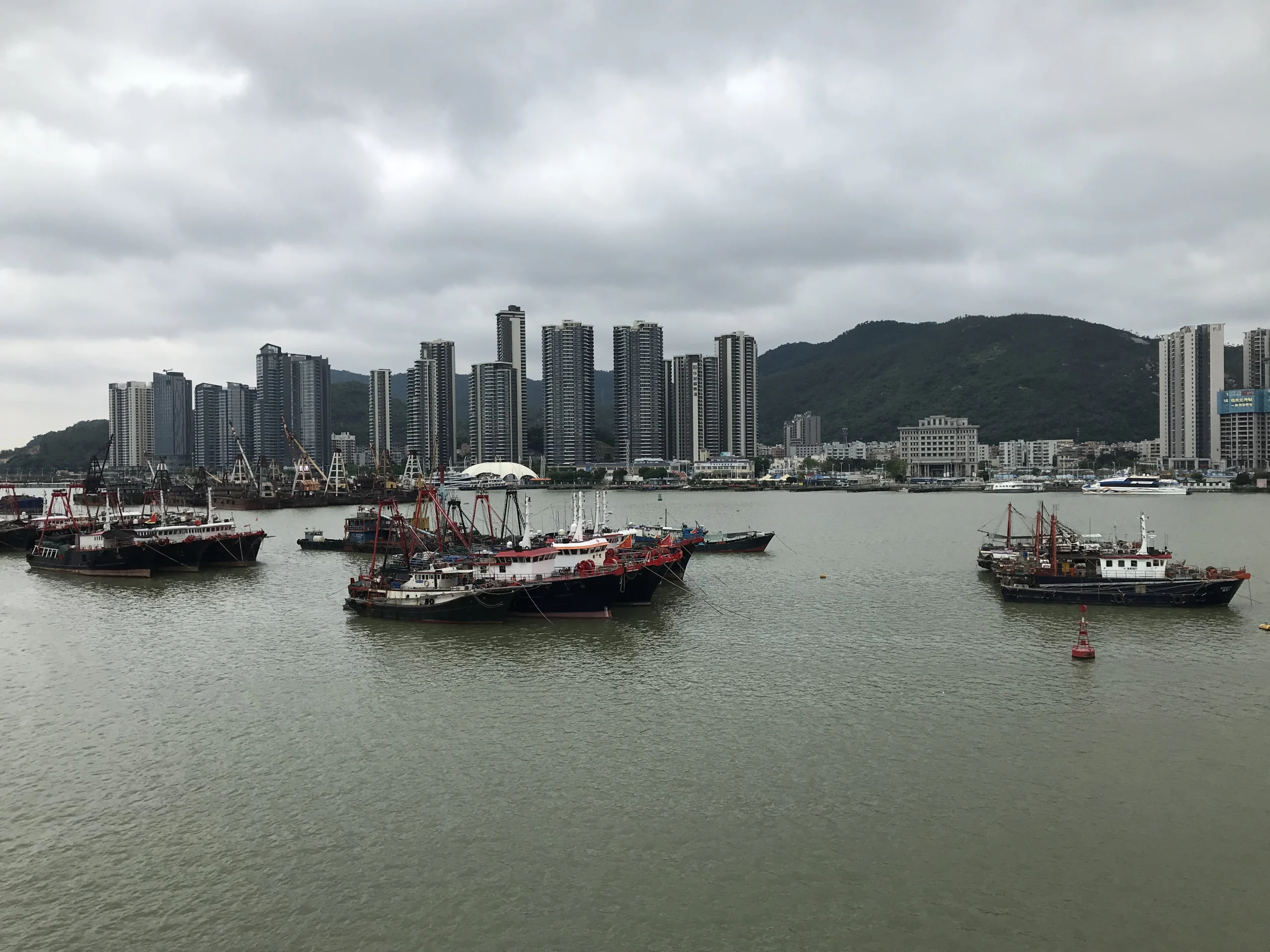
The book stems from a research project funded by the Macau Foundation in 2025 and focuses on water management in the Inner Harbor. André Lui explains that the government’s plan at the time covered “all of the city’s ports,” assigning each of them “specific functions.”
According to the author, today’s renewed attention on the Inner Harbor is driven by contemporary concerns such as “flood control, urban renewal, and revitalization.” Drawing on original Portuguese engineering reports and government memoranda, the book offers a clearer understanding of how the current situation developed and what lessons can be applied today.
The study shows that between the second half of the 19th century and the 1930s, the Inner Harbor underwent major changes to its physical layout, port functions, and coastline. After the Opium War, the opening of Hong Kong reshaped the port system across southern China, weakening Macau’s role as a regional transit port.
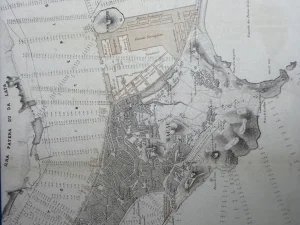
Between 1883 and 1887, then-Governor Tomás de Sousa Rosa ordered the planting of sixty thousand trees, incorporating tree planting into the plans to improve the port and the city
According to an 1884 assessment, the shipyards and timber yards in Patane, San Kio, and Sa Kong declined because of environmental constraints. “Macau faced deteriorating port infrastructure and a loss of competitiveness in ship repair,” Lui told PLATFORM. In response, the government sought to redefine the commercial and transportation functions of the Inner Harbor.
For André Lui, water management was never an end in itself. The broader objective was “to redefine the city’s role,” which required “planning the harbor” and, consequently, “carrying out hydraulic engineering works.” Under a plan drafted in the 1920s, “the land reclamation in what is now the Fai Chi Kei area was intended not only to create anchorage for vessels but also to establish a new industrial district with warehouses,” he explains.
Read more: The Guardian at the Crossroads: Macau’s Na Tcha Belief and Customs of Na Tcha
The Macau government envisioned a large-scale development project that combined port planning with cross-border railway infrastructure designed to support tourism. “The idea was to transform the city into an attractive tourist destination.” Lui notes that officials were already advocating the use of Macau’s peaceful atmosphere “to attract affluent visitors from the Pearl River Delta.”
Between the late 19th century and 1930, the government invested heavily in developing these projects. Construction of the breakwater at the entrance to Ilha Verde was inspired by French engineering practices and relied on floating caisson technology – large hollow concrete structures towed into position and then sunk to form foundations or breakwaters.
The tender for the harbor works attracted Portuguese, British, and Dutch companies at a time when the Netherlands was considered a global leader in water management. Alongside hydraulic engineering projects, planners also proposed new workers’ neighborhoods, tree-lined avenues, and sheltered harbors.
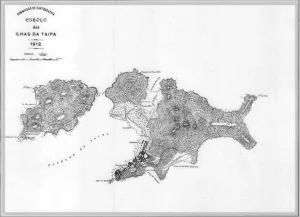
André Lui points to the documentation as the biggest challenge in the research. Engineering documents include both text and drawings, but in Portuguese and online archives, one of these components is often missing. The technical language has also added to the complexity.
However, these ambitious plans were never fully realized. Frequent changes in governors, disagreements over urban planning, and political instability in both Portugal and China ultimately prevented many of the projects from moving forward.
Revitalizing the Inner Harbor today
Although the book explores what Macau might have become had these projects been completed, André Lui acknowledges that “history has no ‘what ifs.’” Even so, he believes that “the ideas of the past can provide valuable lessons for the present.”
With extensive experience in urban planning and heritage conservation, the author is concerned about the future role of each of Macau’s neighborhoods. Regarding the revitalization of the Inner Harbor, he argues that “plans from a century ago can no longer be applied to today’s reality,” but insists on “the need to establish an overall vision for the entire area.”
If cargo terminals are eventually relocated, “it will be necessary to define the area’s future, whether for leisure tourism or another purpose. Without a clear vision for the district as a whole, revitalizing individual terminals will have little impact,” he concludes.
A first self-published book
The slim volume, consisting of only a few dozen pages and featuring a simple design, marks André Lui’s first experience with self-publishing. After working with major publishing houses and associations – where publications often fail to recover their production costs – he was inspired by Macanese writer Manuel Viseu Basílio to try the independent publishing model. The book is currently available exclusively at Livraria Pinto, allowing the author to better monitor sales, and he has not ruled out using the same approach for future research projects.
