

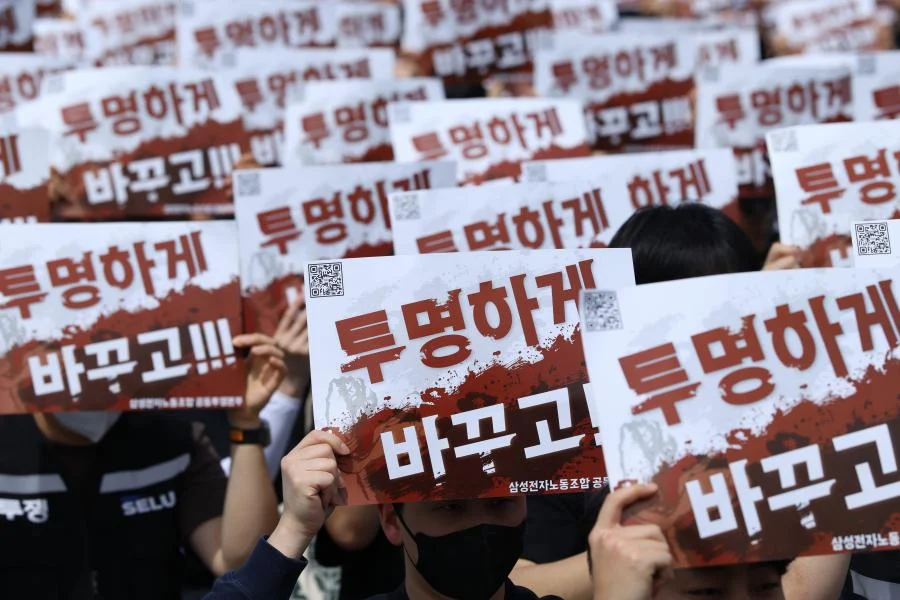
The South Korean government issued an urgent plea today for a resolution to the escalating labor dispute at Samsung Electronics, warning that a planned strike starting May 21 could jeopardize the nation’s economic stability.
Finance Minister Koo Yun-cheol stated that any prolonged work stoppage at the semiconductor giant represents a significant risk to national growth, export targets, and financial markets. Following a high-level meeting with financial authorities, Koo emphasized that the disruption comes at a critical time when global demand for high-end artificial intelligence (AI) chips is reaching unprecedented levels.
In response to the government’s warnings, the Korean Confederation of Trade Unions countered that the rights and dignity of the workers must take priority over discussions of industrial competitiveness. The union argues that the labor force sustaining the semiconductor sector deserves fair compensation and a transparent reward system.
This tension underscores a deepening divide between the corporate drive for global dominance in the AI sector and the domestic labor movement’s push for systemic reform in how performance-based wealth is distributed within the company.
Read more about this topic: Samsung strike looms as last-ditch wage negotiations collapse (with video)
The conflict reached a stalemate on Wednesday after government-mediated talks failed to produce a wage agreement between Samsung management and its labor representatives. The primary point of contention involves the performance bonus structure; workers are demanding the removal of the current 50% annual salary cap on bonuses.
Instead, they are proposing a new incentive system that would reserve 15% of the company’s total operating profit for employee bonuses—a shift that could dramatically increase payouts if Samsung meets its optimistic year-end targets.
Economic analysts and local news outlets like the JoongAng Daily highlight the staggering stakes involved in this 18-day strike, scheduled to run until June 7. If production is halted, Samsung faces potential losses of approximately 18 trillion won, while the broader impact on the South Korean economy could exceed 40 trillion won.
As both sides remain entrenched, the government continues to urge “sincere efforts” to avoid a worst-case scenario that could disrupt the global semiconductor supply chain and dampen South Korea’s post-pandemic recovery.
