

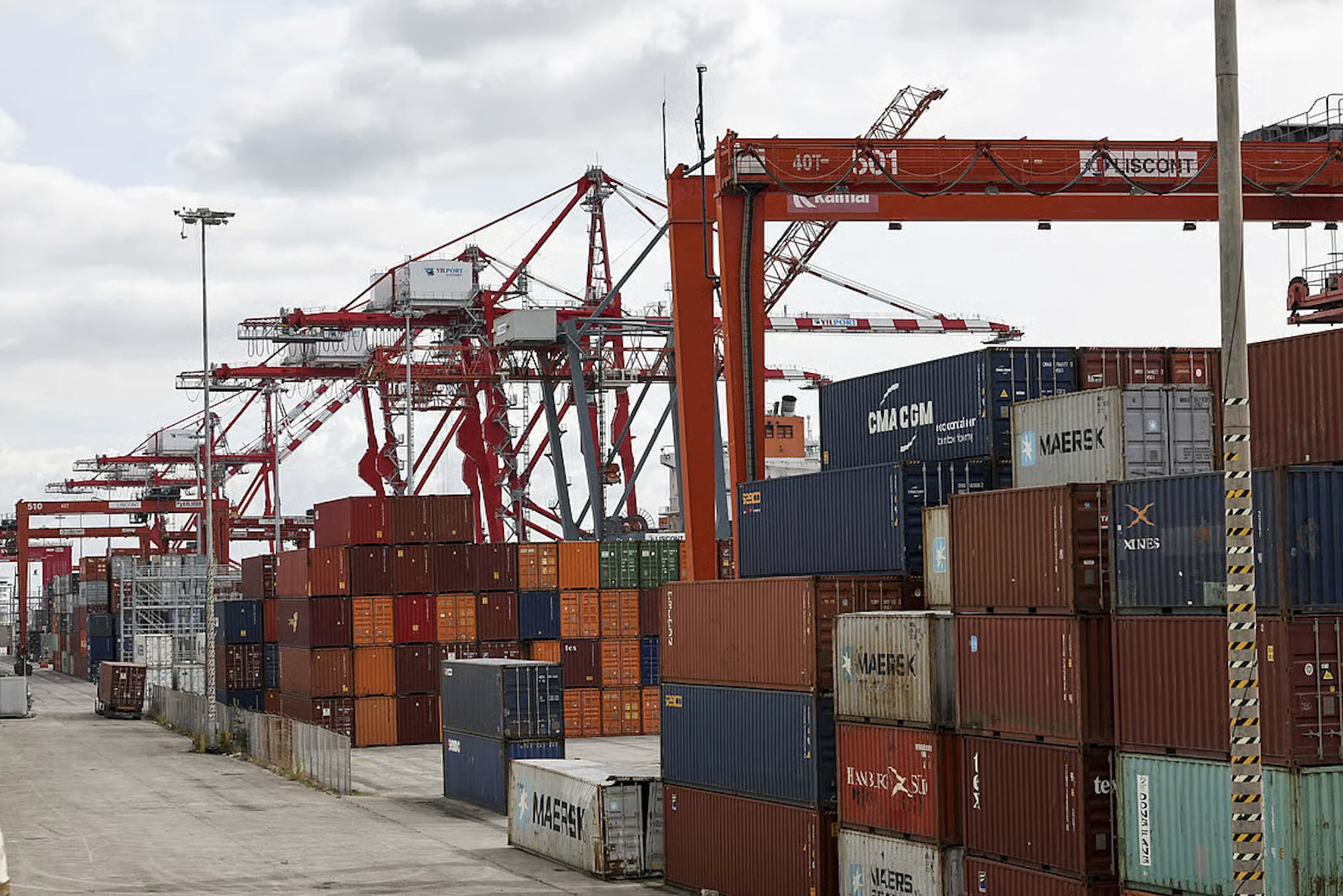
China’s export growth rebounded more than expected, despite disruptions to maritime transport caused by the war in Iran, as trade volumes rose due to a boom in investment in artificial intelligence.
Exports rose 14.1% in April compared with the same month a year earlier, according to a statement released Saturday by China’s General Administration of Customs.
This figure contrasts with the median forecast of 8.4% in a Bloomberg survey of economists and with a 2.5% increase recorded in March. Imports rose 25.3%, resulting in a trade surplus of 71.9 billion euros.
The improvement in exports followed a surprisingly sharp slowdown in China’s exports during the first month of the war, after U.S. and Israeli attacks on Iran and Tehran’s retaliation spread turmoil throughout the Middle East, which extended across the globe.
Read more: Trump plans to “put pressure” on Xi during his visit to China
And with imports of high-tech products, such as chips, surging, China recorded its smallest trade surplus in over a year in March.
Trade imbalances will be a key focus ahead of next week’s summit in Beijing between U.S. President Donald Trump and his Chinese counterpart, Xi Jinping.
The U.S. trade deficit in goods with China increased in March for the third consecutive month, according to data from the Department of Commerce.
Chinese factories circumvented last year’s tit-for-tat tariff war with the U.S. by shipping more products to regions such as Africa and Europe, even facing resistance from countries where they pose a threat to local producers.
Read more: China restricts exports to European firms over Taiwan arms sales
China has been adding its voice to the global pressure for an end to the conflict in the Middle East, which erupted in late February and effectively forced the closure of the Strait of Hormuz.
A sharp decline in traffic through this waterway – vital to the energy sector – risks disrupting imports, driving up oil prices, and threatening foreign demand for Chinese products. Strong overseas sales propelled China to an unprecedented trade surplus of 1.02 trillion euros in 2025.
Shipping volumes recorded so far in 2026 remain, for the most part, above last year’s record levels, thanks in part to strong global demand driven by investments in data centers and energy equipment.
