

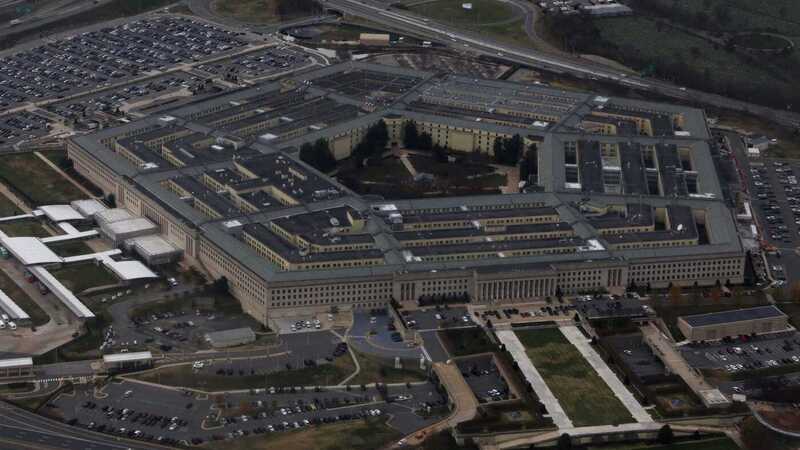
The United States Department of Defense (Pentagon) is pressuring the country’s arms industry to accelerate production, in order to restore its munitions arsenal, which has been depleted by the war with Iran.
Pentagon spokesperson Sean Parnell stated in a statement on Saturday that the Department was actively focused on boosting munitions acquisition to supply “the weapons” that the United States military needs “at the pace the threat demands.” Parnell confirmed the Pentagon’s efforts over the past week to significantly accelerate weapons production, but insisted this was part of a broader modernization effort that predated the five-month-long conflict.
American Deputy Secretary of Defense Steve Feinberg wrote to industry leaders on Wednesday, giving them a maximum of 21 days to submit plans to “promote significantly faster and more aggressive delivery schedules and/or increased production of critical capabilities,” according to a memo obtained by The Washington Post newspaper.
“Multi-year development cycles are not acceptable,” Feinberg wrote. “We have to dramatically accelerate our program timelines and expand our production capacity now.”
Read more about this topic: Trump confronted Hegseth over munitions shortages at Camp David. The White House says it never happened (with video)
The memo comes at a time when recent fighting with Iran has further depleted the already reduced arsenals of advanced missile interceptors held by the American military, which could put American troops at greater risk should hostilities resume, according to a new analysis.
According to the Center for Strategic and International Studies (CSIS), a Washington think tank, the decline in Patriot and THAAD interceptor inventories could force the US and its Middle East allies to take on more risk in order to conserve these air defenses.
The Center noted that American forces may end up launching fewer missiles against incoming Iranian drones and missiles, increasing the likelihood that one of them gets through.
In recent days, American President Donald Trump reacted with irritation to public reports of a munitions shortage, posting on his Truth Social platform on Saturday that the US has “massive amounts” of munitions, and that “large amounts are being manufactured and shipped to the US as needed.”
Read more about this topic: Iran War: Trump willing to let economic pressure shake Tehran (with video)
On Saturday, Parnell confirmed that the memo, which seeks a rapid escalation in weapons production, is “real,” adding that it “will inform the fiscal year 2028 budget submitted to Congress for funding, and is entirely consistent with our ongoing effort to rebuild the defense industrial base.”
A defense spending bill is currently stalled in Congress, with lawmakers angered by Trump’s military action against Iran and resisting the White House’s request to substantially increase the Pentagon’s budget to 1.5 trillion dollars (1.37 trillion euros), compared to around 900 billion dollars (825 billion euros) last year.
The number of Patriot interceptor missiles fell from 2,330 before the war to 1,030 when the April ceasefire took effect, CSIS estimated last month. Following the recent fighting, the stockpile is now estimated to be between 759 and 827, a decrease of at least 65% compared to the period before the conflict began.
The number of THAAD interceptors fell from 452 before the war to between 232 and 262 at the start of the April ceasefire, CSIS indicated. The US managed to replenish part of the inventory to between 234 and 278 interceptors. However, the stockpile remains at least 38% smaller than it was before the conflict.
Read more about this topic: Iran seeks to bar US and Israeli ships from Hormuz, impose tolls on others
The United States Armed Forces also announced this week that they are opening test ranges to private companies developing missiles, drones and other weapons, hoping to be able to purchase them more quickly for use on the battlefield.
