

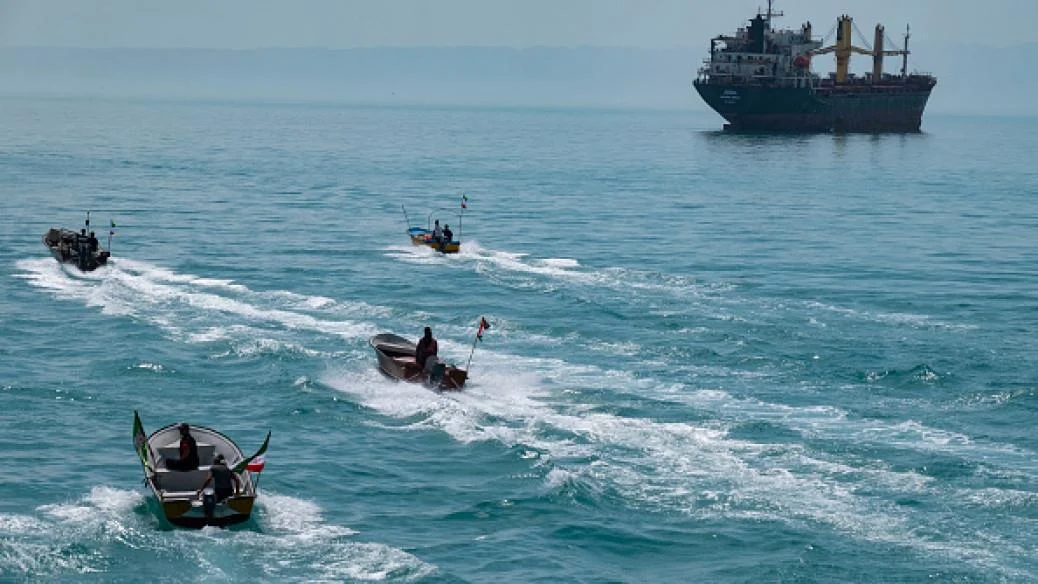
Iran’s parliament is considering a plan that would bar ships connected to the United States, Israel and other so-called hostile countries from passing through the Strait of Hormuz until Tehran receives compensation for war damages, according to Iranian state media.
Under the proposal, commercial vessels transiting the strait would face fees of up to 7% of their cargo value, with fines of 20% imposed on ships that violate Iran’s conditions.
On Wednesday, Iran said it was close to finalizing a separate agreement with Oman, a U.S. ally situated on the opposite side of the strait, governing shipping routes through the waterway. Iranian state media, citing the Foreign Ministry, reported that under the arrangement, ships would enter through a northern corridor near the Iranian coast and exit through a southern corridor closer to Oman. Oman has not commented on the reported agreement.
The Trump administration has pushed back on Iran’s characterization of the deal. A U.S. official, speaking to NPR on condition of anonymity because they weren’t authorized to comment publicly, said any temporary routes established would come without impediments, meaning no approvals, permissions, tolls or charges, describing the Strait of Hormuz as an international waterway that no single party controls.
Read more about this topic: Iran says deal with Oman on Hormuz route is in the final stages
President Trump later added that the U.S. currently controls the strait through its ongoing naval blockade of Iran.
The dispute comes more than five months after the U.S. and Israel launched their war against Iran on February 28. The strait, a critical corridor for crude oil, liquefied natural gas and other goods, remained open to shipping before the conflict began.
After Israel and the U.S. carried out joint military strikes, Iran retaliated across the region and moved to assert control over the waterway. In response to Iran’s blockade of the strait, the U.S. imposed its own naval blockade on Iran in April, reimposing it again in July, an enforcement effort that continues today.
The Trump administration and Iranian leadership had signed a temporary memorandum of understanding in mid-June aimed at ending the war and reopening the strait, but the agreement collapsed within weeks amid renewed strikes between the two sides.
Read more about this topic: Blockade in Hormuz and the Red Sea could affect 25% of world oil traffic
The strait’s closure has significantly disrupted global fuel and fertilizer supplies, driving up prices and destabilizing economies around the world. On Thursday, Trump said negotiations to reopen the strait were making progress. Turkey’s foreign minister, who has been involved in mediation efforts, said Thursday that a temporary agreement between the U.S. and Iran could be announced soon.
Gulf nations, which have borne much of the brunt of Iran’s retaliatory strikes against U.S. military sites during the conflict, have been urging all parties to reach an interim agreement capable of de-escalating regional tensions. These countries remain concerned that further escalation, something Trump has repeatedly threatened, could put their critical oil infrastructure directly in the path of Iranian drones and missiles, risking catastrophic damage.
