

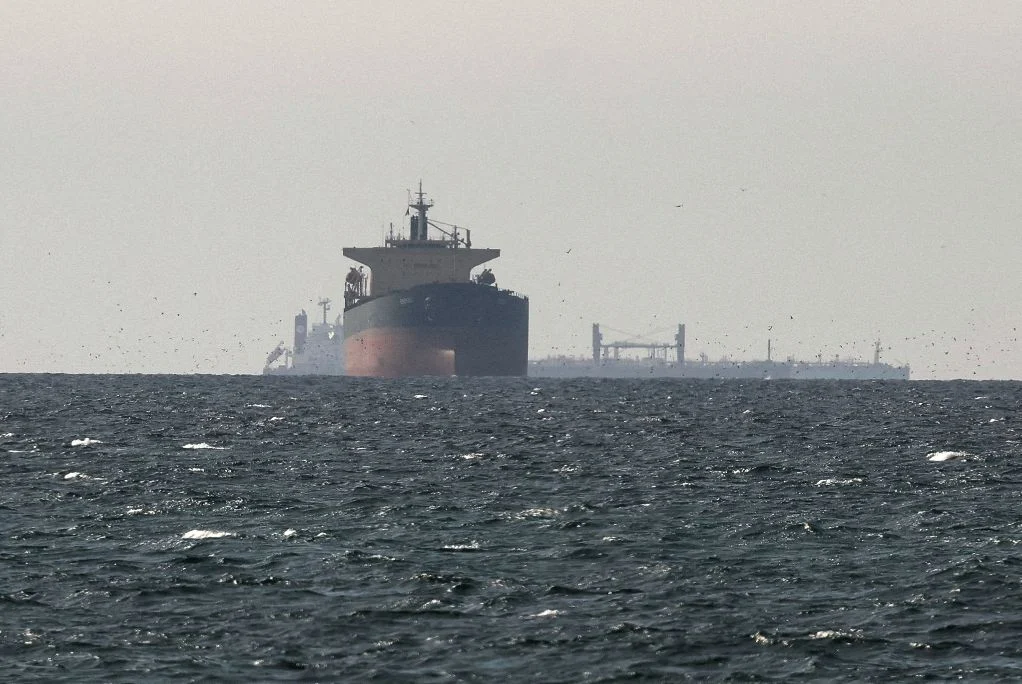
The drop of more than 30% in traffic in the Strait of Hormuz and in Bab al-Mandeb, the gateway to the Red Sea, could affect a quarter of the world’s oil supply routes, it was revealed today.
According to the data analysis and merchant vessel tracking company Kpler, traffic in the Strait of Hormuz registered a decline of 31% on Tuesday.
In Bab al-Mandeb, after Yemen’s Houthi rebels imposed a maritime blockade on Saudi Arabia, the drop in traffic rose to 34% on the same day.
“Maritime traffic continues in both the Strait of Hormuz and Bab al-Mandeb, but operational confidence remains under pressure,” Kpler reported on its X social media account, revealing that on Tuesday traffic “declined sharply in both strategic passages” threatened by blockades resulting from hostilities in the region.
Read more about this topic: Houthi rebels threaten to blockade Saudi Arabia’s Red Sea route. Here’s what that would mean for oil already squeezed by Hormuz
Data collected by the company indicates that on that day only nine ships passed through Hormuz and another 29 through Bab al-Mandeb, a scenario that Kpler attributed to the “context of deteriorating security.”
In addition, the company confirmed “four course-change maneuvers” by ships near the Gulf of Aden, which provides access to the Red Sea, suggesting that “maritime operators are acting with greater caution following the Houthi threats against vessels linked to Saudi Arabia.”
Sumit Ritolia, a Kpler specialist in refined product supply and oil markets, stated on X that tankers loaded with Saudi crude bound for Asia “appear to be waiting in the Red Sea.”
“We are not seeing any Saudi oil transport vessel passing through the strait (although some may have turned off their Automatic Identification Systems), whereas other tankers, such as those carrying Russian crude, continue to transit the area,” he added.
Read more about this topic: Rubio says the U.S. is still open to Iran talks. American strikes on Iranian sites are now in their 11th straight night
Amena Bakr, a Kpler oil specialist, also described the situation as “the biggest disruption to oil flow, with risks concentrated in the Strait of Hormuz, the Red Sea and the CPC pipeline (Caspian Pipeline Consortium).”
Bakr warned that if Bab al-Mandeb and Hormuz “suffer simultaneous and prolonged disruptions, around 25% of the world’s oil supply routes could be affected.”
Saudi Arabia, which has been militarily intervening in Yemen since 2015, was accused by the Houthis of bombing Sana’a International Airport last week to prevent the landing of an Iranian plane, an accusation Riyadh neither confirmed nor denied.
Saudi Arabia, OPEC’s largest producer, now faces a new maritime blockade at a time when Riyadh was exploring alternative routes for its exports, many of which originate from Red Sea ports.
