

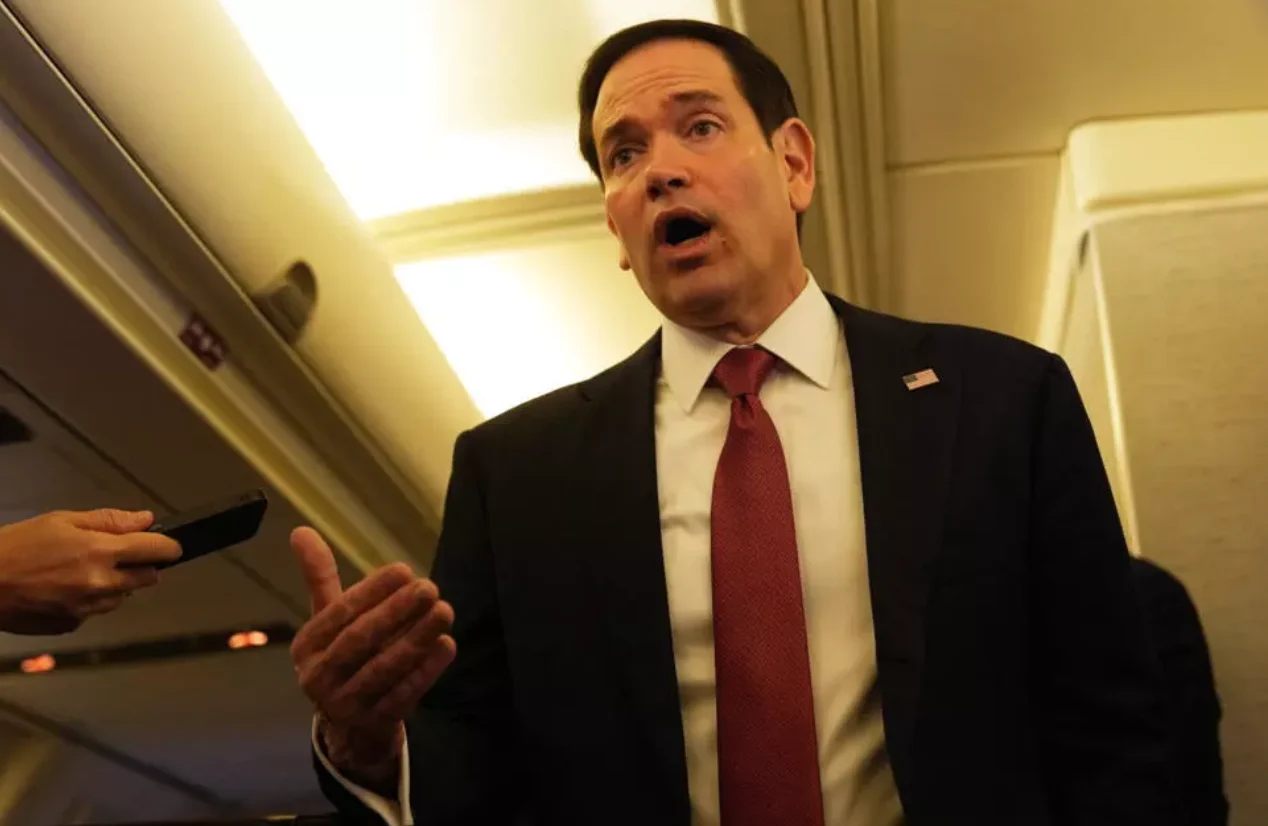
Secretary of State Marco Rubio said Wednesday that Washington is still willing to sit down with Iran, but cautioned that Tehran will face repercussions if it keeps breaking its commitments, as U.S. forces carried out an 11th straight night of strikes on Iranian military sites.
Speaking at the ASEAN Summit in the Philippines, Rubio cast doubt on whether Iran is approaching negotiations in good faith, saying the U.S. is prepared to engage seriously but only if Tehran is too. He framed the choice as Iran’s to make, warning that Washington would act as needed to safeguard its own interests and those of its allies if diplomacy continued to stall.
At the center of the standoff, according to Rubio, is Iran’s demand for control over shipping through the Strait of Hormuz, a claim he said has no legal basis. He argued that conceding such authority to any single nation-state would set a damaging precedent that other regions could later see repeated, framing it as a threat to the broader principle of freedom of navigation.
Rubio said allowing a country to dictate passage through an international waterway, and to attack vessels of those who don’t comply, would put both the global economy and more than a century and a half of established trade norms at risk.
Read more about this topic: Houthi rebels threaten to blockade Saudi Arabia’s Red Sea route. Here’s what that would mean for oil already squeezed by Hormuz
His remarks landed just past the midpoint of the 60-day negotiating period set out in a June 17 memorandum of understanding between Washington and Tehran, an agreement meant to address Iran’s nuclear and missile programs, sanctions relief, and navigation rights through the strait.
Rather than easing tensions, the period since has brought the two countries closer to open conflict, with Iran continuing to target commercial ships in the strait even as American forces keep striking Iranian military positions across the region.
President Trump has already declared the ceasefire finished, though he said Tuesday that Iran is eager to restart talks. Rubio’s comments tracked closely with that message, signaling that the administration still sees a diplomatic path forward while making clear the military option remains firmly on the table.
He said the U.S. would continue engaging in good-faith negotiations as long as Iran honors whatever it agrees to, but stressed that consequences are unavoidable when those commitments aren’t kept, calling that response simply necessary.
Read more about this topic: Pentagon disagrees with report detailing hidden casualties in Iran War (with video)
Rubio added that keeping the threat of military action credible is essential to stopping Iran from using its position to choke off one of the world’s most critical shipping corridors. Without that leverage, he said, a substantial share of the region’s energy exports, representing roughly a fifth of global energy supply, would effectively be held hostage by what he described as a rogue regime.
