

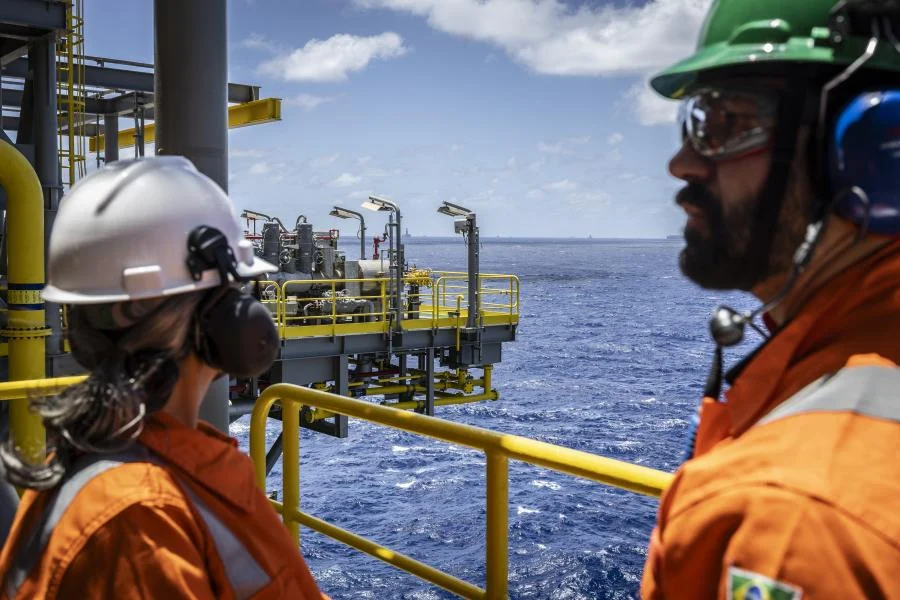
According to the National Petroleum Agency (ANP), the country reached a daily extraction average of 5.53 million barrels of oil equivalent (boe). Specifically, crude oil production hit 4.24 million barrels per day, reflecting a 4.6% increase from February and a significant 17.3% jump compared to March 2025.
Natural gas production also saw substantial gains, reaching 204.11 million cubic meters per day. This represents a 23.3% surge over the previous year. The “pre-salt” layer remains the engine of the Brazilian energy sector, accounting for 79.9% of total national production in March across 184 wells.
The ANP noted that offshore fields continue to dominate the landscape, providing 98% of the country’s oil and nearly 88% of its natural gas.
Read more: Extreme heat threatens agriculture and food security in Brazil
State-owned Petrobras remains the primary driver of this output, operating fields that contribute over 88% of Brazil’s total hydrocarbons, whether independently or through consortia.
Regionally, the Santos Basin remains the most productive area; the Búzios field led in oil extraction with over 886,000 barrels per day, while the Mero field secured the top spot for natural gas production.
