

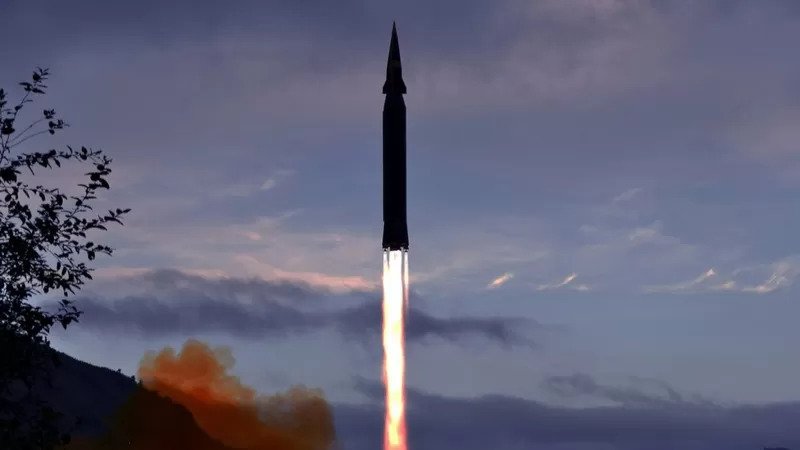
During the Victory Day parade in September 2025, the People’s Liberation Army showcased two new weapons: the CJ-1000, a road-mobile long-range cruise missile, and the YJ-19, a ship-launched variant. Both are powered by scramjet engines, enabling sustained flight at speeds above Mach 5 while maintaining maneuverability. Until now, only Russia’s Zircon missile had entered service in this category.
Military experts warn that such systems pose a formidable challenge to conventional missile shields. Unlike ballistic missiles, hypersonic weapons can alter their trajectory mid-flight, making interception extremely difficult. “These platforms could leave air defenses powerless,” one analyst noted.
The United States, long considered a leader in advanced weapons development, has yet to field an operational scramjet-powered missile. While American prototypes remain in testing, China’s deployment signals a widening technological gap in a domain critical to future warfare.
Beyond the technical achievement, the CJ-1000 and YJ-19 highlight Beijing’s determination to accelerate military modernization and project deterrence. Their introduction underscores a broader strategic competition in hypersonic technology, with Russia and China now fielding systems that the US and its allies are still struggling to match.
