

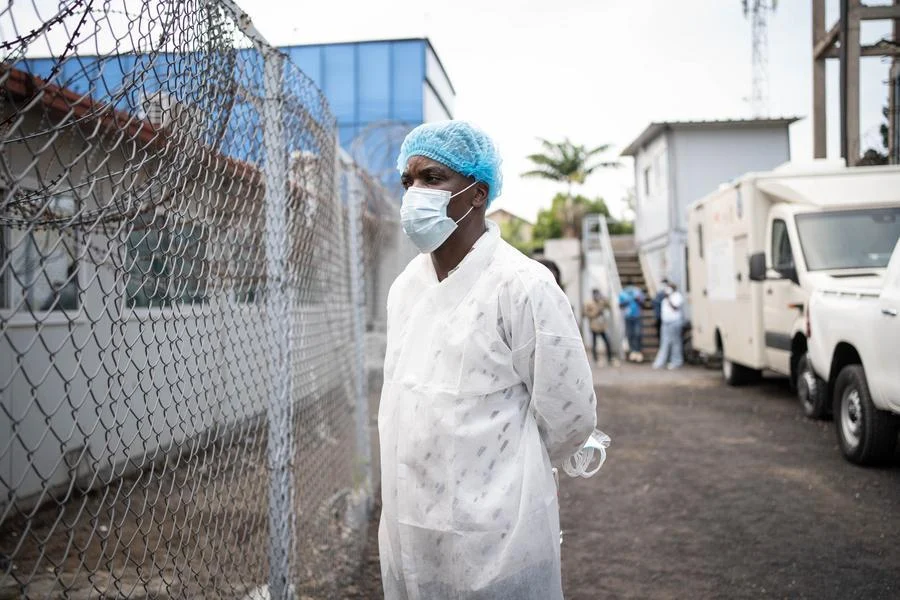
On May 15, 2026, researchers in the Democratic Republic of Congo (DRC) identified an outbreak of the Bundibugyo strain of Ebola — one of four strains known to cause disease in humans. The World Health Organization declared a Public Health Emergency of International Concern on May 17, its highest level of alert.
The outbreak is centred in northeastern DRC, specifically in the provinces of Ituri, Nord-Kivu, and Sud-Kivu. As of late May, there are more than 900 suspected cases and over 230 deaths. Cases have also been confirmed across the border in Uganda, though with clear travel links to DRC, suggesting local transmission there has not yet begun.
This is already the third largest Ebola outbreak ever recorded — and it was that large the moment it was detected. “It’s going to be all the more challenging to contain, because it’s had so much time to spread,” said Amesh Adalja, assistant professor at the Johns Hopkins Bloomberg School of Public Health.
“We don’t really know exactly what’s going on on the ground. We don’t know all the chains of transmission.”
Read more about this topic: Ebola: European disease center insists risk to EU is low
Colleagues at Imperial College London have suggested the true case count could be double the reported figures, meaning wider transmission than official numbers reflect is probably already happening.
What Is the Bundibugyo Strain?
Ebola is caused by a family of viruses that circulate in fruit bats in central and west Africa. The four strains known to infect humans are Zaire, Sudan, Bundibugyo, and Taï Forest. The Zaire strain has driven the largest and deadliest outbreaks in history, including the catastrophic 2014–2016 West Africa epidemic. Bundibugyo is rarer, but still deadly — it carries a fatality rate of between 25 and 50 percent without treatment.
Critically, the Bundibugyo strain currently has no approved vaccine and no targeted therapeutics. The vaccines and monoclonal antibody treatments developed after 2014 — which proved transformative in controlling the 2018–2020 DRC outbreak — were designed specifically for the Zaire strain and are unlikely to work against Bundibugyo.
“We’re effectively back to where we were before 2014,” said infectious disease expert Dr. Charles Whittaker, “relying on supportive care and the older public health measures: case isolation, contact tracing, safe burials, community engagement.”
Experimental vaccine candidates and monoclonal antibody therapies for Bundibugyo are under evaluation, but deployment is expected to take time.
Read more about this topic: Macau imposes 21-day monitoring on travelers from Ebola-affected regions
The one meaningful tool that remains is supportive care — intravenous fluids, electrolyte replacement, blood pressure management — which Adalja notes “can go a long way to decreasing the mortality” even without strain-specific treatments. During the 2014 outbreak, patients evacuated to hospitals in Europe and the U.S. had a mortality rate closer to 20 percent, compared to 40 to 70 percent across affected countries where intensive care was unavailable.
Why Is This Outbreak Particularly Hard to Contain?
The combination of where it is happening and what tools are available makes this outbreak unusually difficult to manage.
Eastern DRC has experienced years of armed conflict, extreme poverty, and population displacement. Hospitals are overstretched. Communities are understandably wary of outside responders — last week, a crowd set fire to hospital tents near Bunia after being told a body would not be released for burial. “Community sensitisation has to be the foundation of any response,” Whittaker said. “The technical interventions build on top of it.”
Read more about this topic: Macau to strengthen screening amid Ebola outbreak (with video)
The response infrastructure in the region has also weakened since the last major outbreak. As Whittaker described it: “A weaker WHO presence after the U.S. withdrawal. Less foreign aid going in. The same insecurity and displaced populations, with several more years of conflict on top.”
Paul Spiegel, director of the Johns Hopkins Center for Humanitarian Health, noted that personnel from both the African CDC and U.S. Centers for Disease Control and Prevention are actively engaged on the ground — but that the overall environment is significantly more constrained than during previous responses.
Should People Outside the Region Be Worried?
The CDC and WHO both currently assess the global risk as low, and that assessment is grounded in biology. Ebola does not spread through the air. It requires direct contact with the bodily fluids of someone who is already visibly ill — it does not transmit before symptoms appear. That single feature makes it fundamentally different from a virus like COVID-19, which spread freely from people who did not yet know they were infected.
“Even if sporadic cases linked to travel from the region show up in the U.S., there’s a defined playbook,” Whittaker said. “Identify, isolate, trace contacts, treat.” That playbook worked in 2014, when a small number of imported cases — mostly returning healthcare workers — were managed without any wider spread.
Read more about this topic: Hong Kong strengthens screening from Africa amid Ebola outbreak (with video)
The U.S. has approximately 13 Ebola treatment centres equipped for the highest level of biocontainment. “We are prepared for this. We learned these lessons back in the 2013–2014 Ebola outbreak,” Adalja told ABC News.
One note of caution, however: sweeping cuts to U.S. public health infrastructure have left the system in a weaker position. “Even a couple of cases in the U.S. would be challenging with our current workforce,” immunologist Gigi Gronvall, a professor at Johns Hopkins, told The Guardian, adding that the country is “worse off now to handle infectious disease threats than at the start of COVID-19.”
