

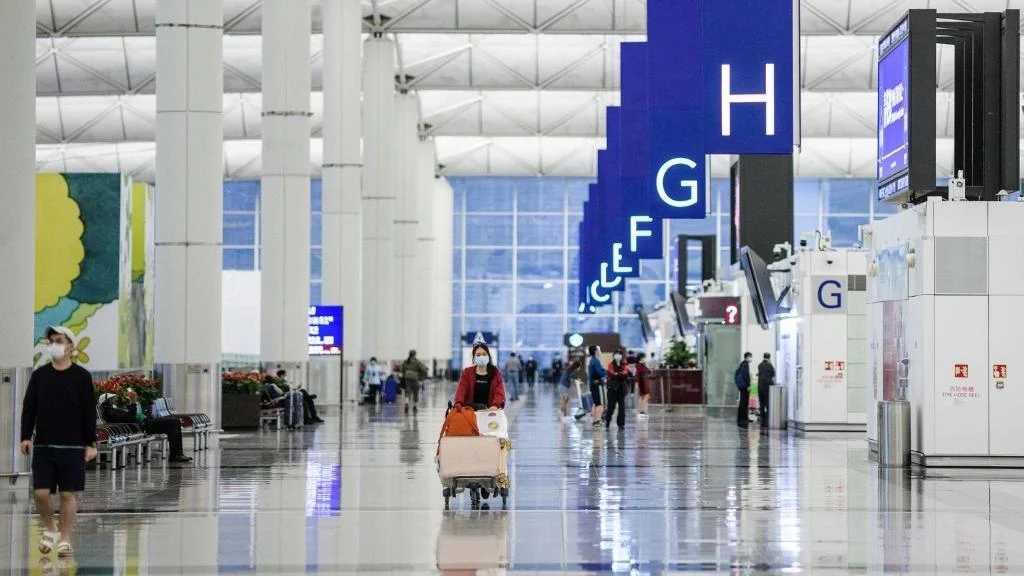
The Government of Hong Kong announced an upgrade to health controls for travelers arriving at its local airport from Africa due to an Ebola outbreak in the Democratic Republic of the Congo (DR Congo) and Uganda. The Center for Health Protection (CHP) stated that it has implemented the lowest of its three response alert levels and confirmed the immediate deployment of health teams directly to the airport.
The primary objective is to conduct mandatory temperature screenings at relevant boarding gates and perform detailed medical evaluations on any inbound passengers who display active symptoms, the CHP explained.
Despite taking these preventative measures, authorities emphasized that no case of Ebola has ever been recorded in Hong Kong and that no direct flights exist between the territory and DR Congo or Uganda.
The CHP consulted with aviation and travel sectors and discovered that travelers originating from these specific regions generally choose to make a flight transfer in Addis Ababa, the capital of Ethiopia. The regional response follows the World Health Organization (WHO) declaring the situation a Public Health Emergency of International Concern on Sunday, its second-highest alert level.
Read more: China denounces UK’s conviction of two former Hong Kong police officers
According to a statement released by the global health body, WHO Director-General Tedros Adhanom Ghebreyesus determined that the current viral outbreak does not meet the specific criteria required for a full pandemic emergency.
The latest epidemiological data indicates that the virus has already caused at least 88 deaths out of 336 suspected cases within the territory of the DR Congo. Meanwhile, Uganda has reported two confirmed cases with no apparent connection in its capital city of Kampala among individuals who had recently traveled from the neighboring DR Congo.
The National Institute of Biomedical Research in the DR Congo also confirmed the first case of Ebola infection in Goma, a major eastern city currently controlled by the M23 anti-government armed group. The WHO warned that the high positivity rate of initial biological samples and the confirmation of cases in Kampala and Kinshasa point toward a potentially much larger outbreak than what is currently being detected.
Furthermore, the organization highlighted that, unlike other historical strains, there are currently no approved treatments or vaccines specifically for this Bundibugyo virus strain.
