

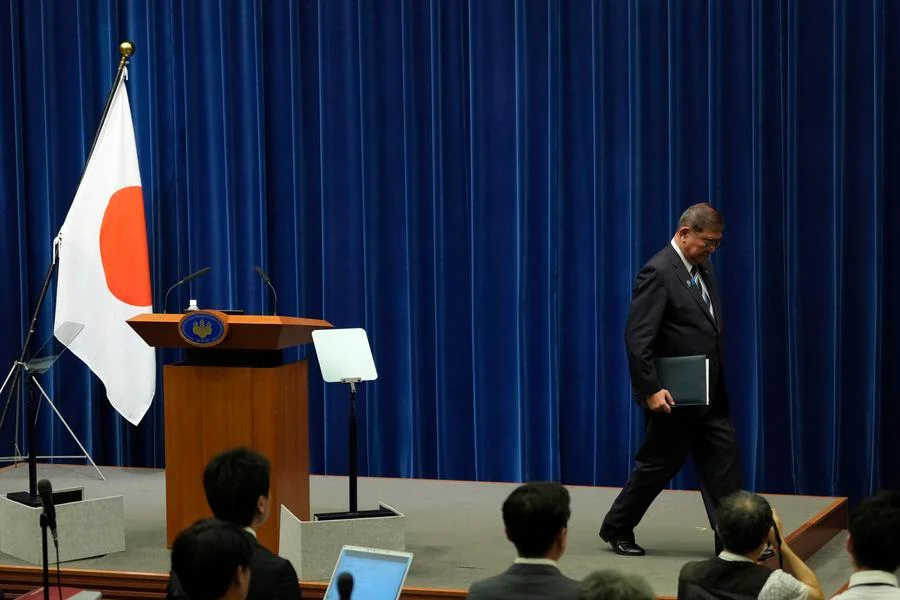
He also said he would not stand as a candidate in the upcoming LDP election.
WHY NOW
Ishiba was elected LDP president in September last year, with his term scheduled to run until September 2027. However, the ruling coalition lost its majority in the House of Councillors in July this year.
This was the first time since its founding in 1955 that the LDP has failed to secure a majority in both chambers of the parliament.
Although Ishiba initially signaled his intention to stay on, calls for him to take responsibility for the dismal election showing grew louder inside the LDP.
At his Sunday press conference, Ishiba said negotiations with the United States on tariff measures, which he had cited as a reason to remain in office, had reached a milestone. With that issue settled for now, he said it was time to hand over to a successor.
WHO MIGHT SUCCEED HIM
With Ishiba’s resignation, the LDP will move to select a new president with an extraordinary election scheduled later.
According to Japanese media, potential contenders include:
Sanae Takaichi: Former minister for economic security, a prominent right-wing politician known for repeated visits to the notorious Yasukuni Shrine. She lost to Ishiba in last year’s runoff for the LDP presidency.
Shinjiro Koizumi: Current agriculture minister and son of former Prime Minister Junichiro Koizumi. A rising star, he finished third in last year’s leadership race.
Takayuki Kobayashi: A 50-year-old former economic security minister, who ranked fifth in last year’s LDP presidential contest.
Yoshimasa Hayashi: The current chief cabinet secretary and a former foreign minister. He placed fourth in the last leadership election.
Once a new LDP president is chosen, the parliament will hold a prime ministerial designation vote.
Even though the ruling bloc has failed to secure a majority in both chambers of the parliament, the new leader is almost certain to become the country’s next prime minister since the LDP remains the largest party, analysts said.
