

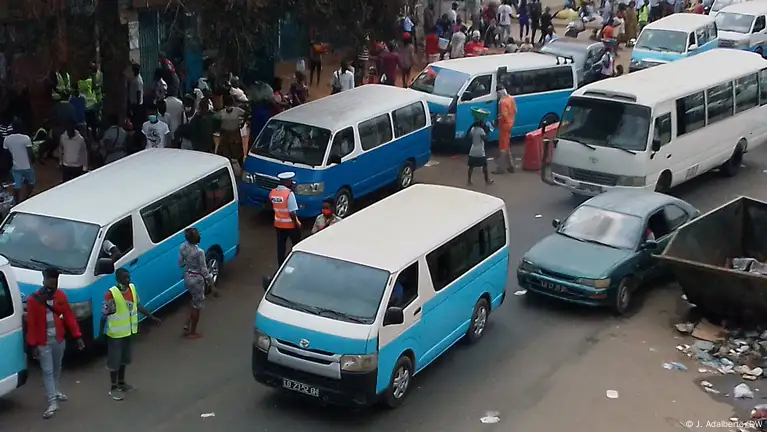
The riots that took place between 28 and 30 July in Luanda and the interior of Angola – which resulted in at least 30 deaths, more than 200 injuries and 1,500 arrests – following the strike called by taxi drivers, were debated in parliament today, at the proposal of the parliamentary groups of the MPLA (power) and UNITA (opposition).
Earlier, the parliament held a minute’s silence in memory of the victims, at the request of the speaker of parliament, Carolina Cerqueira. In the debate, the first vice-president of the parliamentary group of the Popular Movement for the Liberation of Angola (MPLA, in power since 1975), lamented the “tragic episodes” at the end of July, saying that each death represents an irreparable loss for the families.
“No Angolan should see their existence interrupted by acts of violence that build nothing, but destroy everything (…). We are here not only to debate, but to reaffirm with clarity and conviction that Angola will not accept violence and disorder as instruments of change,” said Virgílio Tyova.
“Our path will always be one of dialogue, law and respect for life. It is therefore right and imperative to recognise and praise the role of the security forces, particularly the national police,” he said.
For Virgílio Tchova, Angola has sacrificed a lot to build a constitutional order that gives everyone a voice and he noted that those who want to protest have “the channels to do so”. “Those who resort to violence turn brother against brother and tear at the fabric of our coexistence,” he added.
Álvaro Chikwamanga, MP for the National Union for the Total Independence of Angola (UNITA, the largest opposition party), considered that the events were the result of a “number of critical factors”, namely the systematic violation of the Constitution, “poor service provided by the public media, failure in state security, and hunger and poverty”.
He also listed the population exodus to the big cities and the “late reaction” of the Angolan president, João Lourenço, and the superficial analysis of the real factors of political and social instability in the country as other factors that stimulated the protests.
The late reaction of the country’s president, who didn’t make a timely statement about the seriousness of the uprising, seemed to show indifference to the event and encouraged the police to shoot defenceless civilians at point-blank range,” he said.
For the opposition Social Renewal Party (PRS), MP Benedito Daniel condemned the episodes, noting that his party is not against strikes, but that this right must be exercised in accordance with the law.
“There was a lack of dialogue between the government and the taxi drivers’ associations, the strike turned into a social upheaval (…) We need to solve the problems of hunger peacefully, with dialogue and proximity,” he argued.
MP Florbela Malaquias, leader of the Humanist Party of Angola (PHA, opposition), called on the “inciters of violence” to refrain from manipulating legitimate popular discontent for purposes unrelated to the national interest. “Manufactured agitation and the instigation of confrontation (…) do not build democracy, they destroy lives, heritage and social trust,” she said, also urging the police to respect the “principles of legality, necessity, proportionality and humanity.
‘ UNITA MP Abel Sapinãla accused the Angolan president of being “to blame” for the acts of vandalism, considering that “he has failed miserably in his governance”. “If there is one person to blame for the situation (…) it’s the President, João Lourenço, there’s no point in lying,” he said.
MPLA MP Elizandra Gourgel said that the events “don’t represent” what young people want for the country: “We want an Angola that keeps its guns silent, with political and social stability and economic development”.
Platform with Lusa
