

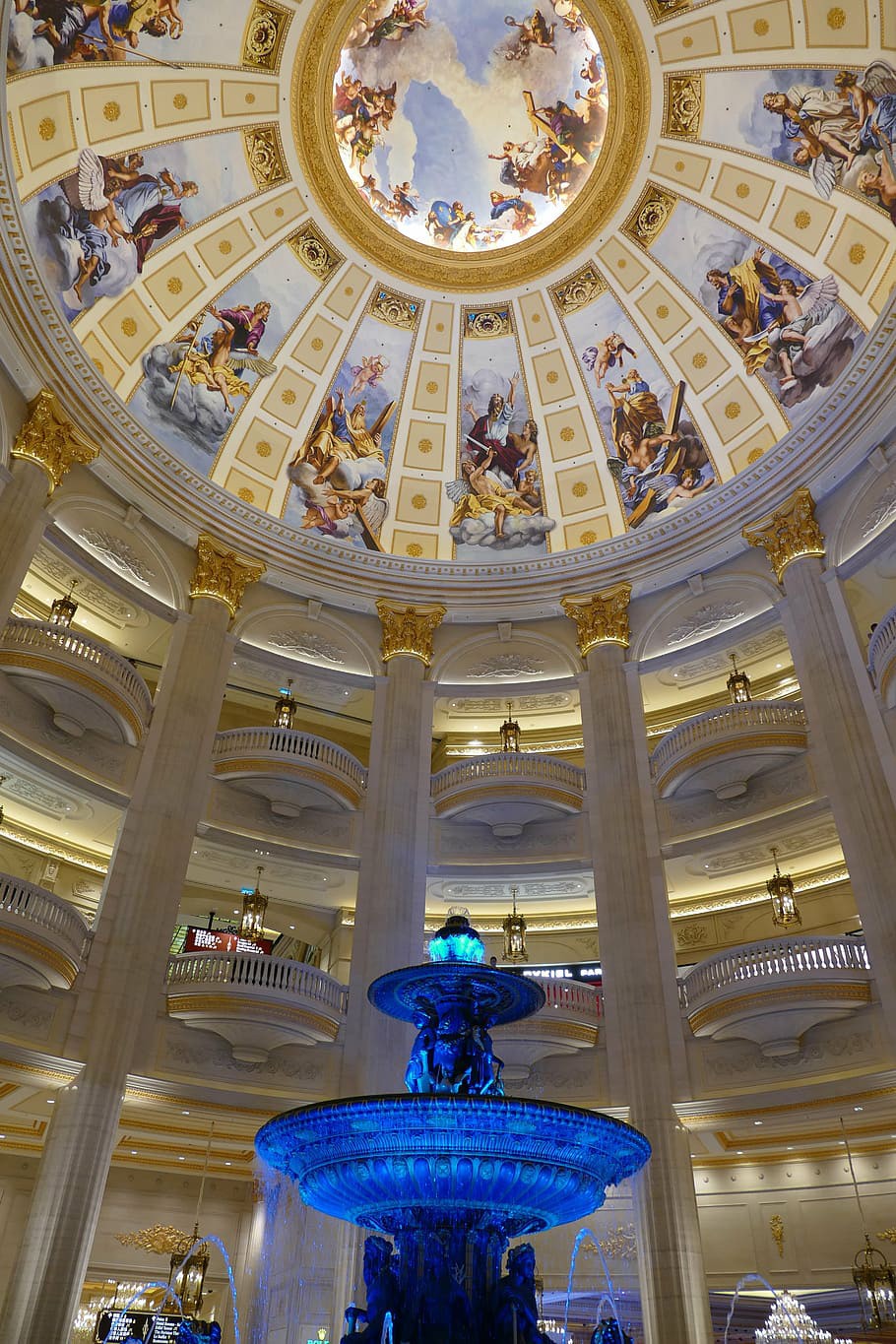
With the new gaming concessions at the door, the ability to compete with neighboring regions in obtaining foreign markets is under discussion. Academics reflect on the cumbersome tax regime in Macau and how this factor can work negatively towards the city’s goals. Leong Sun Iok, Member of the Legislative Assembly, urges the public-private alliance to focus on incorporating new attractions that complement the game
Considering the neighboring regions, the gaming tax in Macau is relatively high. Under the new Gaming Law, which came into force in June, the special tax rate is 35 percent on gross revenue and 5 percent for the Macau Foundation, Social Security Fund, urban and tourism development. Not including prizes, the activity entails a tax of 40 percent.
Under the tax regime in Singapore, which came into effect in March, the tax rate for gross revenue from VIP lounges is 8 percent up to $2.4 billion and 12 percent if it exceeds that amount. For the mass market it is 18 percent up to 3.1 billion and 22 percent if it exceeds that figure. In Japan, which is preparing to open this industry, taxation on gross revenue will be 30 percent.
In the “Study on the problems facing the gaming industry in Macau and what countermeasures to implement”, developed by Yuan Jieping and Yang Jichao, neighboring markets have lower tax rates than Macau to be more attractive to investors and VIP customers.
The study proved a correlation between high taxation on gambling and a decrease in invested capital, employment and hotel services. The two lowest-tax US states attract 67 percent of the country’s industrial investment, for example.
That is, the lower the tax, the greater the volume of funds companies have to reinvest. “These funds are not only reinvested in casinos, but also in hotels, restaurants, showrooms and entertainment services”, it reads. Other studies show that in the US states with the lowest tax rate, it takes 18 million dollars to open a new restaurant, while in the rest it takes 41 million dollars.
Singapore: There are two types of gambling taxation in Singapore. A 7 percent tax on sales of goods and services is also added to the tax burden on concessionaires. Since March 1, the tax has been increased to 8 percent for VIP customers and 18 percent for regular customers. Calculating based on 2019 revenue levels, the tax burden for Singaporean casinos is around 21 percent.
Improve competitiveness
The gambling tax is an important factor in ensuring competitiveness, but it is not the only one. The liberalization of gaming exploitation rights has attracted several foreign companies to bid for gaming licenses in Macau, recalls Ji Chunli, associate professor at the Pedagogical and Scientific Center in the Areas of Gaming and Tourism at the Polytechnic University of Macau.
Now, the liberalization of gambling in neighboring regions will have an impact on the city, however, Macau’s great advantage is its proximity to mainland China, making it a cheaper trip for these visitors. Considering the size of the Chinese market, the academic says that if the pandemic is controlled and border restrictions are relaxed, the number of visitors will not be a problem for gaming companies. However, he warns that in the short term it will be difficult for Macau to expand the origins of its customers.
To become more competitive, he says the city must reflect on the tourist experience more comprehensively. “Why do so many people consider the possibility of building integrated resorts in Japan as a threat to Macau’s competitiveness? The truth is that we all know that services in Japan are quality, so we fear that some customers will give up Macau and choose Japan. This situation reflects the need to rethink Macau’s competitiveness in the future, including how to offer better services,” he explains.
South Korea: There is not yet a specific tax for casinos. These spaces are taxed according to the corporate income tax, with different rates for Korean residents and foreign nationals, calculated on a scale according to different income levels. The casino is also required to contribute to a fund. Exclusive casinos for foreign citizens must contribute to the “Tourist Promotion Fund” approximately 10 percent of their gross income. Between 2015 and 2019, the tax burden on casinos for Korean residents was around 40 percent of heir gross income over five years. While for an average period of five years, tax taxation on foreign-exclusive casinos is only around 18 percent.
South Korea: There is not yet a specific tax for casinos. These spaces are taxed according to the corporate income tax, with different rates for Korean residents and foreign nationals, calculated on a scale according to different income levels. The casino is also required to contribute to a fund. Exclusive casinos for foreign citizens must contribute to the “Tourist Promotion Fund” approximately 10 percent of their gross income. Between 2015 and 2019, the tax burden on casinos for Korean residents was around 40 percent of their gross income over five years. While for an average period of five years, tax taxation on foreign-exclusive casinos is only around 18 percent.
Ji Chunli also believes that innovation is important to ensure competitiveness.
“Will we be able to offer more entertainment and leisure elements to our customers through innovation? We must think further and look for innovative business models. We must not look to the present, but to the future. For both the gaming industry in Macau and the entire tourism and entertainment sector, innovation is the key to redefining Macau”, he underlines.
Add-ons to the Game
The new Gaming Law allows that “for reasons of public interest, namely for reasons of expansion of customer markets in foreign countries”, the contributions of concessionaires may be reduced. The main question is how to attract this clientele.
According to Yuan Jiuping and Yang Jichao, the average length of stay for visitors to Macau had a “general decline” in 2018, before the pandemic, proving the “challenge of the internationalization of future Macau visitors”.
Deputy Leong Sun Iok says that for several game promoters, the current maximum commission rate of 1.25 percent, lower than in neighboring regions, may not be enough to attract foreign promoters and customers to Macau, which could affect development. of these markets.
There are three types of taxes on the game. The first concerns a taxation of 25 percent of gross revenue for the general public. The second is a tax of 17 percent of gross revenue applied to VIP lounges only. The third is a 15 percent tax on gross income from VIP lounges for foreign clients.
There are also several regions that have or will have integrated resorts, such as Singapore, Japan, or even Thailand, which is exploring the liberalization of gambling. All are sites with rich tourist resources. Others have several attractive projects to complete, such as a casino-hotel in the Philippines with a luxury golf course and resort, the first course in the country to be affiliated with the Professional Golfers’ Association of America (PGA).
According to Ji Chunli, if the quality of integrated resorts can be improved, they will naturally attract more customers and compete with other regions. Leong Sun Iok also states that foreign tourists visiting Macau not only want to participate in gambling, but also want to experience a quality tourist environment, so the Government should actively develop the city as a World Center for Tourism and Leisure, in terms of ‘hardware’ and ‘software’.
Prior to the pandemic, the per capita expenditure of tourists attending conventions and exhibitions in Macau was the highest (excluding gambling expenditure), however, the percentage of these visitors was the lowest, according to the Bureau of Statistics and Census (DSEC). According to Leong Sun Iok, the MICE industry is one of the most important in Macau and, therefore, the Government should seek support from the mainland to bring major events to the city, capable of boosting local consumption.
The deputy added that the community and government entities must work together to ensure that Macau has several attractive elements for different types of tourists 365 days a year in order to sustain its economy.
“The pandemic will end soon, we have to prepare in advance for the future market, which will be different from the past, where all tourists came to Macau as soon as the borders opened. Now these visitors will first see what the city has to offer. Improving Macau’s level as a tourist destination will consolidate its overall competitiveness, he concludes.
