

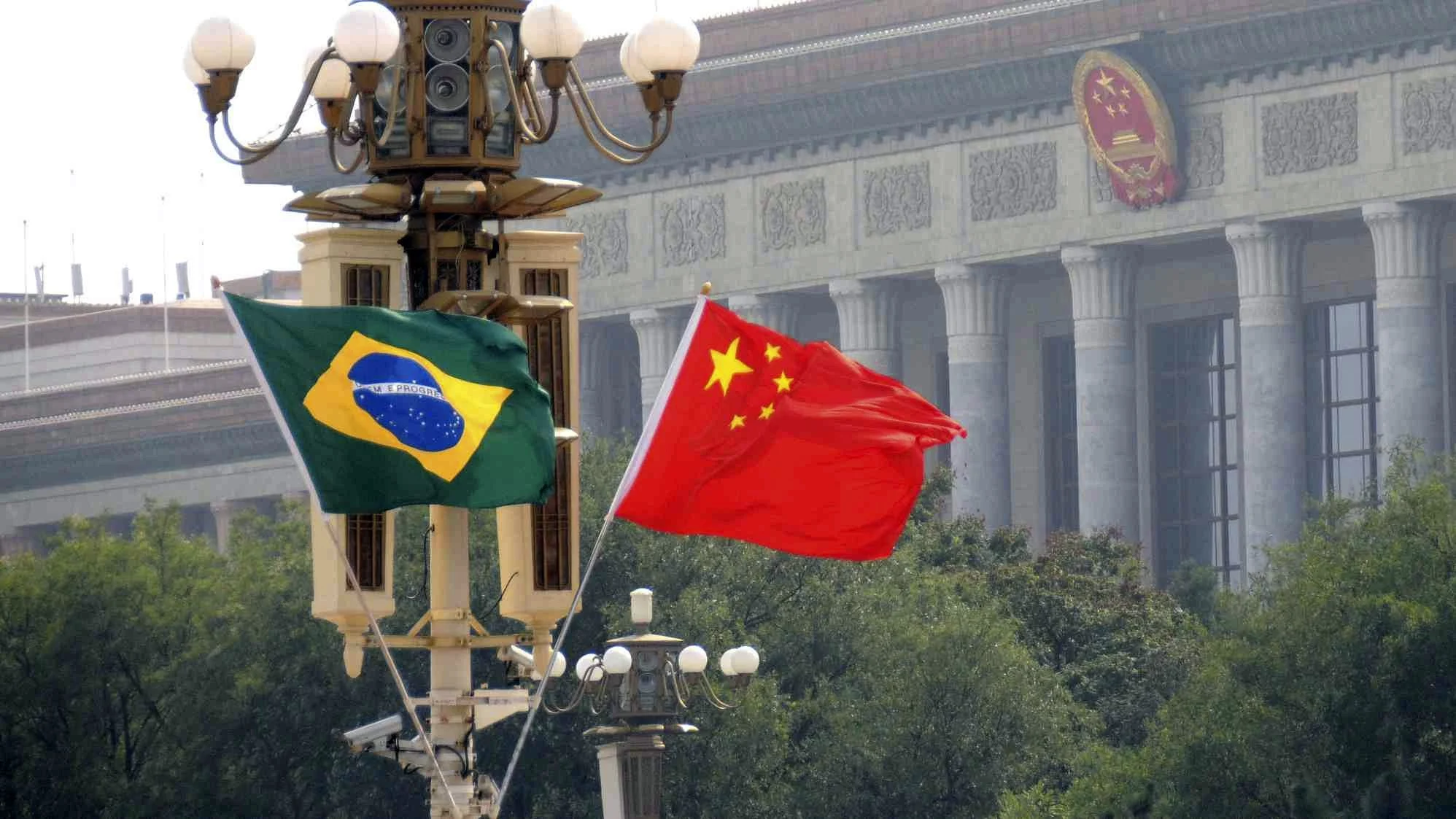
Brazil wants to attract more Chinese direct investment in infrastructures, including in public-private partnerships for large-scale projects, an advisor to the Brazilian Presidency told Lusa today.
Filipe Brand recalled in Macau that Chinese companies already have some ongoing projects in Brazil, but China is still not on the list of the five largest foreign direct investors in the country.
Chinese companies are, for example, manufacturing the new carriages for the São Paulo subway system and building the Salvador-Itaparica Bridge, whose works received the “green light” to move forward in early June.
“There is still a lot of potential to be explored in Chinese direct investment,” argued the advisor to the Special Secretariat for the Investment Partnership Program (PPI), under Brazil’s Presidency.
Read more about this topic:
Brand spoke on the sidelines of the closing of a colloquium on infrastructure investment and construction, which brought together government officials and leaders from the nine Portuguese-speaking countries in Macau for two weeks.
The colloquium, which kicked off on June 2, was organized by the Forum for Economic and Trade Co-operation between China and Portuguese-speaking Countries, which is also widely known as the Macau Forum.
“We hope that this type of initiative, like the Macau Forum, helps to bring Brazil-China relations closer together to, eventually, bring more Chinese financing for direct investment,” Brand stated.
The advisor stressed that Brazil “has a very rich portfolio of projects in the most varied sectors,” highlighting the country’s extensive strategic list of public works that require robust international backing.
Read more about this topic:
“We need capital to invest in highways, railways, ports, airports, energy, urban mobility, social housing, social projects, health, and education,” Brand listed when detailing the vast infrastructure needs across the South American nation.
The PPI is an interministerial initiative that identifies priorities among infrastructure projects for public investment in Brazil and currently has more than 200 projects in its portfolio, the government official explained.
China has been Brazil’s main trading partner for 15 years, cementing a deep economic bond through continuous bilateral trade flows and major commodity exports that drive the commercial relationship between both nations.
According to data from Chinese Customs, Brazilian exports rose 36.9% in the first three months of 2026, reaching 26.4 billion dollars, which is equivalent to approximately 22.9 billion euros.
Read more about this topic:
At the closing of the 17th International Infrastructure Investment and Construction Forum and Exhibition, the secretary-general of the Macau Forum, Ji Xianzheng, stressed that the organization’s action plan, approved in 2024, prioritizes infrastructure.
This strategic plan, which remains in force until 2027, establishes transport, telecommunications, electric energy, and water resources as the main priorities for international cooperation and development among the participating member states.
The diplomat promised that China will continue “to strengthen its openness to the outside world and to expand the space for international cooperation, bringing greater stability and certainty to the global economy.”
