

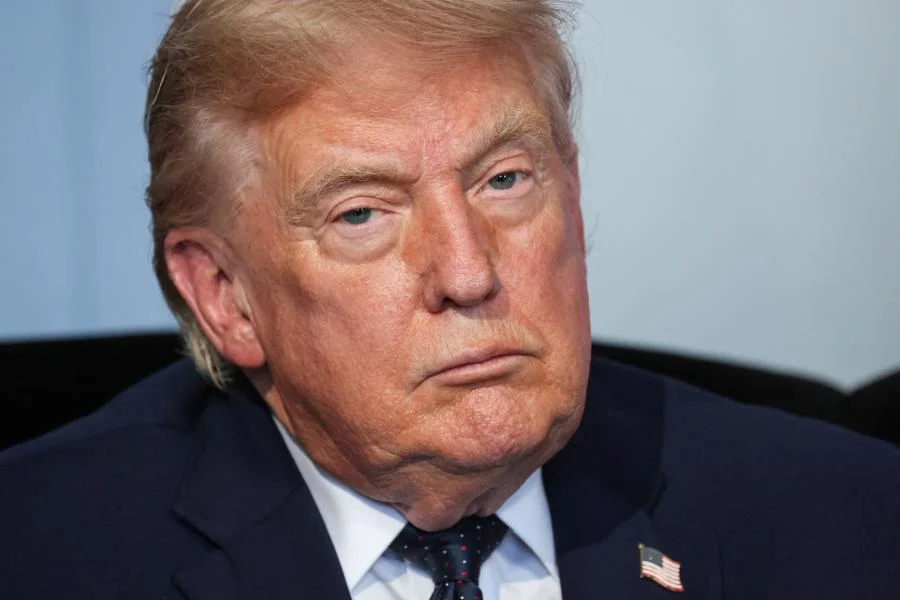
The US President stated today that the preliminary agreement reached with Iran does not involve investments or payments to Tehran and reinforces the commitment of the Iranians to not develop or acquire nuclear weapons.
Donald Trump declared—alongside the Emir of Qatar, Tamim bin Hamad al-Thani, on the sidelines of the G7 summit in the French city of Évian—that the agreement reached with Iran “should be successful.”
The US head of state stressed that after the signing scheduled for Friday, a second stage will begin which “will actually be easier,” referring to the negotiations regarding the Iranian nuclear program.
“We have a fair agreement. It is a good agreement,” Trump stated, noting that it does not involve investments or payments to Iran.
Read more about this topic: Trump tells Macron he doesn’t need “much help” to reopen Hormuz (with video)
“We have the right to enter one day and do something, if I want or if someone wants. But we are not investing money. We have no obligation to invest money in Iran,” he argued.
In this sense, the American leader once again criticized the agreement signed with Tehran during the administration of Barack Obama.
“We did not pay for it like Obama paid. He paid billions of dollars. It was crazy,” he added.
“What deserves attention, the only thing that really matters to me, is that Iran will never have a nuclear weapon,” the White House chief emphasized, insisting that this is reflected in the agreement “clearly and unequivocally.”
Read more about this topic: Trump confirms deal with Iran and reopening of Hormuz (with video)
“They are not going to develop, they are not going to buy, and they are not going to do anything related to it. And if they do, the consequences will be incredible,” the US President explained, revealing that one of the points of contention before the finalization of the agreement was that it should include not only the prohibition of developing nuclear weapons, but also the prohibition of buying them.
According to Trump, this “took a few more days of negotiations (…).
“Finally we agreed that they will not develop, they will not acquire, they will not buy, and they will do nothing to obtain a nuclear weapon. And if they do, hell will fall upon them,” he warned.
Regarding the initial objectives of the US offensive against Iran, which initially focused on regime change in the Islamic Republic, the American President stressed that this is not the current focus, although he stated that this “in fact” occurred after the deaths of the political and military leadership in US and Israeli airstrikes.
Read more about this topic: Portugal: President hopes US-Iran deal ends conflict
“I never cared about regime changes, I never participated in that. But I suppose you could say there was a regime change because the first group died, the second group died too, and part of the third group disappeared,” he said about the Iranian leaders, emphasizing that Washington is now dealing “with very rational people.”
“It was a pleasure to negotiate with them,” he said about the Iranian interlocutors, whom he described as “strong and intelligent people.”
“In fact, I think they are smarter than the first and second groups. But they are not radicalized and they want to help their country,” Trump further stated.
The preliminary agreement extends for 60 days the ceasefire in force since April 8 and establishes a negotiating framework for future negotiations on the nuclear deal.
Read more about this topic: “Trump to limit Iran’s nuclear power at end of negotiations”, says Netanyahu
The commitments guarantee the reopening of the Strait of Hormuz and a progressive lifting of sanctions on Tehran.
