

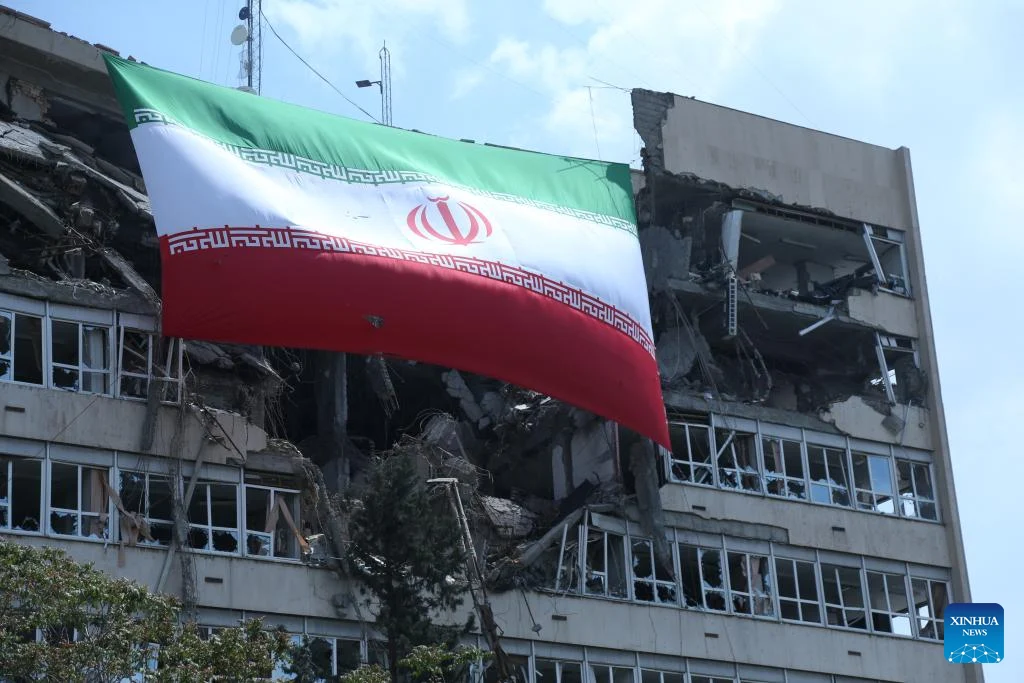
US President Donald Trump claimed today that the Iranian government has communicated that it is in a “state of collapse” and has urgently requested that Washington lift the naval blockade currently restricting its ports. Trump, who shared this update via his personal social media platform, suggested that Tehran is seeking a swift resolution while the country grapples with internal leadership transitions.
While the President has frequently alluded to a schism within the Iranian hierarchy between moderate factions and hardliners, he did not specify which official or entity sent the message.
This development follows reports regarding President Trump’s skepticism toward a new peace plan proposed by Tehran.
According to sources cited by CNN, Trump expressed during a meeting with his national security advisors that he is unwilling to accept the current proposal, which would require the United States to end the naval blockade imposed nearly two months ago.
Read more about this topic: Iran War: shooting won’t make Trump abandon conflict (with video)
The ongoing hostilities, which were triggered by a joint Israeli-American aerial offensive on February 28, remain frozen under a precarious ceasefire. Despite various attempts by Pakistan to mediate talks between the two nations, little progress has been made.
The diplomatic frustration was further highlighted by the last-minute cancellation of a trip by US envoys Steve Witkoff and Jared Kushner to Islamabad, where they were scheduled to meet with Iranian representatives.
Although Iranian Foreign Minister Abbas Araghchi was in the Pakistani capital, no confirmation of a meeting between the parties was ever issued. The current deadlock follows a failed round of negotiations on April 11, which led Trump to double down on the naval blockade in an attempt to stifle the Iranian economy.
Read more about this topic: Iran War: Trump cancels trip to Pakistan to resume negotiations (with video)
The impasse continues to center on several high-stakes geopolitical issues, including the control of the Strait of Hormuz, Iran’s nuclear and uranium enrichment programs, the development of long-range missiles, and the country’s support for various militias across the Middle East.
Additionally, the potential unfreezing of Iranian assets remains a contentious point of discussion. As the situation evolves, the administration appears determined to maintain economic pressure, even as it claims to have received indications of severe instability from within Tehran.
