

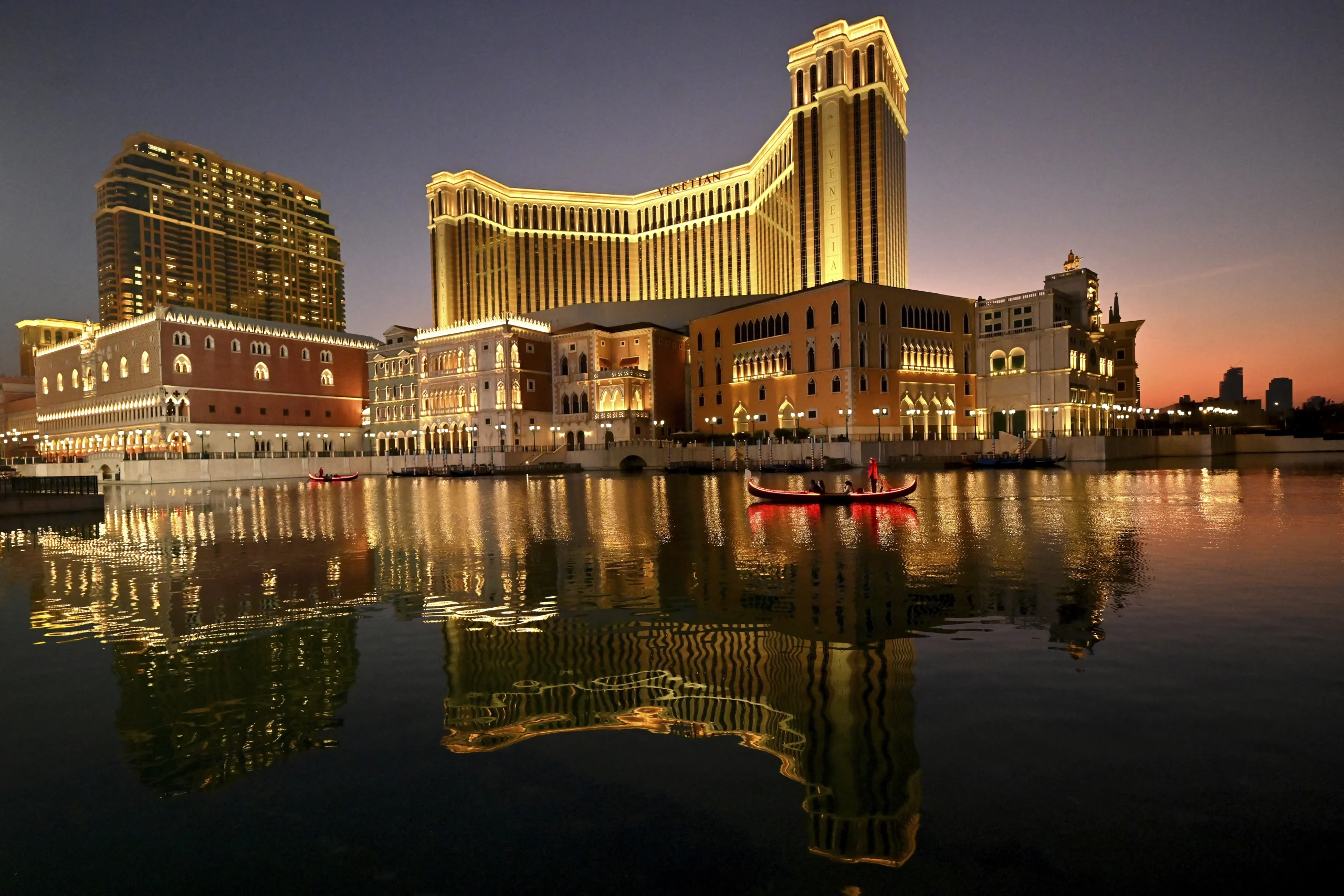
Asian American says it was betrayed in its partnership with Sands for the 2001/2002 tender that liberalised Macau’s gaming industry. On the eve of the jury’s decision, the US operator abandoned that agreement and reappeared in association with Galaxy. Marshall Hao lost at the Court of First Instance in 2022, and the Court of Second Instance did not truly examine the facts of the case, instead raising technical and legal obstacles.
At the final level of appeal, the case could go no further because two dead ends emerged: on the one hand, Asian American lost legal aid, which entailed costs it did not wish — or was unable — to bear; on the other, it never complied with the requirement to produce the company’s share register book.
The case is now closed and final, as shown by the certificate received by Venetian, dated 4 March. Luís Cavaleiro Ferreira, lawyer for Venetian, told PLATAFORMA that “the case is over, the judgment has been published and is available online; and the action was decided as expected because, in my opinion, it had no merit whatsoever”.
Read more: Macau: ten charged in money laundering scheme through casinos
This brings to an end the long legal battle during which Asian American’s lawyer, Jorge Menezes, called into question the transparency of the tender, the regulatory authorities, and the negotiating ethics of Macau’s two largest operators. One other case remains pending… against Galaxy (see infobox). PLATAFORMA attempted to contact Menezes, but received no reply.
Facts and Circumstances
In court, Asian American sets out a sequence of circumstantial facts: it did indeed enter into an agreement with Sands — the favourite to secure a licence — and Marshall Hao presented the financial backing of CDIB, a bank in Taiwan. It is also a fact that, on the eve of the tender decision, Sands abandoned Asian American and joined forces with Galaxy. Finally, legal sources acknowledge that the contract Sands signed with Galaxy was, in every respect, similar to the one it had previously signed with Asian American.
“It was the same, they just changed the names,” Menezes told Ponto Final when he filed the lawsuit in Macau in 2012. There had been an earlier action filed in the United States, which was later withdrawn. Sources familiar with the case suggest that Asian American feared being accused of bad-faith litigation, given the restrictive nature of the US legal system. What is certain is that Asian American ended up being convicted of bad faith in Macau (see infobox).
The Court of First Instance never considered it proven that Asian American was the author of the project that the Sands/Galaxy partnership submitted in the tender. On the other hand, by the time Sands joined Galaxy, its contract with Asian American had already expired. It is unclear why it was not renewed; but that in no way strengthens Asian American’s argument.
Read more: Suspicious transactions at casinos fall 6.1 pct in 2025
Even before the Court of First Instance judgment had been published, Menezes was already announcing the decision to appeal: “I had never seen a ruling with so many flaws and contradictions.” However, at appeal stage, everything became more complicated: arguments deemed improper, high costs, and a technicality that blocked any discussion of the facts.

Obstacles
Asian American was in the process of liquidation. Even so, the Court of Second Instance kept the case alive, but asked Menezes to condense his submissions — nearly 300 pages — focusing on the facts and the legal argument; yet the second version was also rejected.
Any potential appeal to the Court of Final Appeal also collapsed: because of high costs, and because of a requirement carried over from the previous court for Asian American to produce its share register book — which was never submitted. Despite the liquidation, the Commercial Code provides that the company does not lose its procedural rights, which pass to the shareholders (see infobox). But Asian American neither paid the court costs nor identified the shareholders…
At one point, PLATAFORMA has learned, Sands considered an out-of-court settlement, seeking to avoid reputational damage and a prolonged legal dispute. However, Asian American never showed much enthusiasm, which is why a source connected to the case said that “there was never any real negotiation”.
By 2024, the case already appeared lost; the appeals never actually moved forward. A series of further legal steps initiated by Menezes followed, which Cavaleiro Ferreira considers “merely dilatory”. Finally, Venetian requested the court certificate declaring the judgment final and binding… and received it in the middle of last month, dated 4 March.
Read more: Macau: 20 billion MOP to reinvent the economy
Costs, bad faith and hidden shareholders
Throughout the saga, Sands repeatedly asked the court to find Asian American guilty of bad-faith litigation; and succeeded. The Court of First Instance imposed a fine of 120 units of account; the Court of Second Instance added another 30. Once converted, this amounts to roughly MOP 150,000.
These convictions had a second consequence: the loss of legal aid. In the meantime, the Public Prosecutions Office requested the liquidation of Asian American, a circumstance that led to the company’s definitive dissolution… as well as the loss of legal aid.
When the appeal became blocked at the Court of Second Instance, Marshall Hao was ordered to pay court costs and fines for bad faith. But there was more: the court issued a payment order in the amount of MOP 12 million, calculated on the basis of the initial compensation claim of MOP 3 billion. Had the increase in the claim to the previously mentioned MOP 96 billion actually been formalised, the bill would have risen proportionally.
With no accounts submitted and no identification of the shareholders, discussion of the facts was left in the drawer. But without identification of the shareholders and with the company liquidated, the court also had no one from whom to recover the money.
Galaxy in the waiting line
In the middle of this intricate tangle, in 2017, PLATAFORMA learned that Asian American filed another lawsuit, this time against Galaxy, seeking compensation on a scale similar to that claimed from Sands. Three and a half years later, the court suspended those proceedings, pending the outcome of the case against Sands. In substance, the two cases are identical.
According to a legal source, the court will now decide how to proceed with the case against Galaxy. “It will probably require Asian American to produce the share register book that did not appear in the case against Venetian.”
A Galaxy source confirmed to PLATAFORMA that, having already been informed that the Sands case has become final and binding, it is now simply awaiting communication from the court.
