

An editorial in Macau’s press argues that people of Portuguese descent will continue to play a relevant role in China under the new Ethnic Unity Promotion Law, which aims to strengthen integration and value communities with distinct cultural and historical ties.
A Macau newspaper stated in an editorial that the region’s Portuguese-descendant community will remain “important members of the diverse and unified family of the Chinese nation.”
The Law on the Promotion of Ethnic Unity and Progress was approved this month in Beijing by the National People’s Congress, China’s top legislative body, with the aim of fostering “a stronger sense of community among all ethnic groups of the Chinese nation,” according to the Chinese-language newspaper San Wa Ou.
The legislation establishes that ethnic unity should be promoted by all government bodies and private companies, including local governments and state-affiliated organizations.
Read more about this topic: China: new “ethnic unity” law may restrict rights of minorities
China officially recognizes 56 ethnic groups, with the majority belonging to the Han ethnicity, while minorities represent about 8.9% of the population.
According to 2021 census data, more than 2,200 people born in Portugal live in Macau. The latest estimate provided to Lusa by the Portuguese Consulate indicated around 155,000 Portuguese passport holders among residents of Macau and Hong Kong.
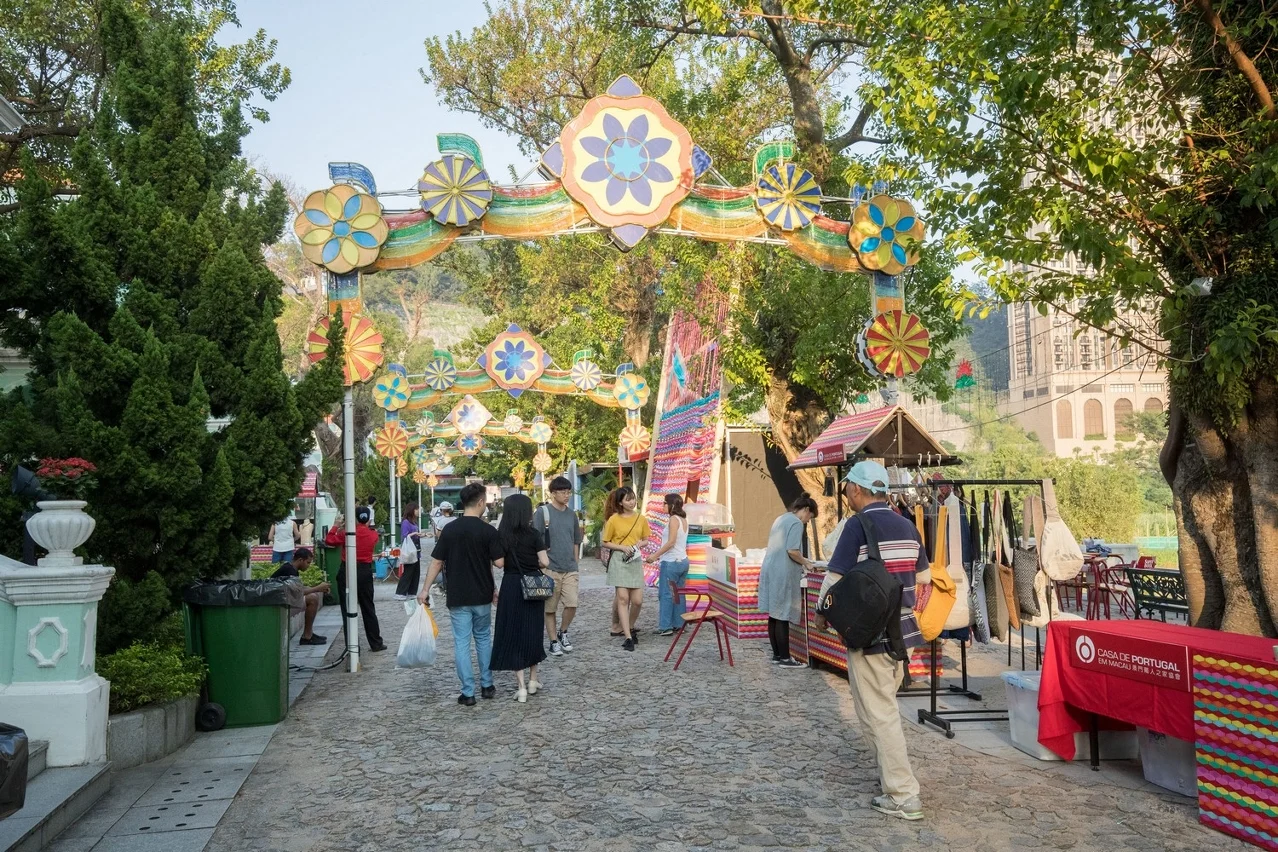
According to 2021 census data, more than 2,200 people born in Portugal live in Macau. Photo: GCS
In its editorial, San Wa Ou highlights the role of Macanese residents—people of mixed Portuguese and Chinese heritage—in implementing the legislation and integrating fully into Chinese national society.
“Portuguese descendants represent about 2.5% of Macau’s population, being descendants of marriages between Portuguese and Chinese or Portuguese families established in the city for generations,” wrote the newspaper’s director and editor, Lam Chong.
Read more: Macau: end of junkets “reflected a strategic alignment with mainland China’s objectives”, says study
Following the 1999 handover, the Basic Law of the Macau Special Administrative Region guaranteed the protection of the interests, customs, and cultural traditions of Portuguese descendants, recognizing them as an integral part of local society.
“Although they are not formally classified among China’s 56 ethnic groups, the new law places them within the principle of ‘diversity in unity,’ valuing their historical role as a bridge between cultures and their contribution to Macau’s prosperity and stability,” the editorial noted.
The article cites examples of political participation, including lawyer and former legislator Leonel Alves, who became “the first Macanese of Portuguese origin to join the National Committee of the Chinese People’s Political Consultative Conference (CPPCC)” after acquiring Chinese citizenship.
On the cultural front, it highlights the work of Miguel de Senna Fernandes, president of the Macanese Association, who has actively promoted cultural exchange between Macau and Portuguese-speaking countries, reinforcing the Macanese community’s role as a link between China and the Lusophone world.
The editorial also stresses that the local government “leverages the unique advantages of Portuguese descendants, offering them broad development opportunities and allowing them to share in Macau’s and China’s progress.”
Economically, it encourages the use of “bilingual advantages and knowledge of Portuguese-speaking countries” through business and policy channels, helping Macau position itself as a “super connector” between China and the Lusophone world.
The editorial concludes that, under the new ethnic law, Macanese people “will continue to be important members of the diverse and unified family of the Chinese nation, working together with all Chinese citizens to write a new chapter of national unity and progress and contribute to the great rejuvenation of the Chinese nation.”
