

China is expected to pass a law this week to promote what it calls “ethnic unity,” further eroding the rights of some minority groups, according to critics, as authorities press ahead with assimilation policies.
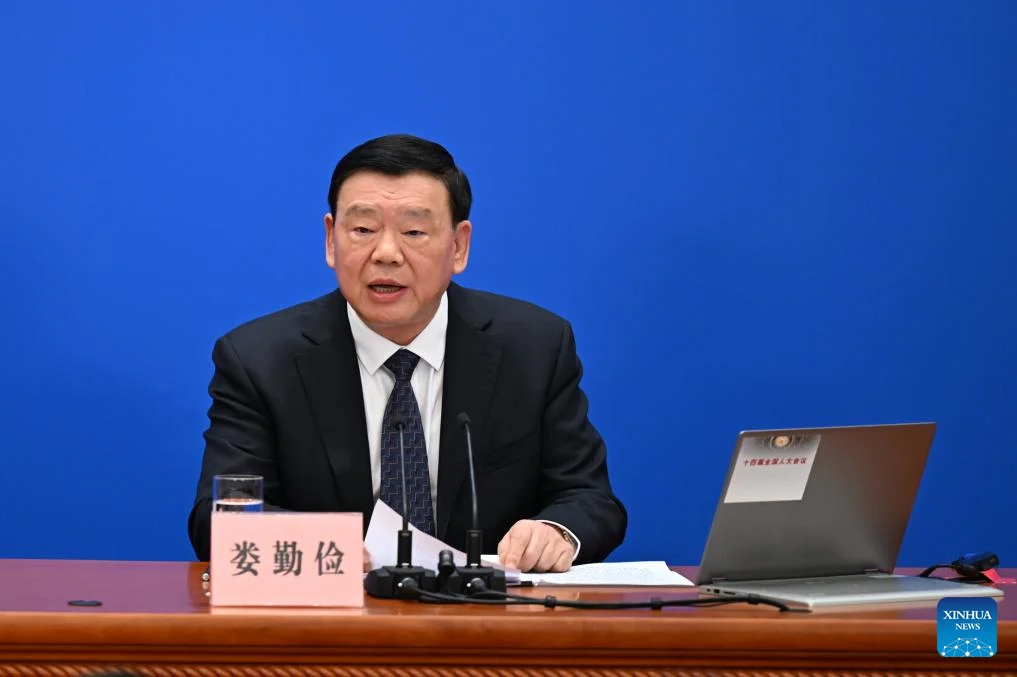
The law, expected to be approved by the National People’s Congress on Friday, aims to promote “a stronger sense of community among all ethnic groups of the Chinese nation,” said Lou Qinjian, the delegate who presented the proposal.
The bill establishes that ethnic unity must be promoted by all government bodies and private companies, including local governments and state-affiliated groups. “The people of each ethnic group, all organisations and groups in the country, the armed forces, all parties and social organisations, all enterprises must forge a common consciousness of the Chinese nation in accordance with the law and the Constitution, and assume responsibility for building that consciousness,” the text states.
Academics and observers say the new provision represents a setback for ethnic minority identity, requiring the use of Mandarin in compulsory education, among other measures.
The majority of China’s population is of Han ethnicity and the official language is Mandarin. The country has 55 ethnic groups spread across its territory, representing 8.9% of the population. The constitution states that “each ethnicity has the right to use and develop its own language” and “has the right to self-governance,” while the Law on Regional Ethnic Autonomy promises limited autonomy to these groups. Experts say that despite these provisions, the new law will likely take precedence in practice.
“This ends the party’s original promise of meaningful autonomy,” said James Leibold, professor at La Trobe University in Australia, who has studied changes in China’s ethnic minority policies, describing the measure as the culmination of president Xi Jinping’s “great remaking” of ethnic policy.
Under article 15 of the new law, Mandarin must be taught to all children before kindergarten and throughout compulsory education until the end of secondary school. Mandarin is already the main language of instruction in Inner Mongolia, Tibet and Xinjiang — regions with large ethnic minority populations — but the new law establishes that minority languages cannot be the main language of instruction anywhere in the country.
Read more: China steps up fight against corruption, fraud, and crime at the “Two Sessions”
Until recently, ethnic minorities had some autonomy over the language used in education. In the past, students in Inner Mongolia — a Chinese autonomous region bordering Mongolia — could study much of the curriculum in Mongolian. That changed in 2020, when new students found their Mongolian textbooks had been replaced by Chinese-only books, triggering mass protests followed by crackdowns and re-education campaigns. Today, students in the region can only study Mongolian as a foreign language in schools, one hour per day.
Analysts also point to the law’s reference to creating “mutually integrated community environments,” which could result in the dissolution of neighbourhoods with high concentrations of minorities. “The intention is to encourage Han and other minorities to migrate into each other’s communities,” said Zhou Minglang, a professor at the University of Maryland who has studied China’s bilingual policies.
Many countries, including the United States, follow similar assimilation policies. China says its approach aims to bring development to minority areas.
Read more: NPC lawmakers are “a bridge between the Government and residents”
But Maya Wang, deputy director for Asia at Human Rights Watch, says the law is not truly aimed at ensuring equality. “The question was never so much about ensuring their participation in the economy in an equitable and inclusive way,” she said. “A truly inclusive model does not exclude children’s ability to speak two languages,” she added.
The law also creates a legal basis for the Chinese government to prosecute individuals or organisations outside China if their actions are deemed to harm the progress of “ethnic unity.”
