

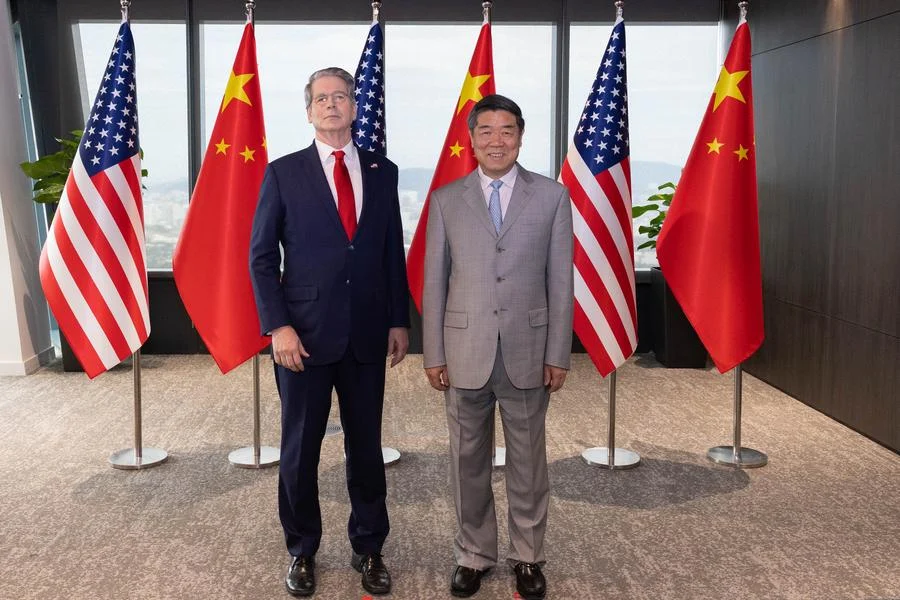
The talks between senior US and Chinese economic officials in Paris, which concluded earlier this week, were described by sources to Reuters as “remarkably stable”, in a sign of easing tensions between the world’s two largest economies, at a time when both sides appear to be trying to prevent a new trade escalation and prepare the ground for a possible meeting between Donald Trump and Xi Jinping.
The discussions, led by US Treasury Secretary Scott Bessent and Chinese Vice Premier He Lifeng, focused on three main areas: agricultural purchases, critical minerals, and new mechanisms to manage trade and investment. According to the cited sources, the contacts were “frank and constructive” and could pave the way for policy proposals to be considered by the two leaders.
One of the main areas of convergence was agriculture. Beijing showed openness to increasing purchases of US agricultural products, while reiterating its commitment to buy 25 million metric tons of US soybeans per year over the next three years. Possible additional purchases of Boeing aircraft and US coal, oil and natural gas were also discussed.
Read also: US says China does not plan to invade Taiwan in 2027
For political analyst Sonny Lo, these signals suggest more than a mere tactical truce. “The possibility of Chinese concessions on purchases of US agricultural products and on the export of critical minerals are important moves that could secure corresponding concessions from the United States on other issues affecting Chinese interests,” he told PLATAFORMA.
According to the analyst, these gestures also help to “create a favourable atmosphere in relations between the two countries ahead of the meeting between Trump and Xi”.
The United States needs China to act as an intermediary in the war with Iran, persuading Beijing to send messages to Tehran and helping Iran understand the American position and moves — Sonny Lo, political analyst
But the Paris meeting was not limited to traditional trade. The two delegations discussed the creation of new formal mechanisms for bilateral management, including a possible “Board of Trade” and a “Board of Investment”, designed to provide greater predictability to the economic relationship and resolve sector-specific issues without compromising national security or critical supply chains.
Among the most sensitive issues was US access to critical minerals produced in China, namely yttrium, which is used in aircraft engine turbines. The sources said that both sides found “some ways to ease” the most difficult points, without explaining how.
Read also: Iran War: China, Russia and France ready to discuss ceasefire
In Sonny Lo’s view, what is on the table says much about China’s priorities at this stage. The analyst points to three main objectives: “a reduction of tariffs on Chinese goods”, the “possible entry of some Chinese electric vehicles into the US market” and a promise by the “United States to reduce sales of weapons and fighter aircraft to Taiwan”.
The scope of the talks may, however, go beyond the bilateral relationship. For Sonny Lo, Washington also wants Beijing to play a useful role in the Middle East. “The United States needs China to act as an intermediary in the war with Iran, persuading Beijing to send messages to Tehran and helping Iran understand the American position and moves.”
Even so, the room for concrete progress remains limited. Trump’s trip to Beijing, initially scheduled for the end of March, was postponed because of the impact of the war with Iran on the US foreign policy agenda, although Washington insisted that the delay was not the result of disagreements with Beijing.
