

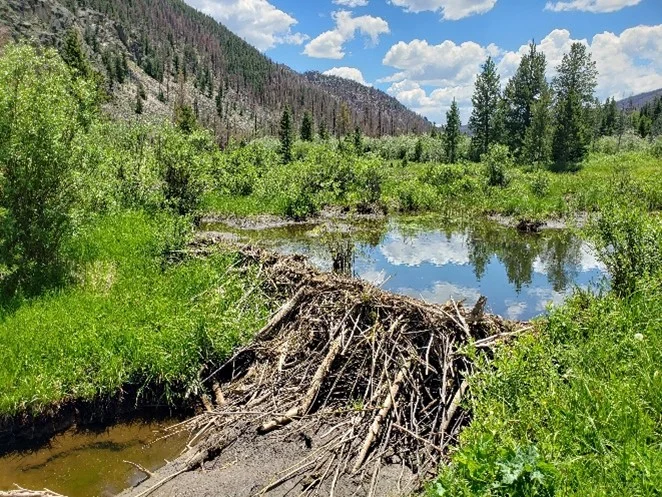
Dams built by beavers allow rivers and waterways to store 26% more carbon, concludes a study by the University of Birmingham and the Centre for Ecological Research and Forestry Applications (CREAF) at the University of Barcelona.
Beaver activity has positive effects on the water cycle, increasing infiltration and recharging aquifers, the Spanish research centre noted in a statement today. Carbon accumulates primarily in sediments and deadwood and can remain stored for up to three decades.
Beavers build dams by cutting branches, shrubs and small trees, which they then weave together with mud, stones and river sediments — a structure that slows water flow, retains sediments and expands wetland areas, transforming rivers into carbon sinks, explained study co-author Joshua Larsen.
Read more: Mozambique: Cahora Bassa dam recovers storage after historic lows
Fellow co-author Josep Barba noted that due to hunting, the beaver disappeared from Europe in the 19th century but began to be reintroduced in Spain from 2000 in areas with vegetation adapted to its presence. Addressing concerns from the agricultural sector about potential impacts on riverside crops, Barba explained that beaver activity is concentrated within the first 20 metres of the riverbank, making its impact highly localised.
The study was conducted over one year along an 800-metre stretch of the Rhine river in Switzerland, where beavers have been present since 2010. Researchers measured carbon flows entering and leaving the system at three points along the river — upstream of the dam, within the beaver-modified area and downstream — combining flow measurements with automated sensors, water sampling, gas bags and sediment and biomass analysis.
