

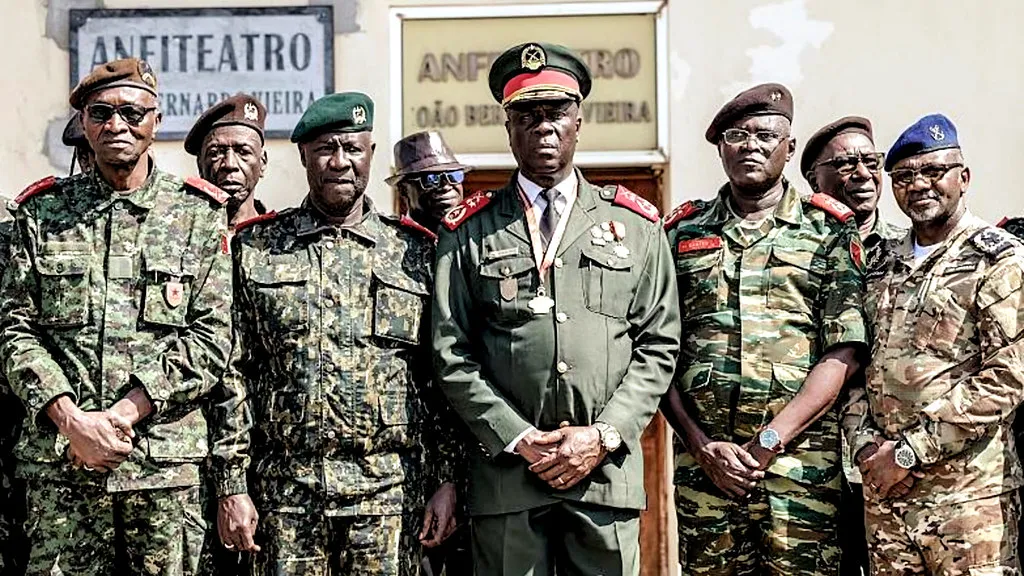
Guinea-Bissau registered the world’s largest decline in the annual report published today by US organization Freedom House, due to the military coup that disrupted the country’s 2025 general and presidential elections.
The report, titled “Freedom in the World 2026: The Growing Shadow of Autocracy,” assesses political rights and civil liberties in 195 countries and 13 territories. The West African nation, classified as “Partly Free,” lost eight points to score 33 out of 100, which the organisation attributes to political instability, military interference and institutional fragility.
A self-proclaimed Military High Command staged a coup on the eve of the announcement of provisional results from the legislative and presidential elections held on November 23, 2025, alleging the imminence of civil war. The report states that “armed men stormed the electoral commission’s office and destroyed the ballot papers.”
PAIGC leader Domingos Simões Pereira, who has led the party for 12 years, was detained during the November 26 coup and remains under house arrest. Following the coup, Guinea-Bissau was suspended from several organisations including ECOWAS, the African Union and the CPLP, all of which demand a return to constitutional normality before lifting the measure.
Read more about this topic: World Bank halts operations, financing for Guinea-Bissau
Elsewhere in Africa, Tanzania, Burkina Faso and Madagascar — the latter two also under military rule — recorded significant setbacks. Military officers overthrew Madagascar’s elected government and president in October 2025, bringing to nine the total number of African countries that have suffered a coup since 2019.
In Burkina Faso, elections have been postponed indefinitely, with security forces and militia close to the junta accused of massacres and forced displacement of Fulani civilians.
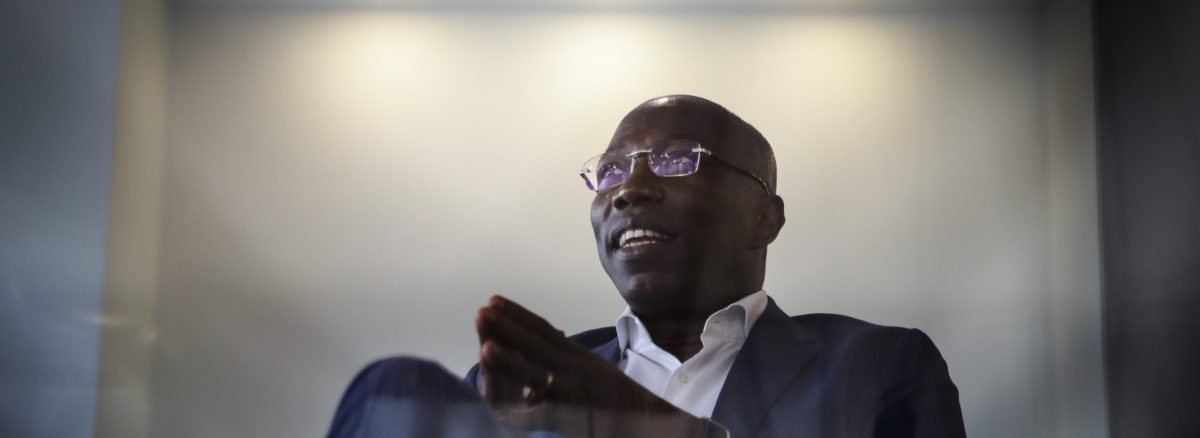
PAIGC leader Domingos Simões Pereira, who has led the party for 12 years, was detained during the November 26 coup and remains under house arrest. Photo credits: Mário Cruz – LUSA
Tanzania recorded the second-largest deterioration in rights and freedoms in 2025, sinking deeper into the “Not Free” category, with acting president Samia Suluhu Hassan declared winner of an election marked by opposition exclusion, press restrictions, forced disappearances and violence against protesters resulting in at least 1,000 deaths.
Cape Verde (92 points) and São Tomé and Príncipe (84 points), both rated “Free,” and Angola (28 points, “Not Free”) showed no change from the previous year. Timor-Leste and Mozambique each rose one point to 73 and 42 respectively.
Read more: Guinea-Bissau: PAIGC split into two congresses to elect leader
The report concludes that global freedom declined for the 20th consecutive year in 2025, with 54 countries recording setbacks and only 35 improving. Just 21% of the world’s population now lives in countries rated “Free” — a sharp fall from 46% twenty years ago.
