

Data from the Monetary Authority of Macau (AMCM) show that the improvement was driven largely by an 8.4 per cent rise in net interest margin — the difference between income from loans and expenses on deposits — which climbed to MOP 17.5 billion (USD 2.16 billion).
The gains came despite three cuts to the benchmark interest rate approved by the AMCM last year, the most recent a 0.25 percentage point reduction introduced on 11 December, following similar moves by the US Federal Reserve.
Outstanding loans, the main source of revenue for banks globally, edged down 0.4 per cent from the end of December 2024 to MOP 1.02 trillion (USD 126.2 billion). Deposits, by contrast, rose 9.6 per cent to MOP 1.39 trillion (USD 171.9 billion) by the end of the year, the regulator said.
Despite the sharp rebound, operating results remained well below the sector’s peak in 2020 — the most profitable year on record for Macau’s banking industry — when earnings reached nearly MOP 17 billion (USD 2.10 billion).
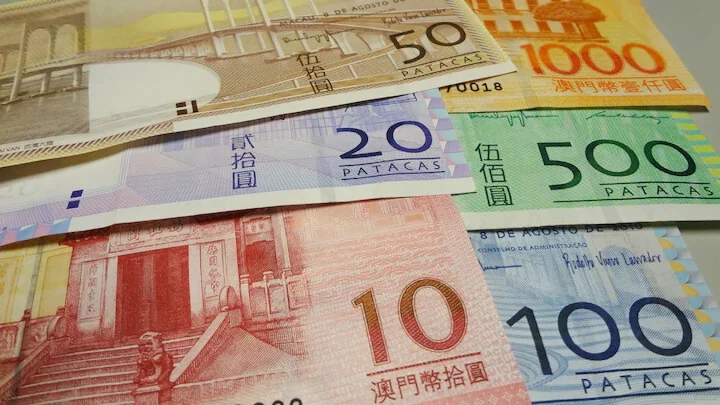
Macau has two note-issuing banks: the local branch of China’s state-owned Bank of China and Banco Nacional Ultramarino (BNU), part of Portugal’s Caixa Geral de Depósitos Group.
In November, BNU reported net operating results of MOP 315.3 million (USD 39 million) for the first three quarters of 2025, a year-on-year decline of 29 per cent, which the bank attributed to interest rate movements. Non-performing loans fell 11.6 per cent last year to MOP 49.7 billion (USD 6.15 billion), marking the first annual decline in overdue lending since 2013.
Overdue loans accounted for 4.9 per cent of total lending, down 0.6 percentage points from the end of 2024. The ratio rises to 5.6 per cent for credit extended to institutions or individuals outside the region.
The European Banking Authority considers banks with non-performing loans exceeding 5 per cent to have a “high exposure” to risk and recommends that they adopt strategies to address the problem.
Even so, Macau’s level of distressed credit remains well below the record high of 25.3 per cent reached in mid-2001, during the global downturn triggered by the bursting of the internet bubble.
