

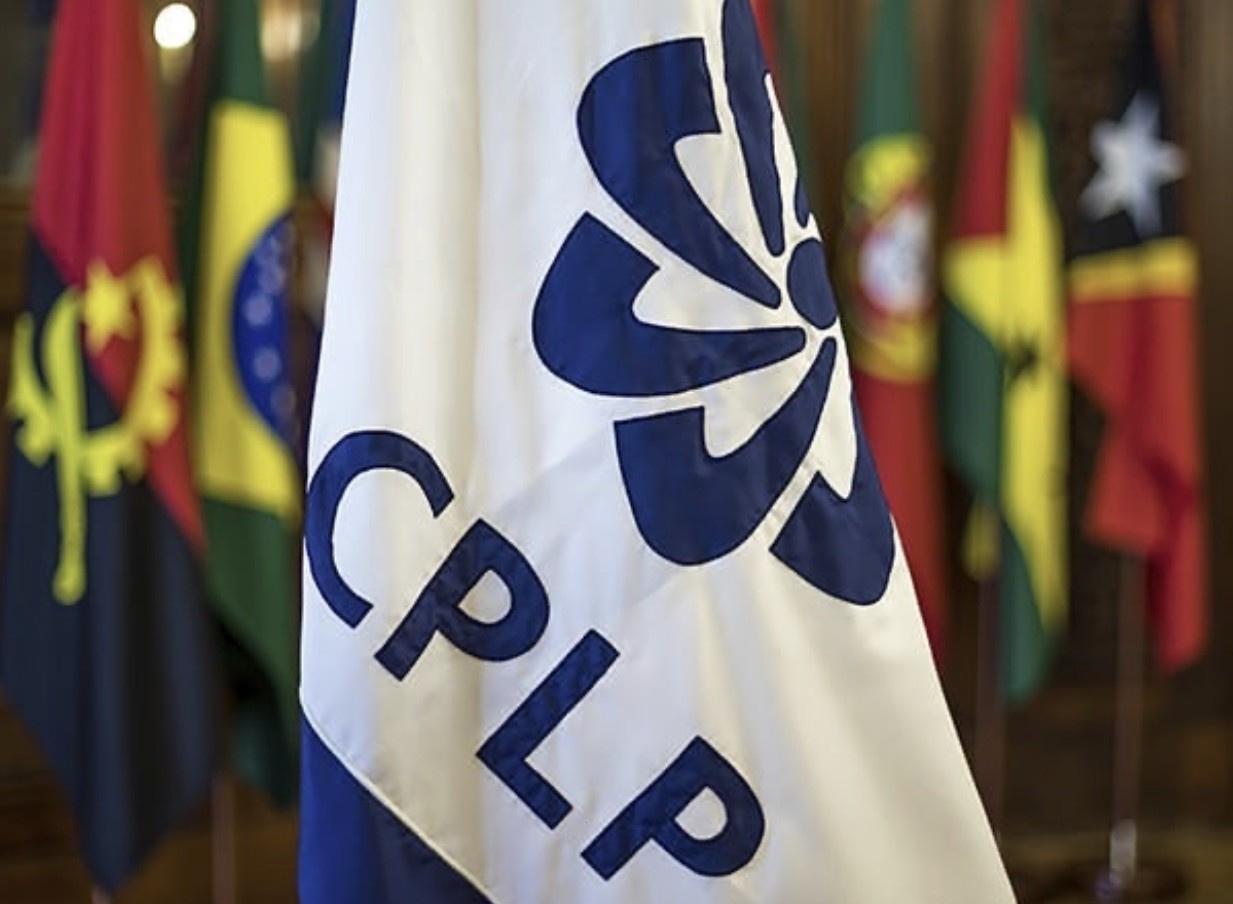
Maria de Fátima Jardim received Timorese Foreign Minister Bendito Freitas today at the headquarters of the Community of Portuguese Language Countries (CPLP), as Timor-Leste took over the organisation’s presidency in December and will hold it until 2027.
The presidency of Guinea-Bissau was withdrawn by decision of the heads of state and government, following the coup d’état on 26 November that deposed President Umaro Sissoco Embaló and disrupted the electoral process, preventing the disclosure of the results of the general elections held three days earlier.
At the summit, it was also decided to suspend the Portuguese-speaking African country from the CPLP. At a press conference, the executive secretary explained that, during the meeting with the Timorese foreign minister, the organisation’s intention to send a mission to Guinea-Bissau, as defined by the heads of state, was reaffirmed.
However, the executive secretary did not specify a date for the mission to be sent. Still on the mission, she added that it has “several levels,” but reiterated that the CPLP continues to maintain contacts with the country and that the Economic Community of West African States (ECOWAS), which has already made two visits to Bissau, “is not acting alone.”
The acting president of ECOWAS led a high-level mission to Guinea-Bissau over the weekend to meet with the military high command that seized power and established a transitional government for up to one year, led by General Horta Inta-A, the former chief of staff to the deposed president.
Julius Maada Bio added that during the meeting, he reiterated to the military junta what had been decided by the regional organisation during its 68th meeting in Abuja, the capital of Nigeria.

In that communiqué, the organisation rejected the “transition programme announced by the military leaders” after the coup d’état of 26 November 2025 and demanded the immediate release of all political detainees, as well as “a short-term transition led by an inclusive government that reflects the country’s political and social diversity”.
Maria de Fátima Jardim reiterated at the press conference that the organisation continues to monitor the situation in the country and that it wants stability and a democratic outcome for Guinea-Bissau, and that “the people of Guinea-Bissau will continue to have the unquestionable support of the CPLP and this presidency”.
The executive secretary also called for the country’s constitution, in force before the elections, to be respected and for “detainees to be released immediately”.
The Military High Command announced a new Constitution on Tuesday, but on Wednesday corrected, in statements to Lusa, the amended points, stating that the President of the Republic will “appoint the prime minister” and “the appointment does not depend […] on the election results”.
The prime minister is chosen by the president, regardless of whether there is a majority political force in parliament,” Fernando Vaz, spokesman for Guinea-Bissau’s National Transition Council, told Lusa.
Among the changes is the removal from the Constitution of “all revolutionary ideological references that existed in the preamble”, and the President of the Republic will now be sworn in by the Constitutional Court and not by the National Assembly, as was the case in the previous Constitution.
The Minister of Foreign Affairs of Timor-Leste, Bendito Freitas, began a working visit today to discuss Timorese presidency of the CPLP and the situation in Guinea-Bissau. The visit to Portugal will last until 21 January.
The CPLP, which celebrates its 30th anniversary this year, includes Angola, Brazil, Cabo Verde, Guinea-Bissau, Equatorial Guinea, Mozambique, Portugal, Sao Tome and Príncipe, and Timor-Leste.
Platform with Lusa
