

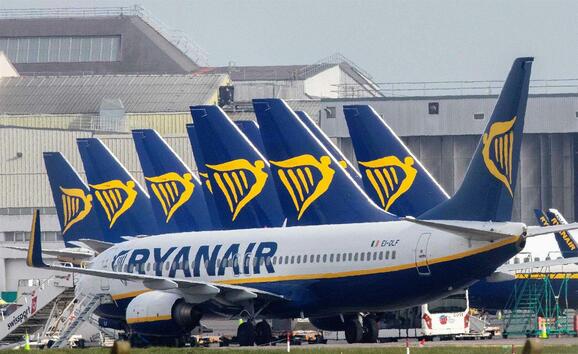
“Ryanair asked the General Court to annul this latest decision by the Commission,” but “the General Court dismissed the appeal lodged by Ryanair,” announced the first instance of the EU Court of Justice in a statement.
Specifically, according to the judgment released today, “the Commission demonstrated that TAP was eligible for restructuring aid” and also “correctly assessed that the measure responded to an objective of common interest and was necessary, appropriate and proportionate”.
At the same time, “the General Court also rejects Ryanair’s claims that the Commission failed to demonstrate that the restructuring plan was realistic, coherent, sufficiently comprehensive and capable of restoring TAP’s long-term viability, and that there was therefore no breach of the guidelines,” it added.
Furthermore, “the Commission cannot be accused of having carried out an incomplete analysis of the negative effects of the aid measure”, since “the principles of non-discrimination, freedom to provide services and freedom of establishment have not been infringed”.
At issue is the European Commission’s approval, on 21 December 2021, of TAP’s restructuring plan and €2.55 billion in state aid to enable the group to return to viability, imposing commitments to avoid harming European competition.
Among the remedies imposed by Brussels for the approval of the restructuring plan is the obligation for the airline to make available up to 18 slots per day at Lisbon airport, the division of activities between TAP Air Portugal and Portugália, and the disposal of non-essential assets such as subsidiaries in adjacent maintenance, catering and ground handling activities.
Platform with Lusa
