

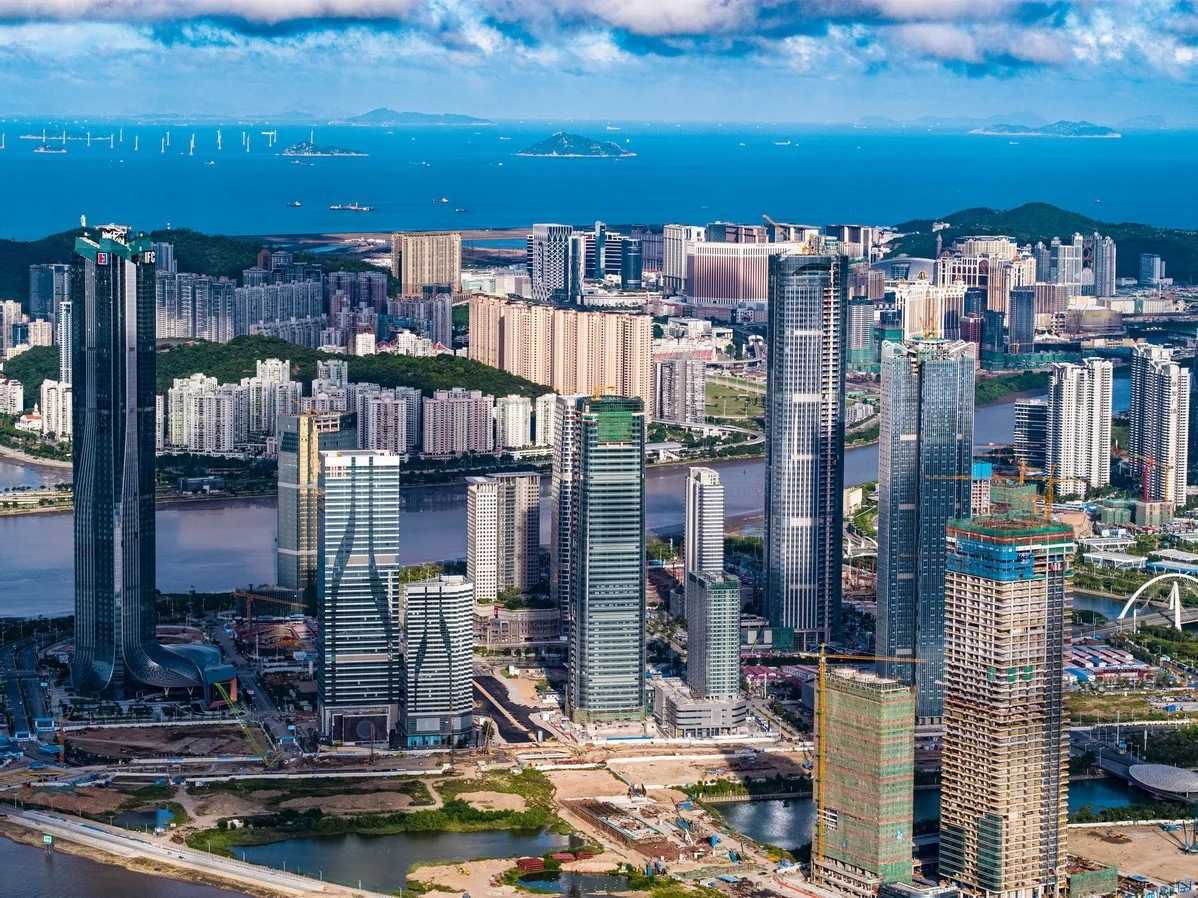
The new infrastructure is part of Hengqin’s urban plan and was already known to some gaming operators, who adjusted their investment strategies in advance. “It’s good news for the six concessionaires. The challenge lies not in demand, but in supply—more specifically, in hotel capacity and ease of entry into the city,” said Matthew Ossolinski, CEO of GW Investment and strategic consultant to gaming operators, in an interview with PLATAFORMA.
The impact will be strengthened by new visa and mobility policies, such as the “multiple-entry visa” for Hengqin residents and the “one visit per week” policy for Zhuhai residents. “With more corridors and new entry points, combined with an increase in hotel capacity in Hengqin, conditions will be created to relax visa policies. This will translate into more visitors, higher gaming revenue, and better financial results.”
Ossolinski adds that Cotai’s large resorts will be the main beneficiaries, given their greater capacity to accommodate tourists and extend their stays—consolidating Macau’s role as an international tourism and leisure destination.
Wong Seng Fat, professor of Electromechanical Engineering at the University of Macau and former vice-president of the Transport Advisory Council, explains that the project includes roadways and intelligent border-control systems capable of reducing crossing times and making travel faster and more efficient. “Improving border efficiency will facilitate residents’ mobility and strengthen daily ties between Macau and Hengqin, consolidating the concept of an integrated living zone.”
According to the academic, the current connection between the two areas is still “conceptual,” but future bridges and corridors will create true urban continuity. “History repeats itself: Macau and Taipa were once separated, and today they form a single urban network. Hengqin will follow the same path—from separation to integration.”
The new connections will serve as the foundation for the future International Education University City in Hengqin. The new University of Macau campus, expected to be completed between 2028 and 2029, will be one of the direct beneficiaries. “These infrastructures will allow teachers and students to adapt in advance to cross-regional mobility, ensuring that the new campus operates in harmony with the integration between Hengqin and Macau,” explains Wong.
Given Macau’s limited space, Wong believes that expansion into Hengqin will open new opportunities in education, research, and housing. “The more corridors there are, the broader the living circle and the greater the population’s well-being.”
Vehicle Passage in the Plans
The plan also proposes the creation of four new road corridors to strengthen connections between the two regions, in addition to the existing Lotus Bridge and the University of Macau tunnel.
Among the new routes planned are the extension of Shizimen Avenue, which will connect to the Barra area; the Huitong V Street corridor; the Lian Ao Road corridor; and the Chimelong Avenue corridor. The plan also includes new border checkpoints, such as one at the University of Macau campus in Hengqin; another at the Financial Island Maritime Terminal (connected to the Inner Harbour); one at Lian Ao Road, which will link to the Tenente Pedro José da Silva Loureiro Roundabout near the Jockey Club; and another at Chimelong Avenue, which will connect to the Coloane shooting range area.
A source familiar with the plan told PLATAFORMA that during a visit earlier this year, senior Macau government officials reviewed several proposed routes, including the connection between Hengqin’s Financial Island and Barra. The same source explained that the project is still in its early stages, with no final definitions yet, but “there is a strong likelihood that it will adopt a model allowing for vehicle passage.”
“If a tunnel model is adopted, only authorized vehicles will be able to cross, allowing direct passage without the need for large border control areas.” Another option, the source said, “would be to combine passenger and vehicle inspections under a system similar to that currently in place at the Hengqin border checkpoint.”
The same source stressed that, at present, access between the Macau peninsula and Hengqin is still made via the Lotus Bridge, which entails a longer route. The new connections would shorten travel times and increase the efficiency of the road network.
Although planning is led by Hengqin authorities, the project has already received approval from both Macau and Guangdong, under the joint administration of the zone. The next stages should focus on technical feasibility and management coordination.
The plan is currently under public consultation until the end of October, with no implementation schedule yet defined.
