

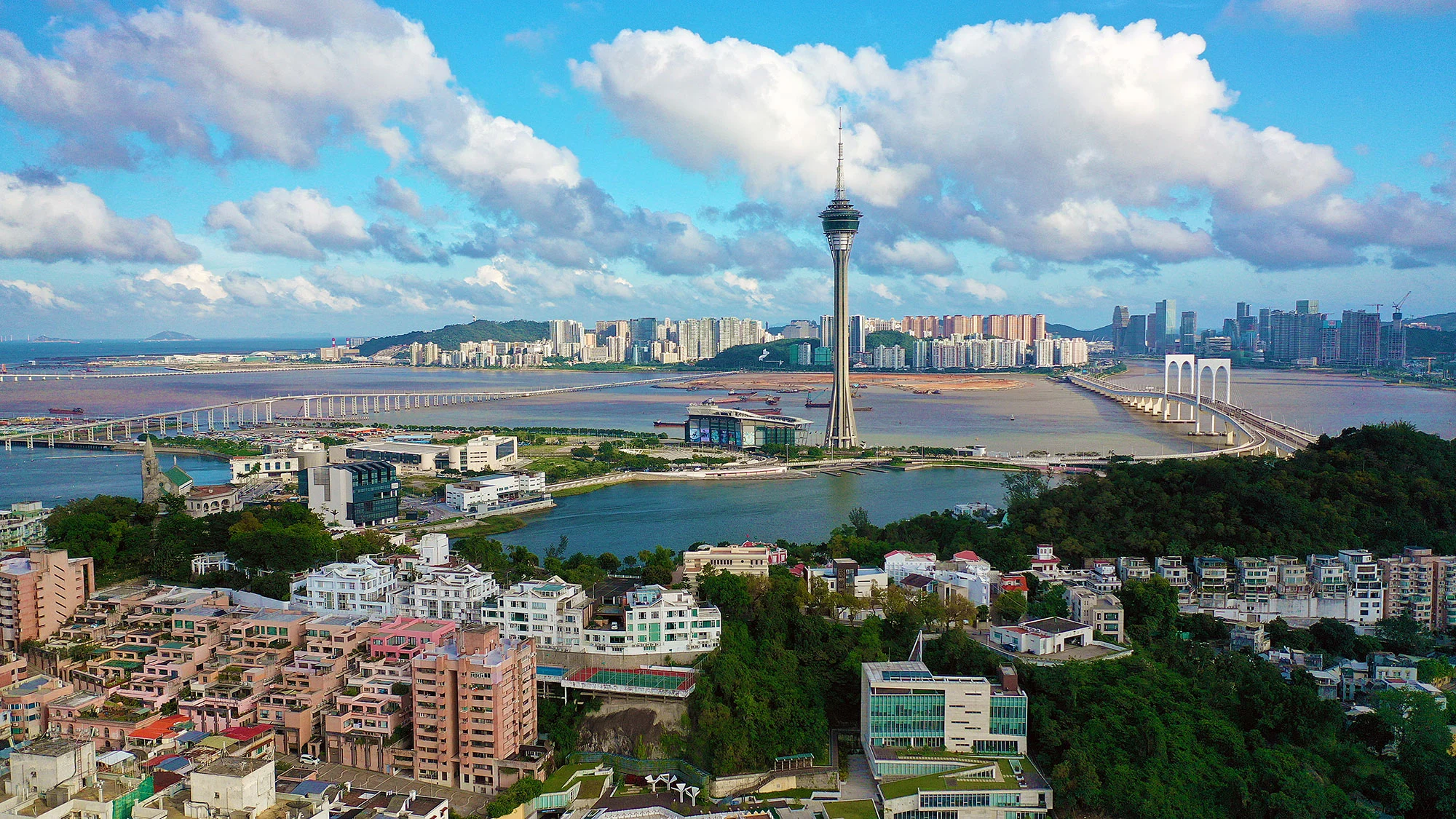
More than 25 years after its return to the “Motherland,” Beijing continues to ensure that Macau has a unique place in the country’s strategy for internationalization; indeed, by insisting on the mission of the RAEM to be a platform for Portuguese-speaking countries, it even reinforces its status as a small city with global ambitions.
The Third Five-Year Plan reinforces this position, in line with China’s 15th Five-Year Plan, approved this week by the National People’s Congress. Always connected to globalization. Macau thus sees its DNA recognized in the context of the “Two Sessions”, a decisive moment in the political, economic, and social definition of China; both internally and externally.
The Lusophone project is clarifying, especially in the context of international relations and the economic and social challenges amplified by the current turbulence. This is particularly true for China, given its global weight – 17% to 19.5% of the world’s GDP in 2025 – and for Macau, which bridges regional integration and its global DNA as a strategic axis for its economic diversification.
Although Macau’s development depends on its focus on regional integration, Beijing continues to value the opportunity created over more than four centuries of historical, cultural, and commercial relations between Macau and Portugal and other Portuguese-speaking countries. By combining political stability, administrative autonomy, and mastery of the Portuguese language, it ensures a unique position for the Macau Special Administrative Region in the Asia-Pacific region.
In President Xi Jinping’s expression, “Macau should serve as an important connection point to facilitate the country’s high-level opening-up and deepen collaborations with the Portuguese-speaking countries.” This concept reinforces the confidence of Chinese leadership in Macau’s ability to act as a multifunctional hub; integrating economy, education, finance, and culture in strategic international cooperation projects.
The Macau Government emphasizes the “unbreakable link” in promoting economic, scientific, and cultural cooperation with the Lusophone world. This function is supported by the “One Country, Two Systems” model: administrative autonomy, legal stability, and the ability to implement public policies aligned with national guidelines.
Macau offers a solid institutional infrastructure for international business, including legal support, fiscal incentives, and investment facilitation. In this context, the local government has implemented specific business development programs; workshops of international trade and investment fairs, promoting among Portuguese-speaking businesspeople the strategic opportunities that the city offers.
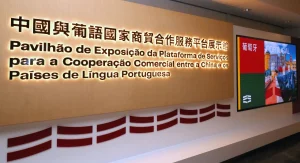
In the institutional plan, the Forum for Economic and Commercial Cooperation between China and Portuguese-speaking Countries founded in 2003, is proving to be strategic for the signing of agreements, exchange of policies, and implementation of bilateral projects. Between 2015 and 2025, more than 50 projects were facilitated in the areas of infrastructure, renewable energy, technology, education, and sustainable tourism.
Macau is now insisting on the idea of attracting Lusophone companies that bet on this gateway into the Chinese market, benefiting from simplified procedures and government support, thus consolidating itself as an internationally recognized hub. Recent examples, such as the agreements signed with Angola and Mozambique – logistics and maritime transport – reinforce this ambition.
The academic and scientific dimension is equally relevant; this is why the University of Macau is expanding its range of international exchange programs. Between 2020 and 2024, more than 300 students participated in mobility programs, with their faculty collaborating on various research projects in the areas of international relations, fintech, renewable energy, biotechnology, management, and public administration.
The goal is to strengthen the region’s technological foundation and develop an innovation and knowledge center, a vision also summarized by Xi Jinping: “Expanding Macau’s unique functions creates new momentum for economic growth.”
In the financial sector, Macau wants to present itself as as hub for the internationalization of the RMB, mediating capital flows between China and Portuguese-speaking countries. Local banking services including foreign exchange, financing, and insurance ensure that Portuguese-speaking small and medium-sized enterprises operate in China with greater confidence.
The position of a secure and efficient financial intermediary involves combining historical experience, institutional trust, and service innovation. Recent examples include fintech and blockchain such as the fast payment mechanisms between China and Brazil, enhance competitiveness in international trade.
Beyond its economic dimension, Macau also acts as a platform for soft power; cultural festivals, art exhibitions, academic exchanges, and international conferences strengthen ties with the Lusophone world, while simultaneously promoting commercial and diplomatic opportunities.
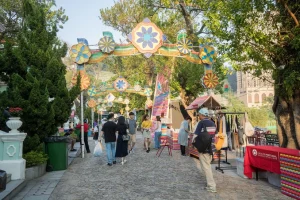
The Chief Executive, Sam Hou Fai, summarizes this position as follows: “To fully leverage the unique advantages of internal connectivity and external linkage, as well as the fusion of Chinese and Western cultures, to further enhance bilateral openness and continuously expand the ‘circle of international friends’.”
The soft power reinforces the city’s image as a platform of trust and innovation, enhancing its image as a platform of trust and innovation, enhancing its attraction to businesses, investors, and critical talent.
Economic cooperation and cultural diplomacy are complementary; creating a multifunctional hub that integrates education, science, culture, finance, and trade; and a replicable model of regional integration. More than just a transit point, Macau should be a driver of concrete projects, international innovation, and economic diplomacy: a reference for small cities with global ambitions.
The finalized design for Macau proves China’s conviction that a small city can exert global influence; by combining national policies, international interests, and enduring cultural ties.
The SAR model combines political stability, robust infrastructure, financial instruments, and soft power; multifunctional hub initiative aimed at attracting investment, having economic and cultural relevance among Portuguese-speaking partners, and developing cooperation projects, especially in the areas of education, scientific innovation, high technology, and modern finance.
