

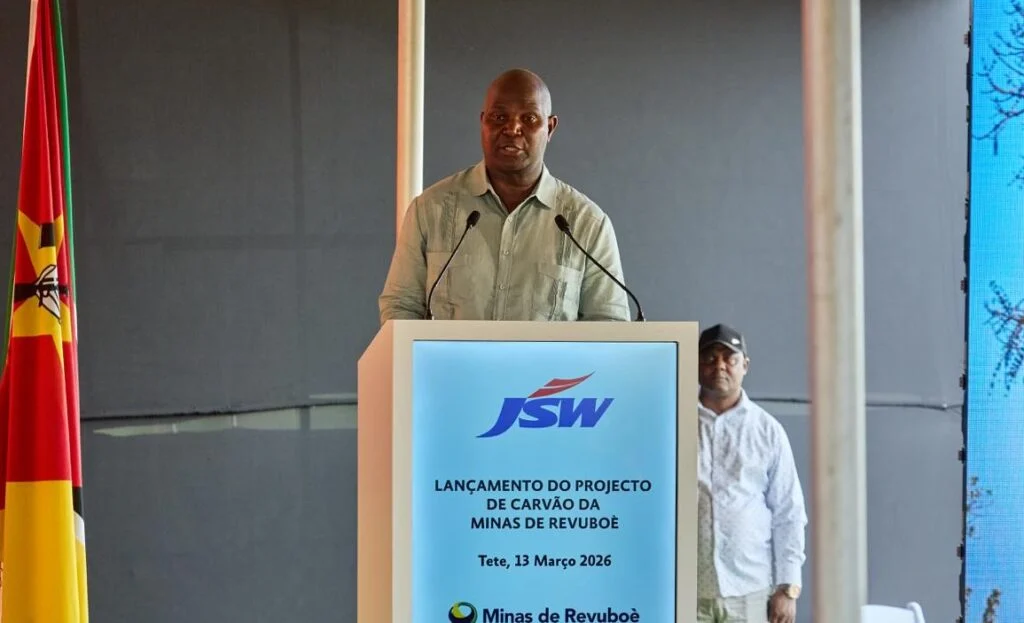
Mozambique expects annual production of 3.5 million tonnes of coal at the start of the new Revuboè mining project in the centre of the country, generating 9,500 jobs, president Daniel Chapo said today.
Speaking at the launch of the Revuboè mineral coal extraction mining project in the Moatize district of Tete province, Chapo said the initiative — with Indian company Jindal Steel & Power as the new shareholder — plans in its first phase, starting in 2028, an initial production of 3.5 million tonnes of coal per year, rising to 7 million tonnes annually in the second phase in 2032, alongside the creation of around 1,500 direct jobs and approximately 8,000 indirect jobs.
Read more: Mozambique inflation forecast up to 5.6%, says Oxford Economics
The project is expected to have a useful life of up to 35 years and is projected to contribute to state revenues and “optimise the use of national logistics infrastructure, including the Beira and Nacala railway lines, reinforcing the strategic role of these development corridors,” Chapo said.
In addition to a resettlement village, the project includes the construction of a bridge linking the mine to National Road 7, a coal depot logistics platform to channel production to the port of Beira in Sofala province, and the construction of a quay for ships in the region. Chapo said the coal extracted at Revuboè will be processed and transformed locally.
“For decades, Mozambique exported raw materials, leaving to other countries the added value of industrial processing. That paradigm must change. And with Revuboè, we begin to change it,” he said.
He noted that the coal to be extracted will be used mainly at Jindal’s own industrial units for steel and iron production in India, adding that Mozambique wants to be an industrialised and reliable partner rather than merely a raw materials supplier. Chapo also called on small and medium-sized enterprises to provide services to mineral extraction projects, stressing the importance of local business participation for job creation and community welfare.
For Chapo, the mine’s entry into operation will strengthen Mozambique’s position as one of Africa’s and the world’s major coal producers. “Our historic challenge as Mozambicans has been to transform this geological wealth into measurable human development — roads, schools for our children, health centres, more free books, more medicines, more energy, more water — an improvement in the lives of Mozambicans,” he said.
Read more: Mozambique wants to bet on productive supply chains to counter concentration in extraction
He pledged to refuse to allow opportunities generated by the project to “bypass local communities” and Mozambican companies, and demanded that the project be “implemented according to the highest standards of social and environmental responsibility.” “Tete must cease to be a reference point for conflicts between companies and communities, or between employers and workers. We must all come out winning,” he concluded.
