

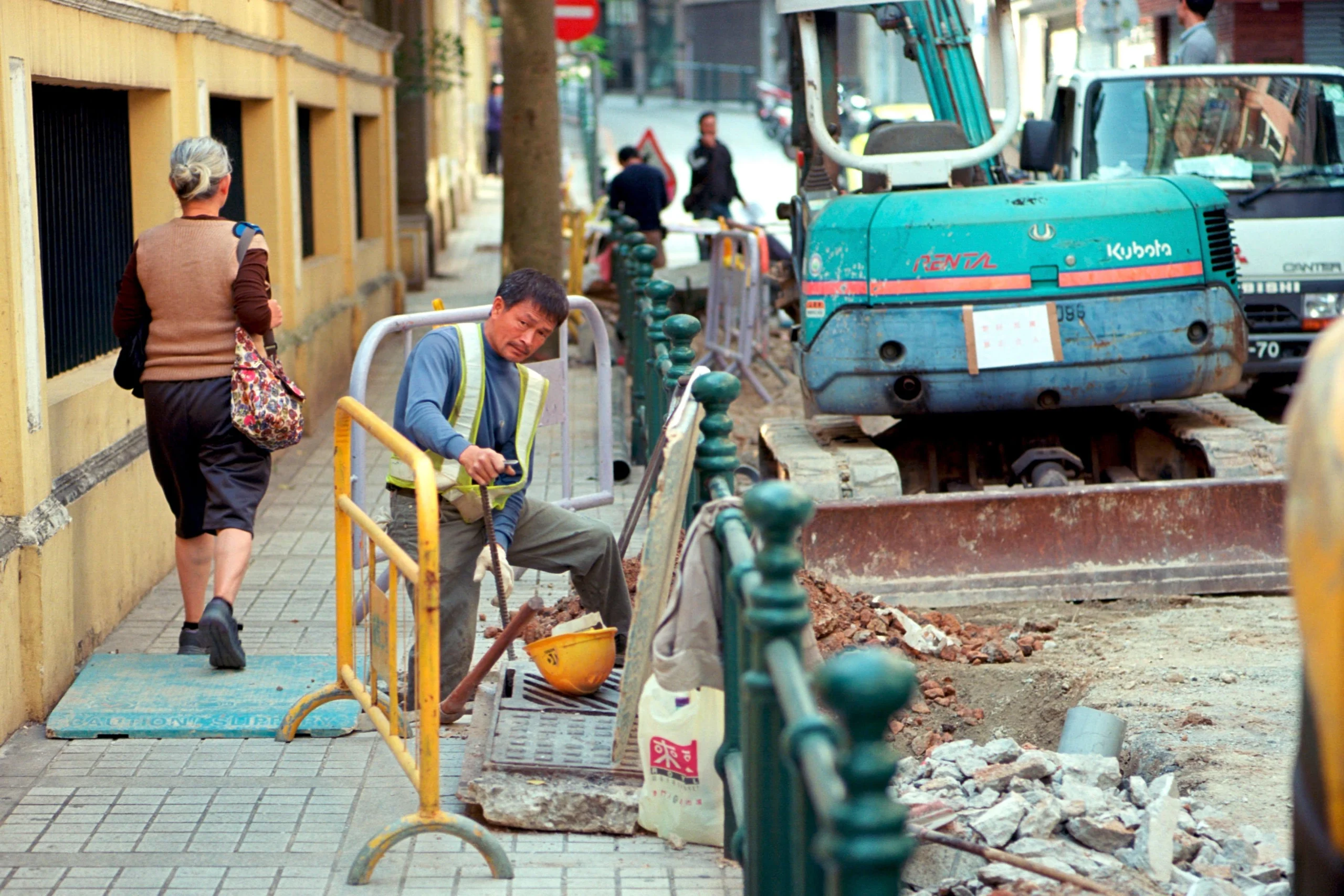
The proposal to revise the minimum wage upward in Macau arose from the second biennial review of Law no. 5/2020, following an evaluation by the Labour Affairs Bureau and the Statistics and Census Service. The Executive considers there is room to update the current rate of 34 patacas per hour or 7,072 patacas per month, based on macroeconomic trends, the labor market situation, and business competitiveness.
At the latest plenary meeting of the Standing Committee for Social Concertation, the Government proposed raising the minimum wage to a range between 35 and 37 patacas, with implementation scheduled for January 1 next year.
Wong Kwok Seng, Vice President of the Macau Chamber of Commerce, stressed that the economic recovery “remains uneven” and that community businesses face difficulties due to falling consumption and resident outflow. “Even an increase of just 1 pataca, to 35, represents a 2.9% rise. This amounts to an early increase, not merely an inflation adjustment,” he told PLATAFORMA.
According to him, although the report points to 18,200 beneficiaries from the increase, “the real impact will be much greater. This measure will trigger cascading wage increases for other workers, raising labor costs for businesses. For companies still recovering, this only deepens existing difficulties.” Wong stated that “there will certainly be opposition. But if the Government decides to go ahead, we appeal for the smallest possible increase to limit the impact on companies and the economy.”
Economist Henry Lei believes the minimum wage could rise by 2 patacas, equivalent to a 5.88% increase. “This figure is higher than cumulative inflation over the past 2–3 years, but the new monthly wage at 36 patacas would be only 7,488 patacas, still significantly below the median income. Those earning the minimum wage would continue to face serious financial struggles in Macau, opting to live in Zhuhai to benefit from lower living costs,” he explained to PLATAFORMA.
On the labor side, legislator Leong Sun Iok advocates a rise to 37 patacas, noting that “prices have steadily increased in recent years” and that, compared to neighboring regions such as Hong Kong, “Macau’s wage levels remain relatively low.” For the lawmaker, raising the minimum wage protects the living standards of low-income workers and improves overall service quality. “Previously, some roles covered by the minimum wage struggled to attract local residents due to low pay. A moderate increase can encourage locals to enter these sectors, with a positive impact on unemployment rates,” he highlighted, adding that pay increases in areas such as property management, cleaning, and security would raise service quality.
Leong Sun Iok suggests improving the minimum wage review mechanism by including an objective calculation formula that would bring more scientific grounding to discussions and reduce disputes between employers and employees. He also defends more opportunities for vocational training to prepare residents wishing to enter sectors covered by the minimum wage.
According to Henry Lei, the update may also have indirect effects on prices, since “the increase in the minimum wage could serve as a pretext for some companies to raise their prices, particularly those providing security, cleaning, and management services, triggering a temporary spike in inflation (as Macau already experienced some years ago, when the general minimum wage was first introduced). As only 6% of employment will be affected, this adjustment is not expected to have long-term economic impacts.”
Labor Distinctions
Luo, a local resident with many years of experience in foreign trade, analyzes the situation from an “employment structure” perspective, pointing out that Macau’s labor market faces deep contradictions. “Whether the minimum wage is set at 32 or 37 patacas, it remains difficult to attract local residents to these jobs.”
Based on her management experience, she explains that “part-time jobs currently pay up to 45 patacas per hour, attracting mainly women seeking to balance family responsibilities. Local male workers are practically impossible to recruit without an hourly wage of at least 60 patacas.”
Thus, she advocates establishing a system that distinguishes between local and foreign workers. “Foreign workers from Southeast Asia generally earn only 30 patacas per hour, or less, in their home countries. Forcing micro and small enterprises to hire them at 37 patacas will severely impact operational efficiency.”
However, Henry Lei warns of the risks of such discrimination: “Establishing a dual system, with different minimum wages for local and foreign workers, is a highly sensitive issue, especially in the current economic context (…). Moreover, some companies that opt to hire imported workers do not do so to reduce local costs, but to secure a more stable team, with better work attitudes and greater loyalty. They may even end up paying those workers the same wage levels as locals. In any case, I personally do not consider it appropriate to start discussing a dual system now, at a stage when the economic recovery process remains heavily unbalanced and highly uncertain.”
