

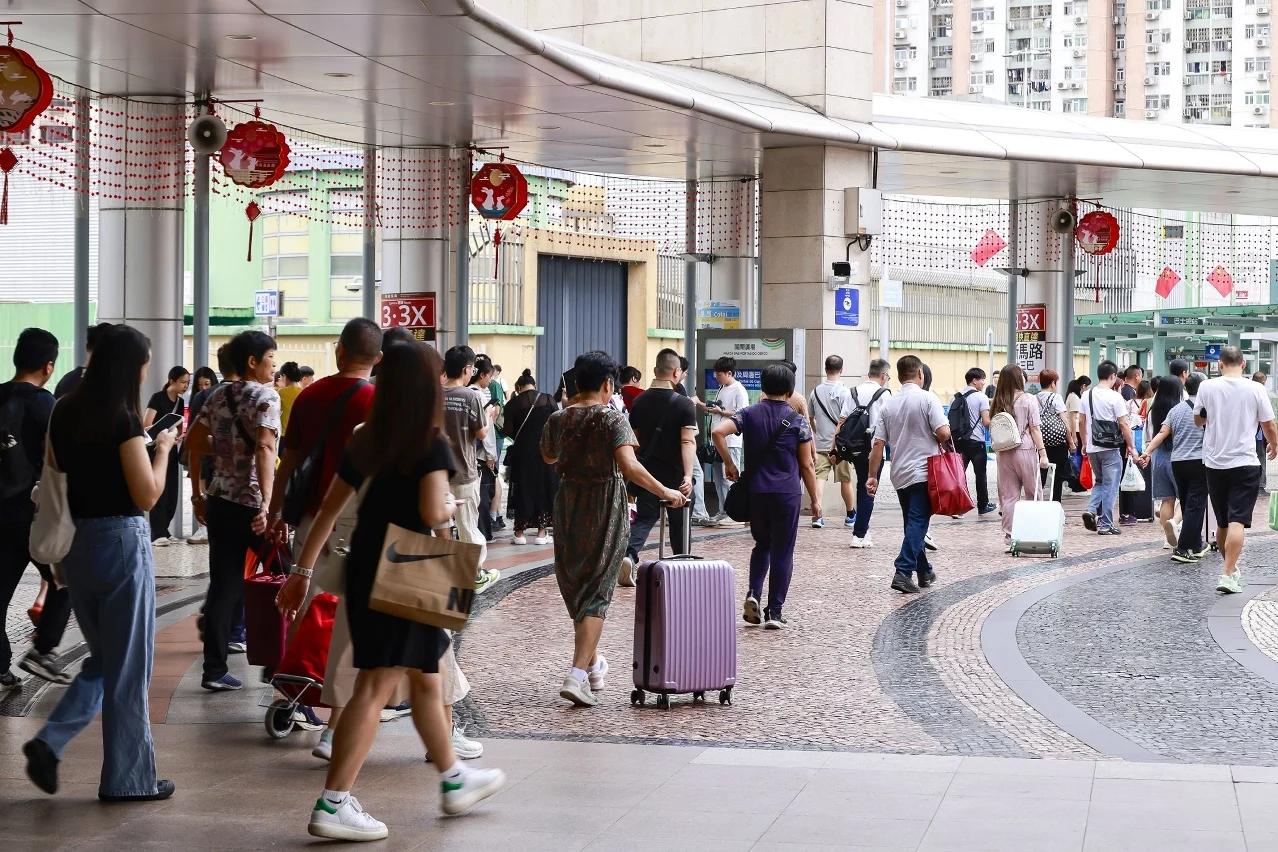
Tourists are spending less on luxury goods, though their numbers are higher. “There used to be clients who would spend more than 100,000 patacas on luxury handbags, but now that type of customer is rare. With duty-free malls in Mainland China, people no longer travel here specifically to shop,” explains Leng Sai Wai, a board member of the Macau Chamber of Commerce and president of the Macau Federation of Tourism Industry and Commerce.
According to Leng, the new reality requires a shift in mindset: “We have to compete on volume. Average spending per visitor has dropped, but the increase in tourist flow continues to drive the economy.”
Leng recalls that China’s so-called “involution culture” — a situation in which competition no longer generates progress or innovation but instead leads to exhaustion, stagnation, or even regression — is, in fact, a consumption strategy based on value-for-money. “This tourism model will last for many years. Visitors are demanding consumers who know how to calculate value-for-money: if the service is adequate, they will come back and repeat the experience,” he told PLATAFORMA.
In his view, the casino experience does not fit this pattern, which opens opportunities for local small and medium-sized enterprises (SMEs). “If transport problems between zones are resolved and visitors are encouraged to go beyond Cotai, neighborhoods will certainly benefit.”
Leng also sees the creative sector as a driver of growth. “Products like Labubu, which are low-cost yet highly profitable, can generate strong demand. Macau has the conditions to expand this industry, provided there are incentives for small businesses to launch products with symbolic value and strong emotional connections.”
Revenue Below 2019 Levels
However, the food and beverage sector is approaching Golden Week with caution. For Ip Sio Man, president of the Alliance for the Development of Macau SMEs and vice-president of the Macau Catering Association, “This year’s Golden Week lasts one day longer — eight days in total. The daily inflow of 150,000 visitors naturally raises expectations, but we don’t believe tourist spending will return to 2019 levels.”
Although the flow of visitors may be equal to or even greater than before the pandemic, company revenues, especially in tourist areas, remain 30% to 40% below those recorded six years ago. Ip points to tourist prudence and a lower average spending per purchase as key factors.
To adapt, local SMEs are betting on proximity strategies. From traditional restaurants to tea houses, many have launched more affordable menus and seasonal packages at moderate prices, targeting both tourists and residents.
Ip believes that the biggest gains will concentrate in tourist areas, while residential neighborhoods will see more limited returns. Even so, the mismatch between local holidays and those in Mainland China should boost domestic consumption. At the same time, policies such as “one visit per week” continue to attract visitors from neighboring cities, strengthening consumption potential.
Heavy Crowds
With the arrival of China’s National Day and the Mid-Autumn Festival, Macau begins eight days of Golden Week, seen as the strongest period since the pandemic. “I estimate this will be the busiest year in a long time, with the number of individual travelers constantly increasing. During the summer holidays we already saw peaks in daily arrivals, which clearly demonstrates Macau’s attractiveness as a tourist destination,” says Leng Sai Wai. Unlike other Southeast Asian destinations whose post-pandemic recovery has been unsatisfactory, Macau stands out for its safety and convenience, he explains.
By October 8, Macau is expected to record around 1.2 million tourist arrivals, according to government estimates. Total entries and exits are projected at between 5.6 and 6 million, with daily peaks potentially exceeding 700,000. Authorities highlight today and tomorrow as the busiest days and ensure that additional measures have been put in place to guarantee smooth border operations.
For Leng Sai Wai, the city is now better prepared to handle high volumes of visitors. “Even when visitor numbers hit record levels, we did not feel major congestion. Cotai has a very high capacity, and the government has been investing in different events and points of interest that ultimately attract even more visitors,” he says.
Macau’s transport capacity has kept pace with the growth of tourism. According to Leng Sai Wai, new infrastructure has given a decisive boost. “If not for the pandemic, the 2019 visitor record would already have been surpassed. In recent years, the opening of new border checkpoints and the light rail transit have clearly strengthened the city’s capacity,” he notes.
Still, Leng warns that structural constraints remain. “Macau has just over 300 kilometers of roads; it’s not possible to indefinitely increase the car fleet. Only public transport will improve circulation between different zones. Taxis alone cannot absorb demand from tens of millions of annual trips.”
Pedestrian zones have helped better distribute tourist flows, but expanding public transport will be key: “To bring visitors into neighborhoods and allow small and medium-sized enterprises to benefit from growth, it is essential to move forward with more public mobility projects,” he says.
