

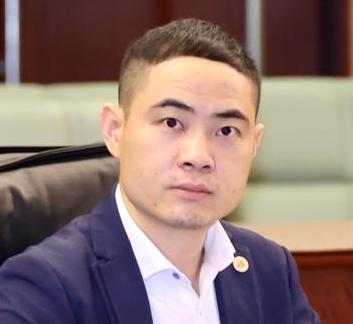
If elected, what will be your main priorities during your term? How do you think members of parliament should act in the next Legislative Assembly?
Lei Leong Wong: As representatives of the people, members of parliament must be pragmatic and act in the overall interest of society. We must use the powers conferred upon us by law to oversee the government and promote social progress and the well-being of citizens. We will prioritize everyday issues, including elderly care, employment, housing, healthcare, and commodity prices.
We will press the government to improve administrative reform and the accountability mechanism for officeholders, implementing the principle “where there is power, there must be responsibility; where there is responsibility, it must be assumed; and where there is a failure of duty, there must be accountability,” encompassing the political, administrative, legal, and moral domains.
Macau’s economy is in a transitional phase, facing several challenges beyond the gaming industry. What specific proposals do you have to promote more sustainable and diversified development?
Lei Leong Wong: Macau has long depended on gaming, making diversification and sustainability a priority. The government should leverage existing resources and align with the diversification policy. In the “1+4” strategy, building a “City of Entertainment” is a crucial element. Macau, with its fusion of Eastern and Western cultures, has unique advantages. Through innovative integration with other industries, cultural resources can be transformed into brands or commercial intellectual property projects.
Although the cultural industry is an essential part of diversification and shows stable growth, major international shows are often dominated by foreign teams, limiting opportunities for local artists. We propose that the government strengthen support for local talent and the performing arts industry. It is essential to create support policies and invest in resources to develop various artistic fields and create a cultural industry with Macau’s own characteristics, helping to build the “City of Entertainment.”
What measures do you advocate to create employment opportunities and promote professional development? How can we reconcile attracting foreign investment and talent with protecting the jobs of local residents?
Lei Leong Wong: Micro, small, and medium-sized enterprises (MSEs) provide a large portion of employment but have faced serious difficulties after the pandemic, leading to some closures and job losses. Although the government has launched recovery policies, average non-gaming expenditure fell 13.2% year-on-year in the first quarter, demonstrating that these measures have not yet had a sufficient impact.
We have urged the government to regulate the hiring of non-resident workers in large companies, ensuring that they only fill local labor gaps. The government should also disclose the number and types of unskilled positions held by non-residents that could be accessible to residents, thus protecting local employment. We propose that public works prioritize local companies, making this a key criterion in tenders.
At the same time, diversification should prioritize the participation of local companies and neighborhood businesses, creating more jobs. The government should develop training programs to help residents adapt to the economic transition and temporarily support the unemployed who are experiencing difficulties during the transition.
Regarding foreign investment, we suggest introducing a “negative list” model to expedite approval, attracting quality capital in strategic sectors and encouraging partnerships with local businesses, ensuring the protection of residents’ jobs.
SMEs are an essential pillar of the economy. What policies do you suggest to help them face challenges, innovate, and grow sustainably?
Lei Leong Wong: Despite the growth of tourism and the recovery of related sectors, a paradox is observed: crowded tourist spots, but deserted community neighborhoods. SMEs are struggling, and the closure of traditional stores is a concern.
These businesses offer quality services at reasonable prices, but lack competitiveness due to their location, small scale, and lack of infrastructure. They represent over 90% of businesses and provide 60% of employment; their difficulties affect consumption and resident confidence. We propose a consumption subsidy plan to support vulnerable families and stimulate domestic demand, relieving the burden on SMEs. In the long term, urban planning should be improved, integrating gastronomic culture to attract visitors, promoting the unique characteristics of local neighborhoods, and improving the environment and transportation, boosting economic recovery.
The housing market faces dilemmas: falling prices are driving away investors, but residents (especially young people) still can’t afford housing. How can we balance the situation?
Lei Leong Wong: The government has taken measures to guarantee housing, such as revising the Economic Housing Law, accelerating the construction of public housing, and launching the Government Housing for the Elderly. However, private rents continue to rise, placing a burden on families on the waiting list. Many residents are unable to buy a home due to stagnant wages, changes in the sector, or unemployment.
The needs of young people cannot be ignored, as they affect social stability and their life plans. President Xi Jinping has emphasized the importance of ensuring residents can live comfortably.
The Second Five-Year Plan ends this year. We propose reviewing housing policies and formulating new responses to social changes, including: reviewing the Government Housing for the Elderly rates; completing the study of the affordable housing exchange scheme; and expanding eligibility for temporary housing after the cancellation of the Seac Pai Van housing project, allowing young people to rent and reduce housing pressure.
Integration in the Greater Bay Area and the development of Hengqin are priorities, but many projects remain unclear, while local consumption is shifting away from Macau. How can regional integration and local diversification be coordinated to generate employment and growth?
Lei Leong Wong: Active participation in the Greater Bay Area and national development is essential for diversification and sustainability. The new “Macao + Hengqin” strategy, presented by President Xi Jinping, points the way. The government should deepen cooperation with Zhuhai, accelerate integration, and use Hengqin as a support for economic optimization.
The Hengqin Master Plan aims to attract residents to work and undertake entrepreneurship, allows foreign professionals to practice, and has created spaces for innovation and youth entrepreneurship. By building a complete ecosystem, it helps Macau’s youth benefit from supportive policies, develop new industries, and create jobs.
The government should also create a mechanism for cross-border industrial collaboration, explore markets in the Global South, attract anchor companies to form distinct industrial clusters, offer quality jobs, and promote a cycle in which “industries attract talent and talent drives industries.”
Regarding Macau’s role as a platform between China and Portuguese-speaking countries, how can members of parliament enhance this role?
Lei Leong Wong: The Greater Bay Area Development Plan supports Macau as a World Center of Tourism and Leisure and as a platform, reflecting Beijing’s strategic positioning and Macau’s unique advantages. IPIM promotes cooperation between Chinese and Portuguese-speaking SMEs.
The Second Five-Year Plan includes efforts to cultivate bilingual talent in Chinese and Portuguese, create training bases, improve curricula in public schools, and support private schools in teaching Portuguese. Cooperation will be strengthened with the Guangzhou Fair and the China International Import Expo, as well as in tourism, healthcare, sports, and youth entrepreneurship.
Within the framework of the Macau Forum, workshops on post-pandemic recovery and economic revitalization can be organized. We should also use the WHO Collaborating Centre for Traditional Medicine to foster exchanges.
Sports are another effective means of connection. The government should explore the cultural advantages of Portuguese-speaking countries to create a platform for youth exchanges in culture and sports.
The audiovisual sector can be a game-changer for exchanges: we propose developing Macau as a post-production base, translating promotional films into Portuguese, and disseminating them in Portuguese-speaking countries, reinforcing Macau’s role and cultural power.
What are your recommendations for strengthening social security (support for families, the elderly, and vulnerable groups)?
Lei Leong Wong: The government places importance on working with the elderly and children, but it is essential to implement policies from planning to execution. In 2024, Macau had 688,300 inhabitants, of which 100,200 were 65 or older (14.6%), an 87% increase from ten years ago.
Many elderly people rely on old-age pensions, which are below the Social Risk Index. We propose optimizing the update mechanism, linking it to the reference value, creating a comprehensive retirement system, and strengthening social protection. We also advocate for a “Support Fund” to ensure that “the elderly are well cared for.”
This year, there are fewer lists for direct election. How can we strengthen the Assembly’s representation, legislative capacity, and effectiveness in oversight of the government?
Lei Leong Wong: The lack of an effective communication mechanism has led to many policies related to daily life not being adequately promoted. Some have even been challenged by the public upon their implementation, undermining trust in governance. Although several public services now have channels for gathering opinions, the response is insufficient. Bureaucratic practices persist, and the principle of “people-centeredness” is merely a slogan.
There are evasive answers to questions from members of parliament, disregarding the oversight functions provided for by law. To increase effectiveness, the Assembly must pressure all services to create effective communication mechanisms, gather extensive opinions, and, especially for policies with direct social impact, respond quickly. We must implement the governance philosophy of “consulting the people on governance, their needs, and solutions,” aligning policies with public expectations.
