

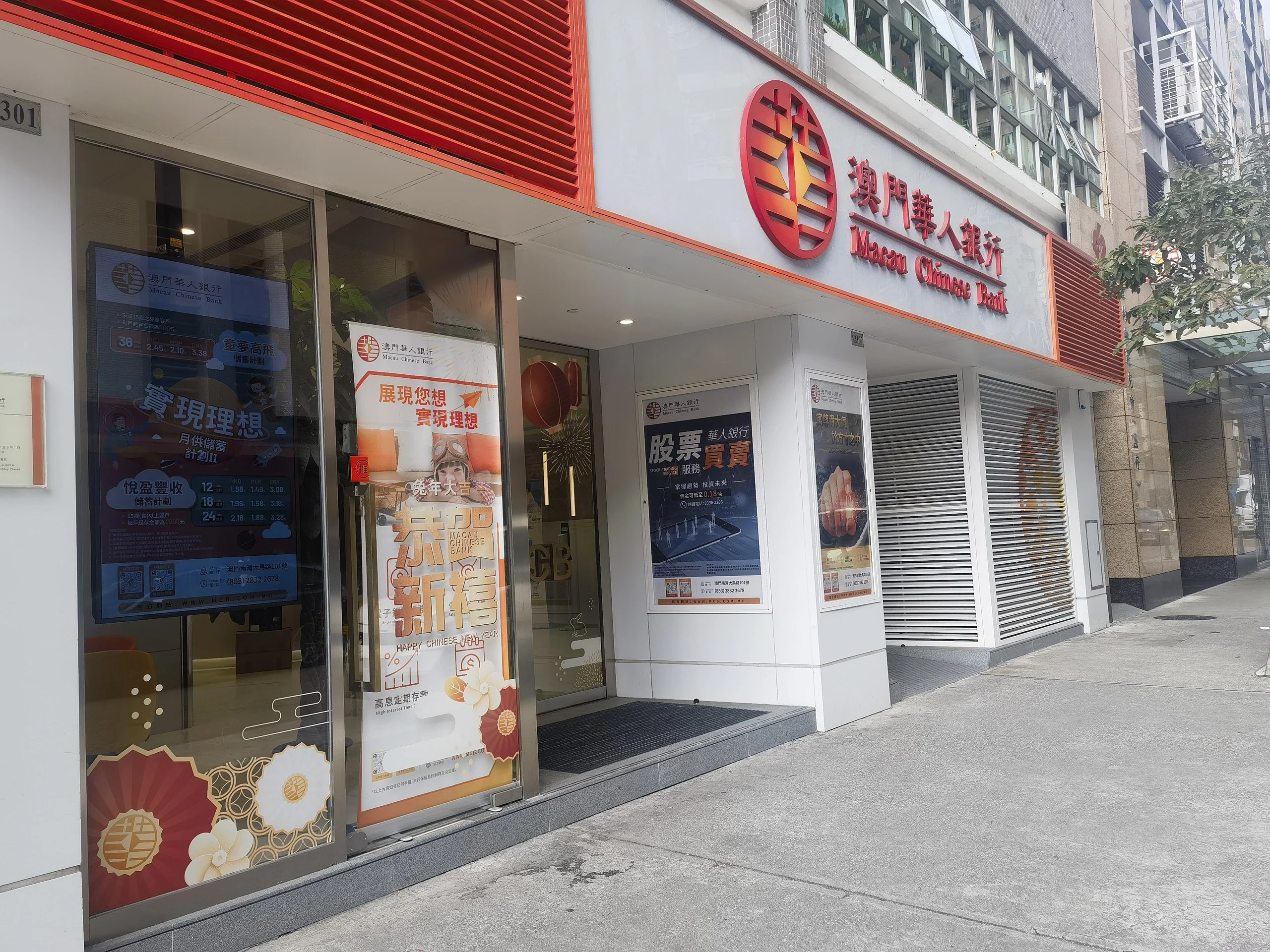
In less than a year, Macau has witnessed the arrest of two executives linked to the local branches of the Bank of China and the Industrial and Commercial Bank of China (ICBC) — two of the largest Chinese banks in Macau — as well as an executive from Banco Chinês de Macau.
Last month, Chinese newspaper Caixin Global reported the disappearance of the president of the Macau branch of the Bank of China, Jia Tianbing, stating that he was allegedly taken by national authorities when he arrived in Beijing from Macau. As president of the Bank of China, Jia was also president of the Macau Association of Banks.
Weeks earlier, the same newspaper reported that Jiang Yusheng, president of ICBC in Macau between 2018 and 2023, had been taken by mainland authorities and was under investigation by the Central Commission for Discipline Inspection on suspicion of “serious violations of discipline and law,” a term often used in mainland China to refer to corruption cases.
Last year, several figures linked to Banco Chinês de Macau (MCB) were also detained in a case of fraud and criminal association, including the bank’s former chairwoman, Yau Wai Chu, and businesswoman Bobo Ng. Both were later acquitted, along with 12 other defendants, while businessman Liu Hai Gui, the only one convicted, was sentenced to 18 years in prison for fraud and document forgery.
For António Felix Pontes, economist and former director of the Monetary Authority of Macau (AMCM), the arrest of the top management of three banks — “two of them ranked at the top of the local banking market, one of which is an issuing bank in Macau” — is a blow to the industry’s image.
“According to the information released, [the arrests] were related to irregularities committed at the headquarters of one of these banks and to the irregular granting of loans, I believe for construction purposes. While this is very bad for Macau’s financial centre, significantly affecting its image and reputation, it does not jeopardise the fragility of the MSAR’s financial system, which is measured by the solvency and liquidity of operators. In this regard, there is good solidity, although the ratio of overdue loans remains a serious concern,” Pontes explains.
Banking Sector in Decline
According to the AMCM, the operating profits of Macau’s banks fell by more than one-fifth in 2024, to four billion patacas, marking the fourth consecutive year-on-year decline and the lowest level since 2010. The value of loan instalments overdue by more than 90 days remains very high, with “non-performing” or overdue loans reaching 55.57 billion patacas by the end of July this year.
The Bank of China remains the undisputed leader of Macau’s banking sector, despite a drop in total profits of its two entities in the MSAR from 9.5 billion patacas to 3.6 billion patacas in 2024. Meanwhile, the Macau branch of ICBC recorded a considerable increase in profits to 223.9 million patacas, despite a decline in the results of its parent company in mainland China. Banco Chinês de Macau, on the other hand, reported negative results of 563.1 million patacas in 2024, a reduction compared to the 835.7 million patacas loss reported the previous year.
According to Pontes, the arrests did not lead to a “run on deposits” at these financial institutions, which shows the confidence of their clients, mostly permanent and non-permanent residents. “In fact, these were isolated cases, but they involved around 10 percent of the 31 commercial banks authorised to operate in Macau. It is more in terms of image and reputation that the negative effects have been felt, rather than any possible fragility of the banking system,” he stresses.
Economist Henry Lei also dismisses any impact on the image of Macau as a “financial centre” and a “dynamic and promising economy” that the MSAR has been trying to develop as part of its economic diversification efforts. “The most important factor is the strong political support from the Central Government, which gives Macau the political flexibility to act as a pioneer in the process of economic diversification and integration with the cities of the Greater Bay Area. Of course, in time, if more information about these ‘incidents’ is released, this may help the market clarify any remaining doubts and uncertainties,” he told PLATAFORMA.
“At present, we cannot know what really happened and what the violations are. It is of great importance for supervisory institutions to release more information to keep the public informed about what actually took place,” the economist adds.
Monetary Authority Remains Silent
For Henry Lei, banking supervision by the AMCM is “prudent,” following the Basel international banking regulatory guidelines “fully implemented” in Macau in compliance with international standards.
“Despite the recent ‘problems,’ this will not affect the population’s confidence in Macau’s banking system,” he argues. Pontes, however, believes that the AMCM should immediately “launch on-site inspections” of the three banks to determine “how their respective analysis, monitoring, and internal control mechanisms failed, and to ensure their effective resolution in the short term.”
“It should also set limits on the granting of loans by these banks, regardless of the size of each entity involved, at least during the period in which the new measures are not yet in place,” the former AMCM director suggests.
PLATAFORMA contacted the AMCM to ask whether there had been any changes or improvements to its banking sector supervision mechanisms as a result of these arrests, but received no response by the time of publication.
