

Can you tell us a bit about Hilab’s story and the products it develops?
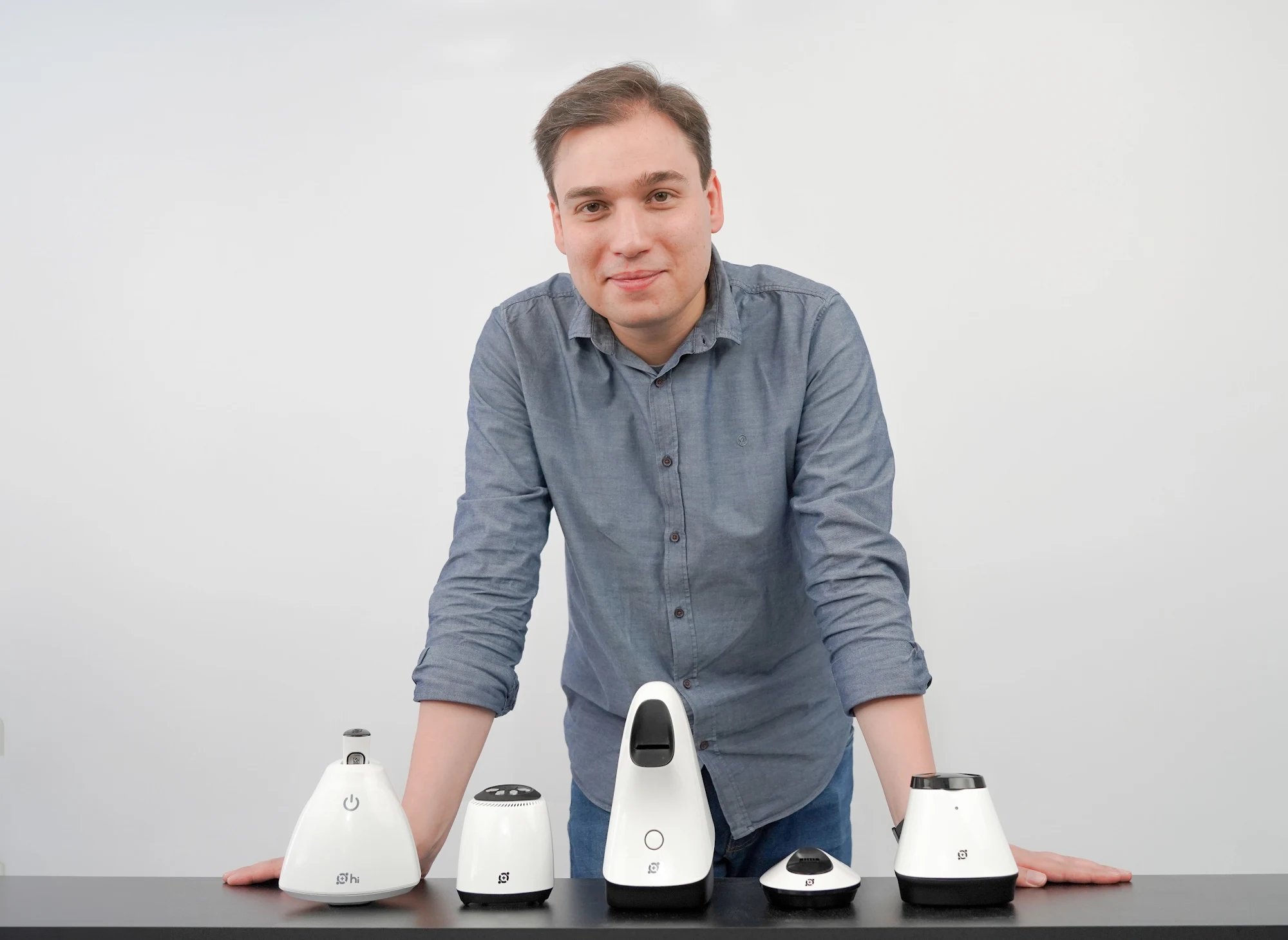
Marcus Figueiredo – We are a biotechnology company from Brazil, a startup focused on developing new diagnostic technologies. Since 2016, we’ve been working on creating a decentralized technological testing platform. We’ve developed three devices that, together, can perform about 25 tests, covering 85 percent of the most commonly requested tests by doctors. These include tests like cholesterol, glycated hemoglobin, creatinine, sodium, potassium, blood glucose, and the most important test of all — the complete blood count. The blood count is our company’s major innovation. We have the smallest blood count machine in the world. It’s a highly innovative technology developed by our company. In Brazil, our products are already being used in 1,700 cities, which is about 30 percent of Brazilian cities. We also work with the Ministry of Health, the Indigenous Health Secretariat, major pharmaceutical companies, large pharmacy chains, clinics, hospitals, and universities. In Brazil, we’ve already served more than 2 million patients and performed over 6 million tests. In a way, we’ve practically become synonymous with rapid testing in Brazil. The country’s National Health Surveillance Agency even recently changed its regulations to allow our tests to be used in more locations. So, we’ve had quite an impact here in Brazil.
Considering that presence in Brazil, why did Hilab decide to participate in this competition in Macau?
.F.M – Recently, we started an international expansion process, exporting our technology to Latin and Central American countries like Chile, Colombia, Paraguay, and Guatemala. However, we’re already exporting to other continents as well, such as Africa, with contracts in South Africa, the Congo, Angola, and Mozambique. In Southeast Asia, we’ve secured large contracts in Indonesia, Sri Lanka, the Philippines, and India. In this internationalization process, we realized that we not only needed to export the technology but also to have a physical presence — an international headquarters in a location that is strategically positioned both in terms of logistics and technology, as well as investments. And of course, China quickly drew our attention, given everything it represents in the world and the size of its market. Macau stands out because of the connection it shares with us through our common history linked to Portugal. When we think of China, we inevitably think of Macau, because it’s so well positioned within the Greater Bay Area. It’s a place where Portuguese is spoken, with a Portuguese heritage very similar to Brazil’s own history. The competition turned out to be an interesting way to make a first attempt at exploring the ecosystem and getting in contact with various players in the region.
As winners, you’ll have the chance to visit the Greater Bay Area, Shanghai, and Jiangsu to explore what’s happening in those regions. Do you already have a date set?
.MF. – We’ll probably go in the last quarter of this year, maybe in October. We’re already in discussions with some local players and we have a consultancy firm helping us with that. The plan is to travel to Macau, probably in October, so we can move forward.
What are Hilab’s practical objectives for this trip?
– M.F. We have a few goals. On one hand, we want to meet potential clients we’ve already been talking to, so we can establish an initial foundation for a market plan. We have a plan for multiple markets where we intend to launch our first operations — which is always helpful when entering a new market. But we also already have a reference client that gives us a clear market focus. We also want to identify places where we can manufacture in the region. It doesn’t make much sense to produce in Brazil and ship the tests to China, so that’s also a goal — to look for locations and partners who can support us in local production. And we’re also looking for potential investors. I think that’s an important point. Today in Brazil, we’ve had a lot of success in raising investment.
So attracting investment is one of the main goals of the visit?
.F.M – Absolutely. When it comes to the Chinese market, we’ll need to find partners and investors who understand the market and can help us navigate it. But there’s also a need to engage with academia, universities, and scientific societies, because we’re talking about healthcare. It’s very important to invest time in conversations with experts, with scientific and medical opinion leaders, so that everyone understands how the technology works and what to expect from our results. It’s an exploratory trip, but we hope it brings us some concrete outcomes.
