

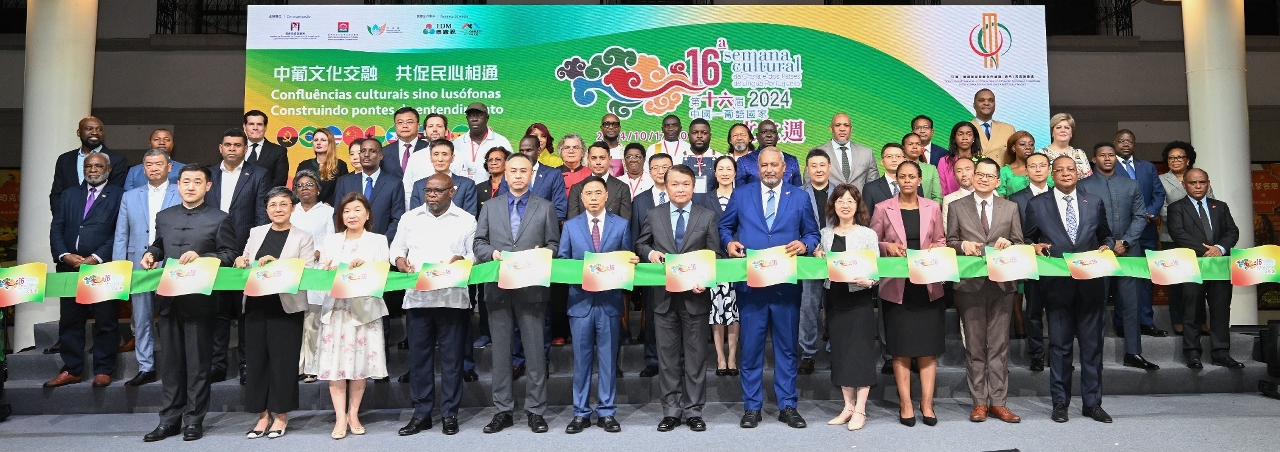
The Macao Trade and Investment Promotion Institute (IPIM), which now oversees Forum Macau, held separate meetings with each of the Lusophone associations involved in the Cultural Week of China and Portuguese-Speaking Countries, informing them that this year, the 17th edition of the event would not take place in Macau but rather in Zhongshan, Guangdong Province. After this unprecedented strategy of “line fishing,” the associations spoke with one another and decided to adopt a joint written position: in it, they reject Macau’s exclusion and raise several other issues they believe must be addressed.
The letter, which PLATAFORMA accessed, acknowledges “the merit of the initiative to extend the Cultural Week to Mainland China, offering a new opportunity for exchange and dissemination of our traditions. However, as Lusophone associations based in Macau, we reiterate the importance of maintaining the event in the SAR, keeping it as the core of this cultural celebration. Macau has historically served as a bridge between Lusophone and Chinese cultures, and we believe this character must be preserved.”
Following the associations’ response, Forum Macau held a meeting yesterday afternoon with the Lusophone delegates and subsequently sent PLATAFORMA a press release in which it affirms its aim to “ensure the success of the event, both in Macau and in the Greater Bay Area, for all parties involved, as well as for participants and the public.” The statement further clarifies that “in accordance with the decision taken by all participating parties of Forum Macau at the 20th Ordinary Meeting of the Permanent Secretariat to include elements of the Cultural Week in the Greater Bay Area, the Permanent Secretariat has been in dialogue with various cities in the Greater Bay Area to determine the best option to optimise the above-mentioned objectives. To this end, the Permanent Secretariat is working with all its partners, whether governmental or from civil society, including the Portuguese-speaking associations in Macau, in order to welcome and integrate all the ideas, concerns, and contributions it has received and continues to receive. We are confident that, through dialogue and close collaboration, all participating parties will reach a new level of cultural exchange in the cultural field, reinforcing Macau’s role as a cooperation platform.”
Beyond the strategic stance defending Macau’s centrality, our newspaper has learned of growing discontent regarding certain organisational and functional changes, which seem to be turning Lusophone associations into a kind of “gift wrapping,” in the words of a source who asked to remain anonymous. On one hand, the integration of Forum Macau into IPIM strips it of functional autonomy—and with it, the influence of the Lusophone delegates of the Forum, who are closer and more aligned with the associations. On the other hand, the event has long been organised by a private company; and this year, the intention is for an external entity to also handle the scheduling, travel, hotels… taking away from the associations the flexibility to manage the event—whether financially, logistically, or in terms of relationship-building. In other words, the associations merely suggest potential participants—and little else. They don’t even welcome the artists upon arrival or have the opportunity to socialise with them or help integrate them into the local environment. For this reason, in the letter they sent, they took the opportunity to try to correct a series of issues beyond just the event location.
